
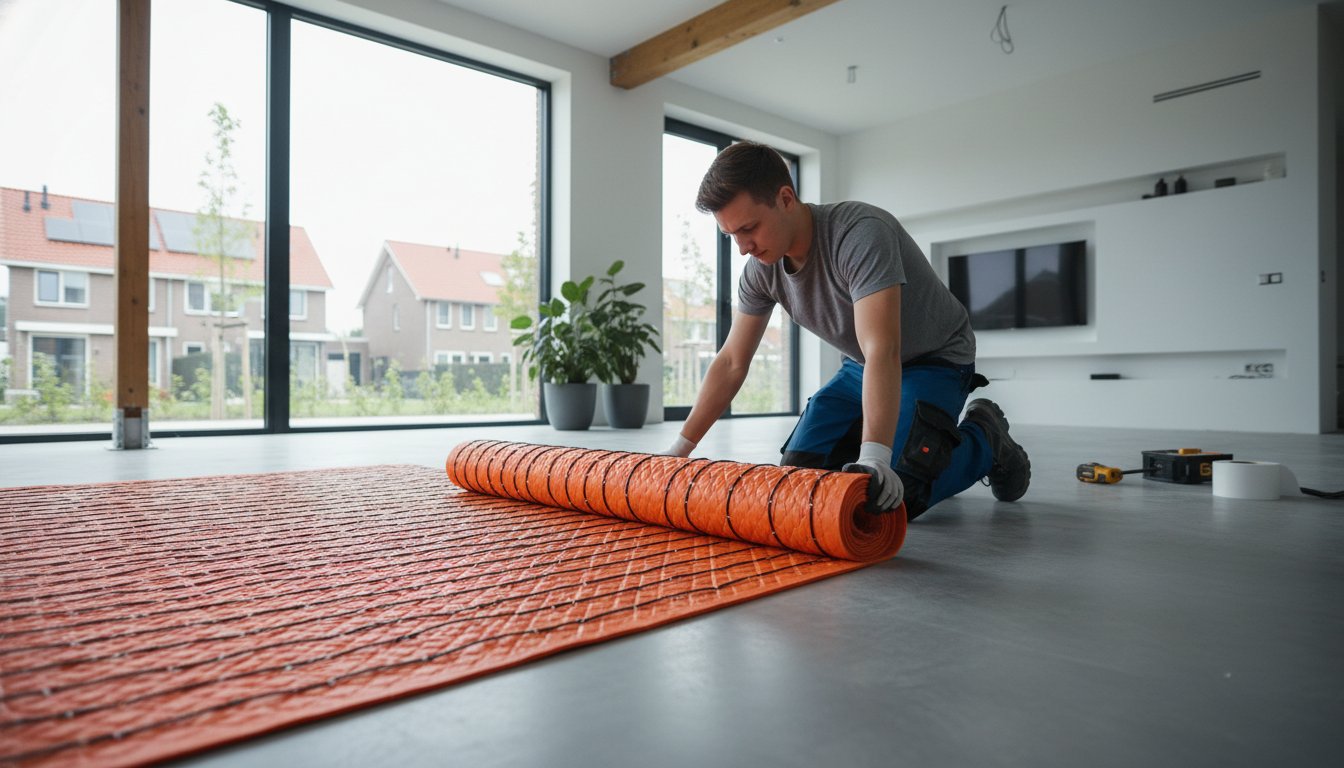
An electric underfloor heating mat can form part of a renovation or new floor plan. Its cable is attached to a carrier, which can make positioning more straightforward. Suitability depends on the complete floor build-up, available height and heating plan. Preparing and checking the substrate remain important even with a thin mat.
Key points
Prepare a layout for the permitted heated area. Choose mat, insulation, adhesive or levelling compound and finish as an approved combination. Keep the heating cable intact and observe specified cable spacing. Record measurements and photos before closing the floor.
How does an underfloor heating mat work?
The electrical resistance cable heats the material in which it is installed according to instructions. Heat passes through the floor build-up to the surface, which releases heat to the room. The carrier helps position the cable but does not alone guarantee faultless distribution or absence of local overheating. Embedding, unobstructed heat release and controls also matter.
Connection method and cable construction differ by version. Check where cold connection sections and end joints may be positioned and which must be embedded. Mat thickness is not the total added floor height: insulation, embedding, waterproofing, adhesive and finish also count. Check junctions with doors, thresholds and drains before ordering.
Which heating mat suits your floor?
Specified output per mat area does not tell you how much heat the whole room needs. Compare the net heatable area with calculated heat loss and floor limits. A mat for warm feet is not automatically primary heating. Do not choose higher output without assessing whether the floor can handle the heat release and temperatures.
Self-adhesive mesh and an uncoupling system have different functions. Use uncoupling, waterproofing or insulation only in a floor combination permitted by the relevant manufacturers. None of these layers automatically repairs an unsuitable or moving substrate. Check flatness, load-bearing capacity, moisture and required preparation among other factors.
Comparing other floor systems
Compare mats, loose cable, heating film and water-based systems for complete build-up, installation cost, controllability and running costs. Warm-up response depends not only on energy source but also on floor mass and insulation. A dry film build-up is not automatically interchangeable with an embedded cable mat. Film also transfers heat through covering layers to the floor surface.
Solar panels can supply some electricity when generation and demand coincide. They do not automatically reduce heating costs to zero. Nor does the absence of water pipes or pumps in the mat mean unlimited service life or no need to check controls and connections. Compare the same space and comfort.
Installing a heating mat: layout and checks
Draw the permitted heated zones, connection sections, sensor, joints and fixed objects. Account for heat build-up beneath furniture and floor coverings. Follow required edge and cable spacing. Buy a suitable mat size: the heating cable must not be shortened. Only the carrier may be cut if the manual permits turning the mat that way, without damaging the cable.
Cables must not overlap, cross or be moved without permission. Install the sensor and any sensor conduit according to system instructions. Check adhesive, levelling compound, waterproofing and finish as a whole; one universal layer thickness or standard build-up does not suit every tiled, PVC, laminate or parquet floor.
Have prescribed electrical measurements performed and documented at the specified installation stages. Investigate deviations before continuing floor finishing. Have load, protection, connection and thermostat assessed as one installation. Start heating only after prescribed drying and curing times, following any commissioning heat-up procedure.
Matching thermostat and heating mat
The thermostat must support the sensor and monitor permitted floor temperature according to flooring and system requirements. Choose the programme based on the complete floor’s response. Wi-Fi or adaptive start depend on the model and do not guarantee savings. When combined with infrared panels, the controls should complement rather than oppose each other.
We support private and business end users, installation companies and wholesalers with material selection and preparation. Share an accurately dimensioned floor plan, substrate and finish details, available height and comfort objective. We can then assess suitable combinations without assuming an unconfirmed standard construction.
Keeping layout plans, photos and test reports
Keep the layout, photos, test reports, settings and product manuals with the building records. Consider the existing heating when adding furniture, rugs or a new finish later. Damage or uncertainty requires assessing suitability first; continuing heating is not a way to test a fault.
Frequently asked questions about underfloor heating mats
Can the mat go on every existing floor?
No. The substrate and all new layers must suit the combination. Check moisture, stability, load-bearing capacity, height and material instructions. Without these checks, retaining the existing floor or avoiding major work cannot be promised.