
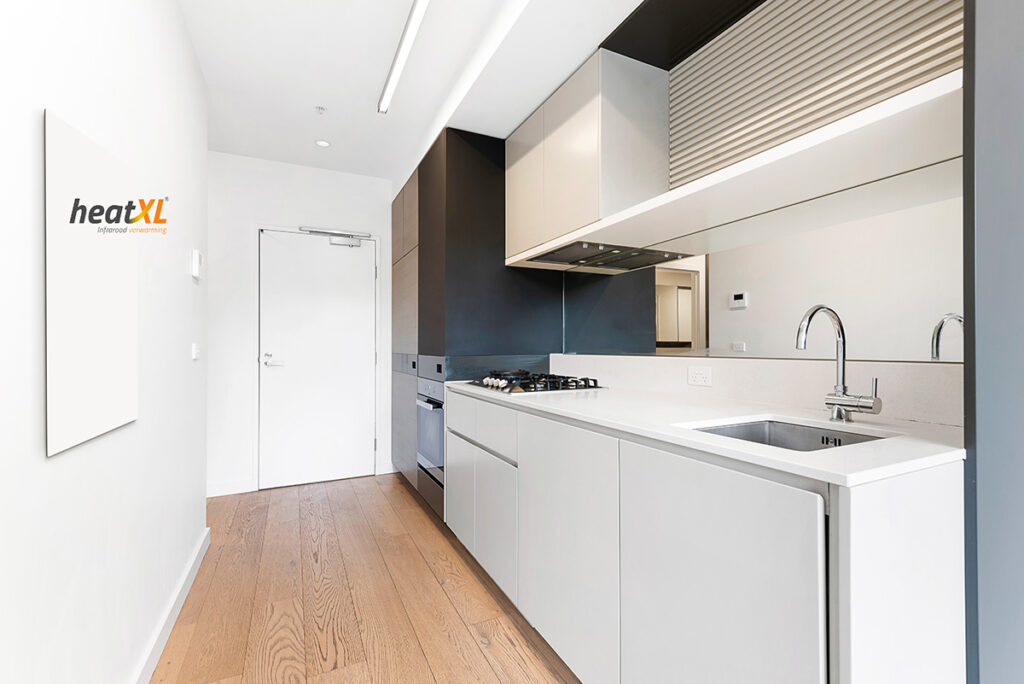
Infrared heating for your kitchen
A panel may offer targeted warmth by the dining table or another occupied area. Choose size and output from heat loss, layout and use. We promise neither a warm kitchen within ten minutes nor a fixed advantage over electric radiators.
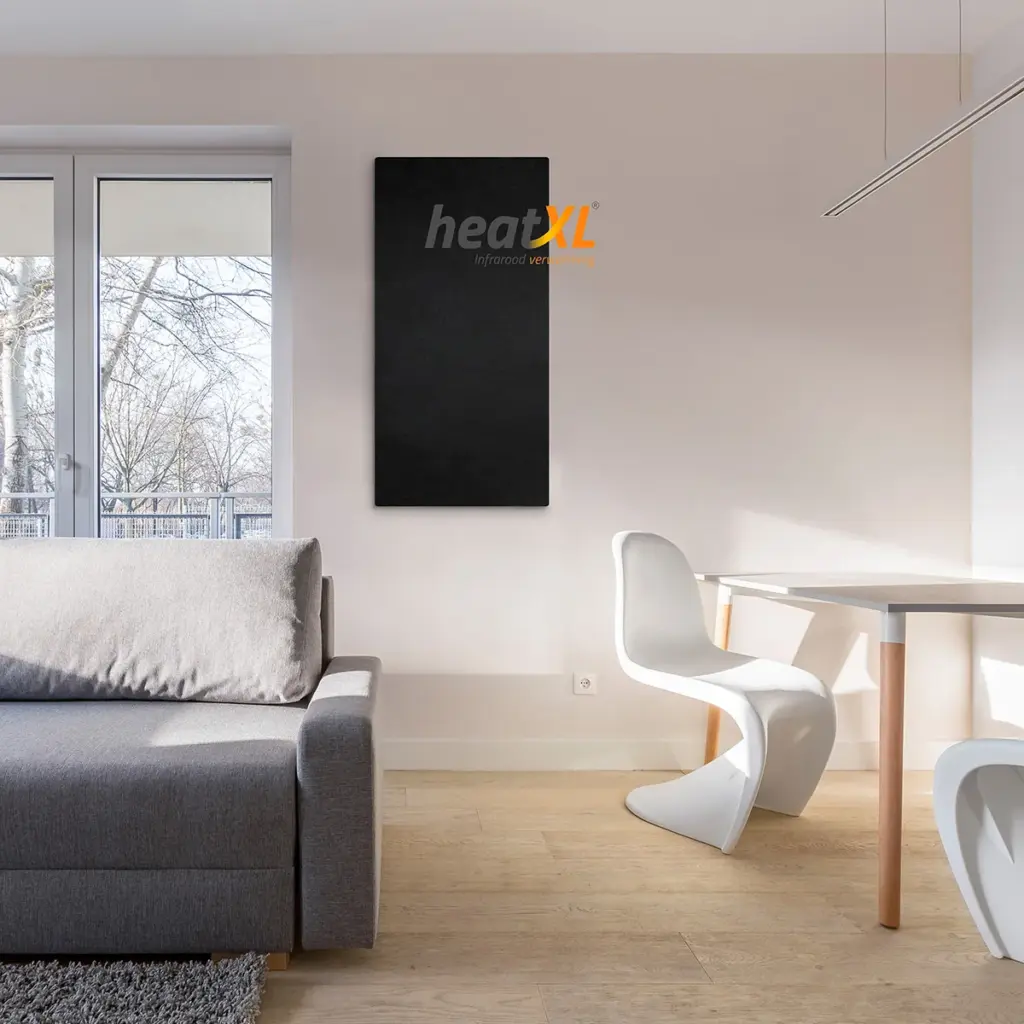
Heating that suits the interior
Compare metal, glass, blackboard and picture panels for the available space. Not every version permits both wall and ceiling mounting. Check support, clearances and cabinets or furniture obstructing the radiant path.
How does kitchen infrared work?
Panels emit radiant warmth towards people and surfaces and also heat air by convection. Distance and obstacles affect comfort. Main and supplementary heating require assessment of the complete application.
Options and considerations
- Warm-up depends on model, room and starting temperature
- Ventilation and cleaning remain needed; fewer bacteria or allergens are not guaranteed
- Assess warmth where people actually spend time
- Follow installation and use instructions and keep the panel clear
- Do not simply mount above a hob or near moisture, grease and heat; check model requirements
Consumption and costs
There is no generic saving of ten to thirty percent or universal wattage per cubic metre. Assess heat loss, approved placement and electrical load for your kitchen. Compare purchase, installation, controls and electricity with alternatives.
Suitable thermostats may reduce unnecessary hours without guaranteeing savings. We support private and business end users, installers and wholesalers with selection and quotations. Share photos or floor plans and details of insulation and use.