
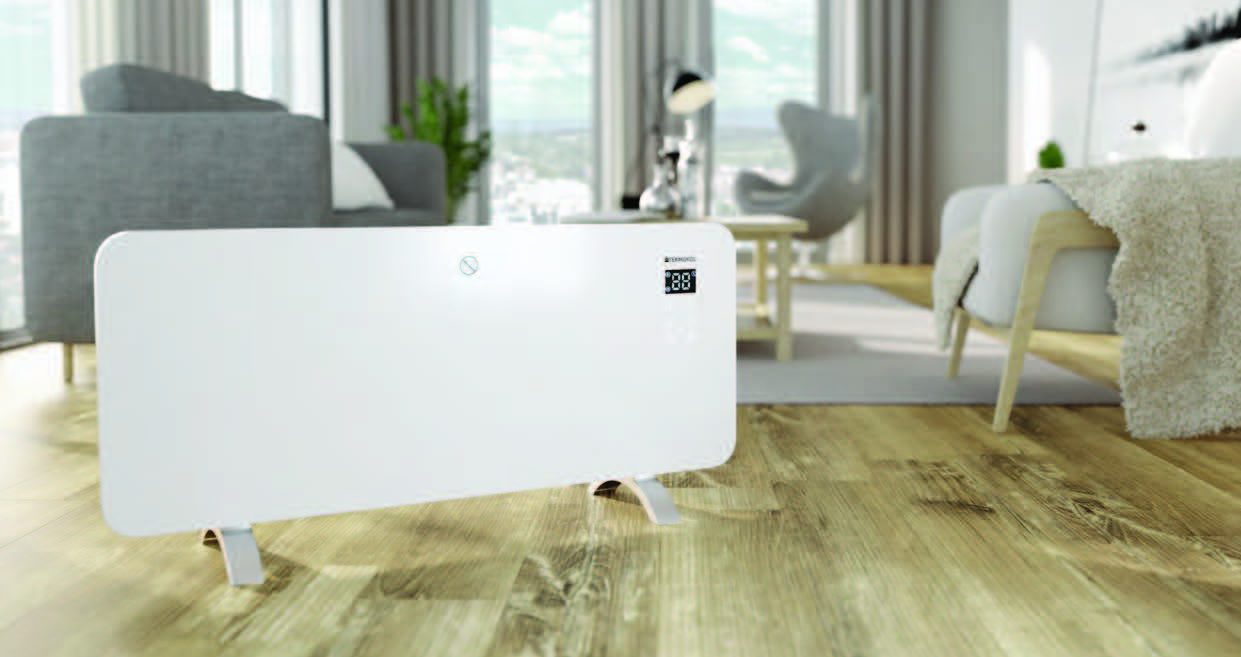
An electric convector for your space
Convectors heat air and may suit a particular heating need. Size from heat loss, dimensions and use; fixed area per wattage provides no certainty. Compare models and total costs.

What is an electric convector?
Air moves past an electric element. Wall and freestanding models have different controls and requirements. No appliance automatically suits every small room.
Basic principles
Warm air rises and circulates past the element. Some designs have fans; others use natural convection. This affects noise and maintenance.
Compare other systems
Radiators often emit convection and radiation. Resistance heating turns almost all electricity into heat; heat pumps may deliver more heat per kWh. Compare whole systems rather than a generic efficiency chart.
| Feature | Convector | Other systems |
|---|---|---|
| Distribution | Depends on position and airflow | Depends on design and controls |
| Noise | Fans, expansion and switches vary by model | Check the actual design |
| Consumption | Demand and operating time determine use | Compare equivalent demand and energy source |
| Warm-up | Depends on appliance, room and starting temperature | Also situation-dependent |
How air circulates
The element warms air that moves through the room. Obstacles, high ceilings and cold surfaces affect distribution. Circulation guarantees neither identical temperatures nor absence of cold spots or draughts. Keep specified vents and clearances unobstructed.
Options and considerations
Check mounting, support, stability, cables and accessible hot surfaces. Have loads, fixed wiring and protection assessed. Bathrooms require approved models and locations together. Overheat or tip-over protection does not replace careful use.
Consumption and controls
Appropriate thermostats and schedules may reduce unnecessary hours. Wi-Fi or a lower purchase price establishes no fixed saving. Demand, temperature, insulation and actual operating time affect consumption.
Warm-up behaviour
A convector is not always faster than every radiator. Assess the selected model’s comfort and response in your room.
Distribution and everyday use
Follow cleaning and inspection instructions. Ventilation remains necessary; heating guarantees no medical benefit or dust-free air. No gas burns at the appliance, but overall impacts depend on generation and use.
| Choice | What should be checked? |
|---|---|
| Wall or freestanding | Approved installation and required components |
| Controls | Thermostat, receivers and functions |
| Costs | Purchase, installation, energy, maintenance and replacement |
| Support | We help private and business end users, installers and wholesalers with advice and quotations based on photos or floor plans. |