
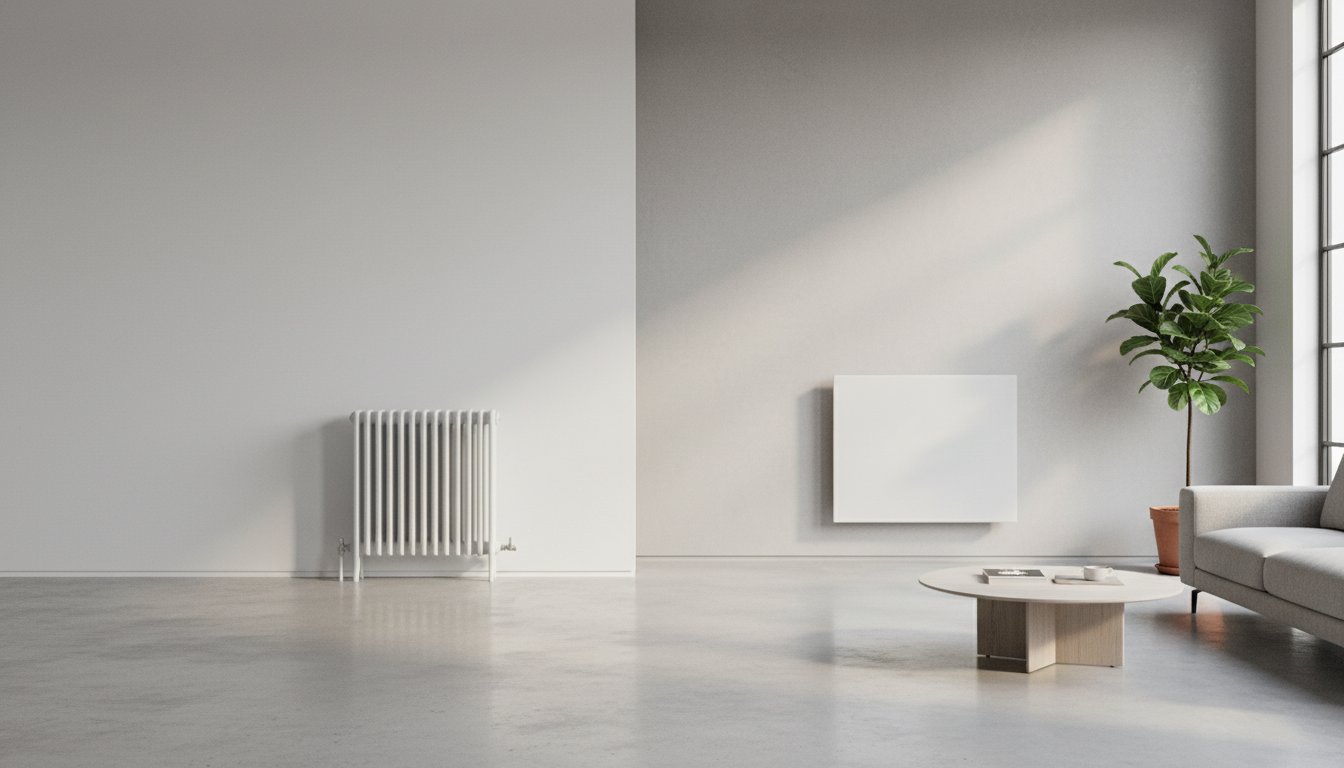
Replacing a radiator with an infrared panel is more than swapping heat sources. It may change heat distribution, controls and the remaining central-heating system. Plan before having the radiator removed.
This guide covers purpose, pipework and controls, electrical preparation and panel choice. The old radiator’s position and rated output do not automatically specify the new unit.
What must be clear beforehand?
Decide whether the panel heats the room independently or supplements it. Assess heat loss, remaining central heating and electrical capacity. Agree responsibility for removal, pipework, mounting, connection and testing.
Define what replacement should achieve
Freeing wall space, local heat or appearance may motivate replacement. A panel is not automatically the cheapest primary heating. Compare investment and use for the same rooms, temperatures and times, including alternatives such as upgraded emitters or a heat pump.
Removing one radiator does not make a home gas-free. Check other rooms, hot water and cooking. Fixed gas costs disappear only when the relevant connection can actually end.
Heat delivery changes, heat loss remains
A water radiator emits both radiant and convective heat, in proportions depending on design. An infrared panel also warms air. This is not a contrast between exclusively heating air and exclusively heating objects.
A resistance panel ultimately converts almost all electricity into heat. This does not prove better system performance than a heat pump using ambient heat. Comfort depends on position, surfaces and people. A fixed two-degree reduction or elimination of cold downdraughts is not universally guaranteed.
A panel does not treat allergies or make rooms dust-free. Ventilation, moisture control and cleaning remain necessary. Warmer surfaces may reduce local condensation but do not repair leaks or building damp defects.
Plan the work in the right order
First assess how the radiator and pipes form part of the circuit. Removal can affect water flows, minimum circulation and other radiator controls. A competent installer determines how to isolate, modify, finish and recheck it safely.
Do not select a generic capping, pressing or soldering method from an online checklist. Pipe materials, access and circuit function determine the approach. Record which pipes remain and how future users can identify them.
Then prepare electrical supply and controls. Check simultaneous load, circuits, wiring, protection and receiver outputs. A box or receiver directly behind the panel is permitted only where the model and installation allow it. Fixed electrical connections need a competent installer.
Mount the selected unit as instructed and check both new heating and the remaining central system. Record settings, connections and responsibilities. The project should end with a checked system, not just concealed pipework.
Reassess the room and layout
Determine required output from heat loss and use, including dimensions, insulation, glazing, ventilation and temperature. The old radiator’s output relates to particular water temperatures and is not automatically the right electric panel wattage.
The old position may not be best, but is not automatically unsuitable. Compare wall and ceiling options for clear radiant space, support and model approval. Generic rear or object clearances cannot replace the instructions.
Coordinate zones and sensor placement with the new distribution. The old central thermostat may remain necessary for the rest of the system. Assess what can stay or must change; do not disconnect controls without a plan.
Choose the finish after defining the purpose
Metal, glass, mirrors, prints and lighting offer range-specific options. Ask about weight and controls. A mirror is not automatically mist-free, and industrial equipment is not an ordinary living-room radiator replacement.
We supply private and business end users, installers and wholesalers. Share room data, photos and existing heating information. Explain who handles central-heating and electrical alterations and which product advice you need.
Request a proposal for the complete change
Request an itemised quote for panel, controls, mounting and alterations. Assess running costs separately with justified heat demand and your tariffs. Lower purchase cost or different appearance does not prove guaranteed savings.
Frequently asked questions about replacement
Does the distribution board need changing? It depends on simultaneous load, circuits, wiring and protection. A fixed panel count or generic circuit rating cannot answer that. Have the installation assessed.
Can one panel heat a whole room? Only if capacity and layout suit heat loss and use. Several units or another solution may be more appropriate. Fixed watts per cubic metre do not guarantee suitability.
Is maintenance then zero? No. Follow cleaning and checks and maintain the remaining central system. Panel, controls and connections have different life and warranty terms; removing one radiator does not remove other equipment’s service requirements.