
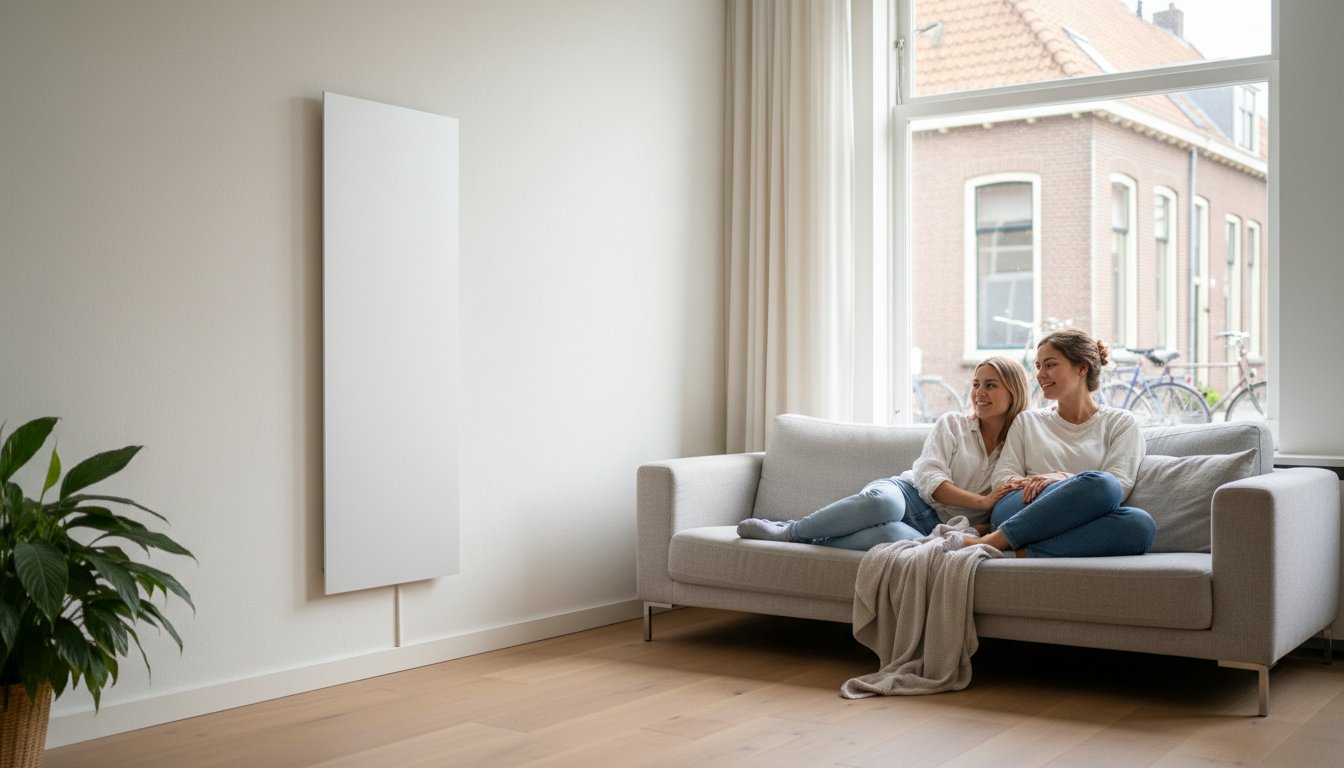
Buying infrared panels starts with what you want to heat: a whole home, one room or a local comfort zone. The right product depends on that purpose, heat demand and permitted installation. Attractive design or high wattage alone is not complete buying advice.
This guide moves from your needs to a verifiable product choice, covering versions, sizing, controls and installation. An electric panel does not automatically guarantee lower costs, a better energy rating or healthier indoor air.
A practical buying sequence
Define the purpose, collect room data, assess capacity and compare suitable models. Then check controls, fixings, connections, included items and terms. This avoids buying a bare panel without the components needed for your use.
Decide on primary or supplementary heating
Primary heating must heat the agreed rooms under the chosen design conditions. Supplementary heating supports an existing system or location. Do not directly compare a briefly used work zone with an entire home kept warm all day.
A heat pump can use ambient heat to deliver the same heat with less electricity. Purchase and installation differ, but panels are not automatically the most economical option. A gas-free home also needs separate hot-water provision; room panels do not replace it.
Which technical details should you check?
A warm panel emits radiant and convective heat and ultimately converts almost all electricity into heat. Radiant share, emissivity, warm-up time and electrical conversion efficiency are different concepts. Compare exact model measurements rather than one material term.
Check output, dimensions, weight, connection, protection and permitted environment. A fixed insulation thickness or surface temperature is not a general quality standard. CE marking is not independent quality certification; check any additional certificates for the exact model and subject.
Determine the thermostat or receiver needed and whether its output may switch the load. Wi-Fi and smart-home features are model-specific. Schedules may reduce unnecessary heating, but fixed savings require calculation.
Choose finish and application together
Metal, glass and mirrors differ in appearance and construction. Compare exact models for size, weight, controls and permitted use. Material alone gives no universal ranking for consumption, safety or lifespan.
Prints, factory colours and LED lighting depend on the range. For personal photos, ask about file requirements, cropping and approval. Compare lighting output, dimming and separate controls; options are not universal.
For bathrooms, model, exact position, protection and full electrical installation must be suitable together. A sufficiently warm mirror may mist less, but condensation-free use in every condition is not guaranteed. Do not cover an ordinary panel as a towel dryer.
Industrial equipment for tall halls has different conditions from domestic panels. “Hybrid” also varies by manufacturer: check what is actually combined. A product name does not replace assessment of the intended environment.
Justify panel quantity and output
Collect dimensions, insulation, windows, ventilation and usage times. Have heat loss assessed. A fixed room table or energy label alone is insufficient for primary heating. For supplementary use, specify the existing system’s contribution.
Match distribution to layout, clear radiant space and model instructions. No universal 160- or 170-degree angle or ideal wall height applies. A blanket ban on facing glass does not follow from general material claims; assess the actual situation.
Check total load, circuits, controls and connections before ordering. More power is not automatically economical and may require extra cost or capacity. Do not add a fixed reserve percentage without design justification.
Advice for end users and trade partners
We supply private and business end users, installers and wholesalers. Share plans, photos and building data and explain support needs. We can discuss suitable products and missing information.
Ask quotes to specify supply scope, controls, mounting conditions and responsibilities. Check current warranties and documentation for the exact version. European origin, a brand or “professional” does not replace those details.
Complete your buying plan
Choose a complete suitable system rather than isolated promises. Compare purchase, installation and calculated use separately, retaining ventilation and necessary services. A clear enquiry enables focused advice and a quote.
Frequently asked questions before buying
Can I install it myself? Follow instructions and assess support, fixings and connection. Some units have plugs; others require fixed wiring. Have fixed electrical work and checks performed by a competent installer.
Are panels healthier for allergy sufferers? Heating does not treat allergies or asthma. Convection, ventilation and dust movement remain with radiant heating. Cleaning, ventilation and moisture-source treatment are still needed; do not expect guaranteed purified air.
How long will it last? It depends on product, environment and use. Element, controls and connections may have different terms and lifespans. Low maintenance may mean limited cleaning and checks, not that maintenance and wear are impossible.