
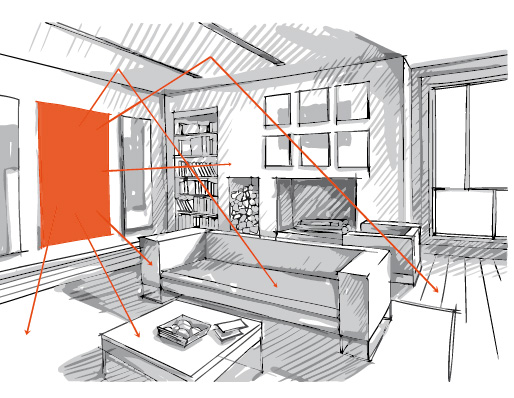
How does an infrared panel work?
An electric infrared panel converts electricity into heat. Its warm surface emits radiation that is absorbed by people and surfaces within its reach. Convection also occurs and the air warms up. The difference from a convector is therefore not an absolute separation between heating objects and heating air.
Radiation type, temperature and reach
IR-A, IR-B and IR-C refer to parts of the infrared spectrum. The distribution of emitted radiation relates to the heat source’s temperature and design. Indoor long-wave panels and short-wave radiant heaters are different products. A spectrum label alone does not determine temperature, safe clearance or suitability for your room.
Warm-up time, surface temperature and perceived warmth vary by model and situation. Distance, orientation, obstacles and surrounding temperatures matter. There is no universal three-metre limit or single temperature range for every panel. Check the manual and allow for hot surfaces.
From operating principle to a heating plan
Whether a panel can provide primary or supplementary heating depends on heat loss, available output, placement and use. A thermostat helps match operation to a schedule, but does not prove savings. Compare consumption and costs for the same comfort requirement. Lower output is no advantage if insufficient heat is available.
A heating panel does not treat allergies or other health conditions and does not make a room dust-free. Ventilation, moisture control and cleaning remain necessary. Have mounting and electrical connections assessed for the exact model and room. We help end users, installers and wholesalers compare products and controls.