
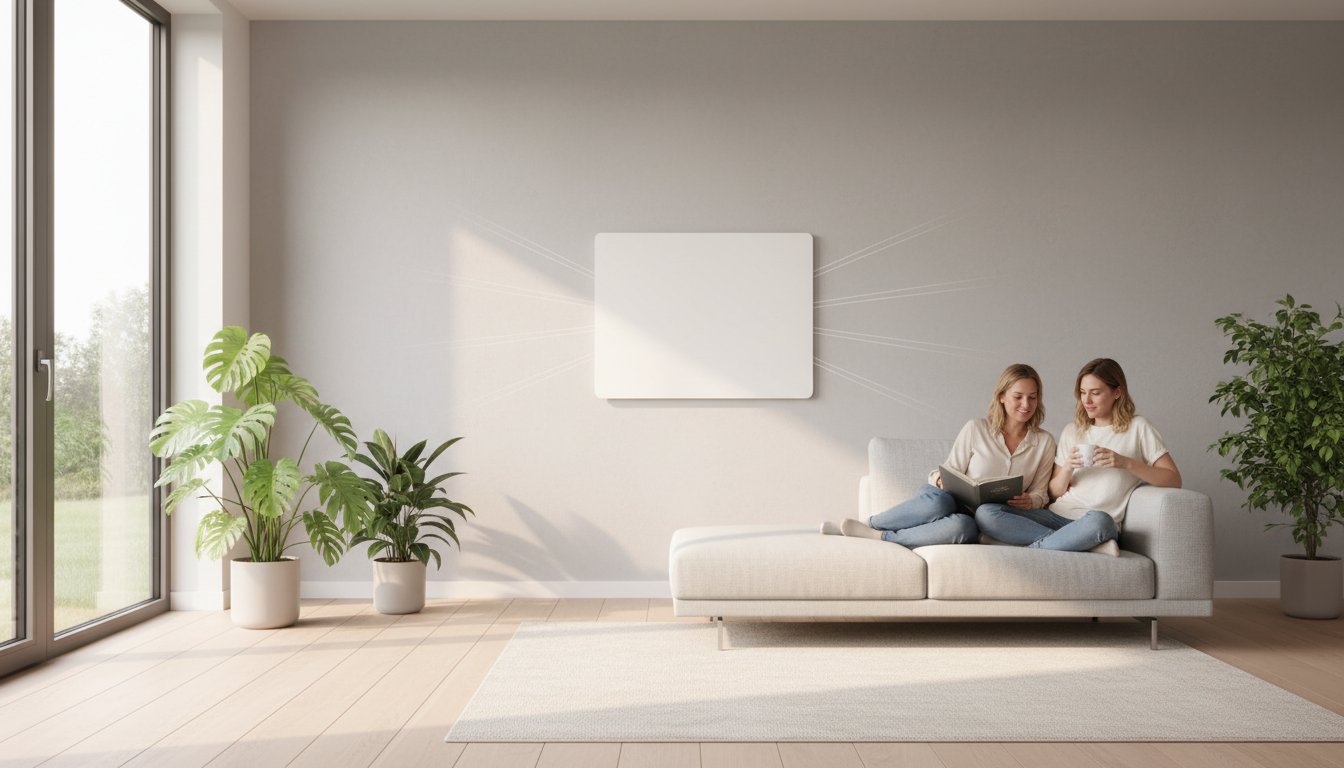
A glass infrared panel can combine heating with a clean interior finish. The glass front does not tell you everything about construction, consumption or permitted installation. Compare the exact model rather than its material name alone.
This guide helps compare versions, applications and controls. Heat demand, safe positioning and manufacturer instructions remain central. Glass does not automatically guarantee lower electricity use than metal.
The key considerations
Check dimensions, weight, output, glass type, controls and permitted wall or ceiling installation. Use model-specific performance data. Choose fixings and position according to the manual and substrate, and avoid contact with hot surfaces.
A heated glass finish with different constructions
An electric element heats a glass heating panel’s construction. The warm surface emits radiant and convective heat. Construction, insulation, protection and heating technology vary by range. Do not assume carbon fibres or a fixed number of safety sensors without specifications.
Check the manufacturer’s glass specification and available declarations. Toughened safety glass has different fracture behaviour from ordinary glass, but is not unbreakable. A material description does not guarantee freedom from damage, thermal breakage or injury.
Compare glass and metal fairly
Material, thickness, mass and construction affect heating and cooling. Residual heat is previously supplied energy released later; it does not automatically reduce annual consumption. Heat storage alone therefore does not make a glass model more efficient than every metal model.
Electrical resistance heating ultimately converts almost all input electricity into heat. Emissivity and radiant share describe other properties requiring evidence for the specific surface or model. A generic emissivity value or fixed lifespan does not prove lower running costs.
Assess heat demand, operating time and controls under the same conditions. A glass panel does not automatically improve an energy rating or produce a specified saving. Total costs also include installation, controls, maintenance and possible replacement.
Match finish to application
Consider colour, reflections, frame, dimensions and visible connections. White, black or personalised versions depend on the range. Ask about availability for your interior needs and verify dimensions and weight before ordering.
A bathroom requires assessment of the exact unit, position, protection and complete electrical connection. A glass front alone does not make a panel suitable for wet conditions. Do not drape towels over it unless the manufacturer expressly permits that use and rail.
Living rooms, offices and bedrooms have different occupancy patterns. Position the panel for its intended comfort and keep required clearances free. It does not automatically prevent condensation or mould and does not replace ventilation.
Establish capacity and controls first
For primary heating, have heat loss and usage assessed. Dimensions, insulation, windows, ventilation and target temperature matter. Fixed watts per cubic metre or one standard living-room proposal are insufficient. Supplementary heating needs a defined comfort zone and existing background heating.
Check compatible thermostat, receiver and sensor and whether controls suit your routine. Wi-Fi, Zigbee and voice control are not universal or interchangeable. A control plan should reduce unnecessary operation without promising a fixed percentage saving.
Handle mounting, glass and cables carefully
Use the specified mounting system and have the wall or ceiling’s load capacity checked. Not every wall model is approved for ceilings. Follow model-specific clearances; a fixed twenty centimetres is not a universal installation instruction.
Plan cabling and controls in advance. A junction box immediately behind the panel is not automatically permitted for every model. Have fixed electrical work and checks performed by a competent installer and protect glass edges during handling.
Switch off and let cool before cleaning. Use only methods approved for the glass, coating and connections. Check visible damage to glass, fixings and cable. Stop using a damaged unit until the supplier or installer has assessed it.
Advice for your interior and application
We help private and business end users and supply installers and wholesalers. Share a floor plan or photos, intended use and finish preferences. Request the selected model’s current terms; a general ten-year warranty does not automatically apply to every panel.
Frequently asked questions about glass panels
Can touching it cause burns? A heated surface can become hot and contact can cause injury. Do not rely on a withdrawal reflex for protection. Follow manufacturer guidance on placement and any guards, especially around children and vulnerable users.
How long will it last? This varies with construction, environment and use. Glass, element, controls and electrical parts do not necessarily share lifespan or warranty. An element’s expected life is not a promise for the whole system.
Is a dedicated circuit needed? Have total simultaneous use, wiring, protection and controls assessed. A fixed three-thousand-watt threshold or generic circuit maximum is not project-specific advice. Include other appliances on the circuit.