
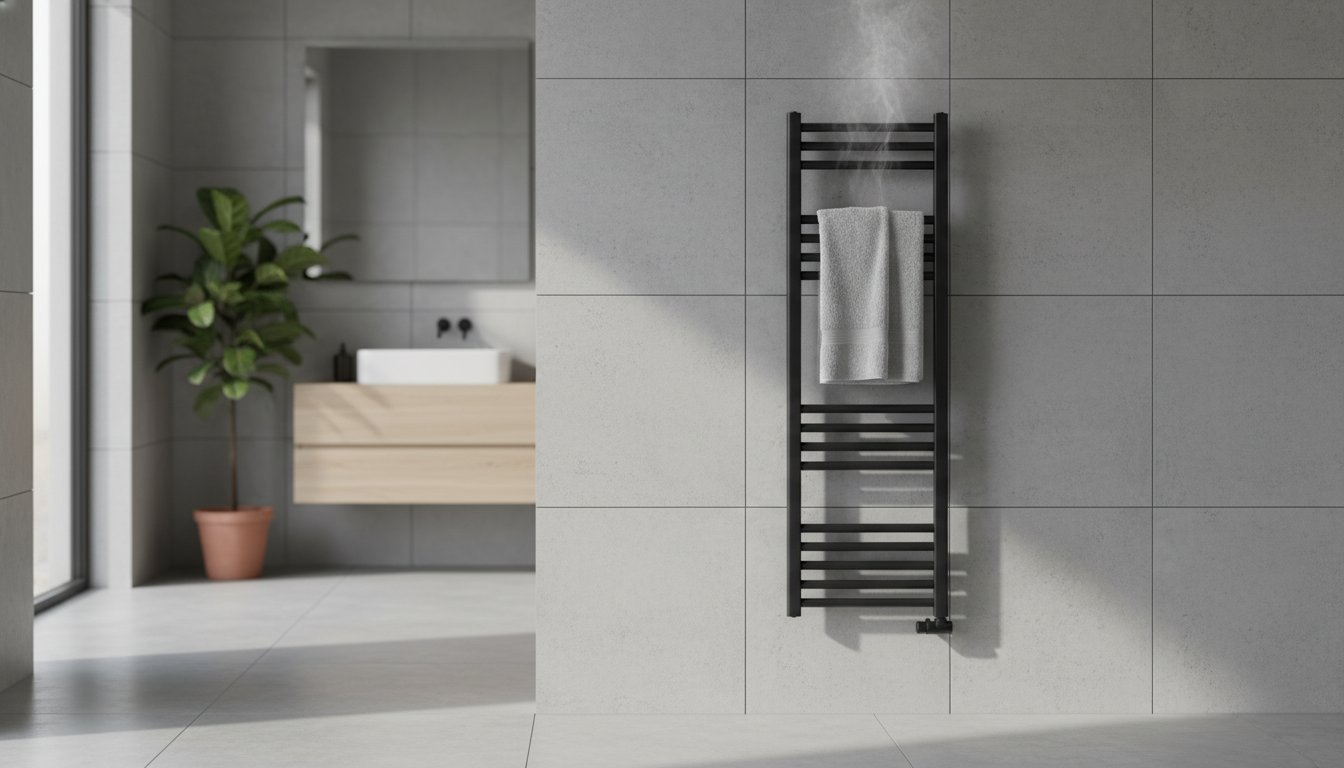
An electric towel radiator can warm towels and, depending on the model and bathroom, contribute to room heating. These are not automatically the same function. First decide what you need and check that the manufacturer permits that use.
This guide compares operation, required output, controls and positioning. The aim is a suitable choice for your bathroom, without blanket promises about warm-up time, hygiene or energy savings.
What should you consider?
Check whether the product is intended for towels, room heating or both. For room heating, have the heat demand assessed. Use only permitted towel rails and install the unit according to its manual and the requirements of the complete electrical installation.
An independent unit for bathroom comfort
An electric model can operate without a water-based heating circuit running. This can be useful between seasons or when a bathroom has its own usage schedule. It does not mean every unit is fast or powerful enough to heat the whole room independently.
Usage hours and demands differ between homes, hotels and other commercial washrooms. Frequent use may require different scheduling, controls and cleaning arrangements from a domestic bathroom. Drying towels does not replace ventilation or demonstrate an antibacterial effect.
Different designs, different characteristics
There are electric ladder radiators, fluid-filled units and panels with approved towel rails. Not every electric towel radiator is an infrared panel, and not every panel may be covered. Construction determines how heat reaches towels, surfaces and air.
Electrical resistance heating ultimately turns almost all input electricity into heat. This does not guarantee low consumption or exclusively radiant output. Warm-up time depends on the model, thermal mass, environment and use; a fixed time for all versions cannot be justified.
A warmer surface may reduce local condensation, but the radiator does not remove moisture from the bathroom. Persistent damp or mould requires ventilation, moisture reduction and investigation of leaks or building defects. Heating is not a treatment for allergies or asthma.
Assess room heat demand and towel use
Room heating depends on dimensions, insulation, ventilation, windows and desired temperature. A universal wattage per cubic metre or a fixed output for a five-square-metre bathroom is insufficient. Also assess whether existing floor or room heating already meets part of the demand.
Towels alter heat output and can create unsafe use on an unsuitable unit. Follow the instructions for rails, textile quantity and clearances precisely. Do not use an ordinary infrared panel as a drying rack unless the manufacturer expressly permits it.
Calculate electricity use from power in kilowatts and actual energised hours, then multiply the kWh by your electricity tariff. A timer can reduce unnecessary operation, but savings depend on previous practice and your usage. Solar power is not available at every heating moment.
Positioning and controls in a wet room
Have the exact position, permitted use, IP protection, connection and electrical protection assessed together. An IP rating alone does not permit installation anywhere in a bathroom. Generic distances or zones cannot replace the manual and the installer’s assessment of the actual location.
The wall and fixings must support the unit and its permitted load. Select fixings for the substrate and instructions, not solely by weight or a generic plug size. Have fixed electrical connections and necessary checks carried out by a competent installer.
A timer, thermostat or drying mode can be useful, but functions vary by version. Check whether Wi-Fi, adaptive start or open-window detection is included and what each function actually does. An app does not automatically display measured energy use, and settings are model-specific.
Compare design alongside model data
Consider dimensions, colour, material, rail and controls, but also permitted installation and intended use. Available RAL colours, outputs and accessories vary by range. Country of origin or material alone proves neither better safety nor longer life or lower consumption.
We help private and business end users choose and also supply installers and wholesalers. Send dimensions, intended use and photos or a floor plan. If combining with floor heating, explain which heating remains so the controls can be coordinated.
Choose for function as well as appearance
Do you need warm towels, extra comfort or independent room heating? A clear brief lets us discuss suitable versions. Also ask about current warranty terms and cleaning instructions for the selected model.
Frequently asked questions about towel radiators
Is a towel dryer the same as a towel radiator? Terminology varies. Check the manufacturer’s intended function and declared output. A name or a low or high wattage alone does not establish whether a unit can heat your bathroom.
How should I maintain it? Switch it off and let it cool before cleaning as instructed. Keep openings and required clearances unobstructed and check visible damage to the unit, cable and fixings. Maintenance and checks depend on construction and use; seek expert advice if something is abnormal.
Does solar electricity make the bathroom carbon-neutral? An electric radiator and solar panels do not automatically establish that. Availability, grid electricity, usage and calculation boundaries matter. Compare costs and energy use on the same basis as other heating options.