
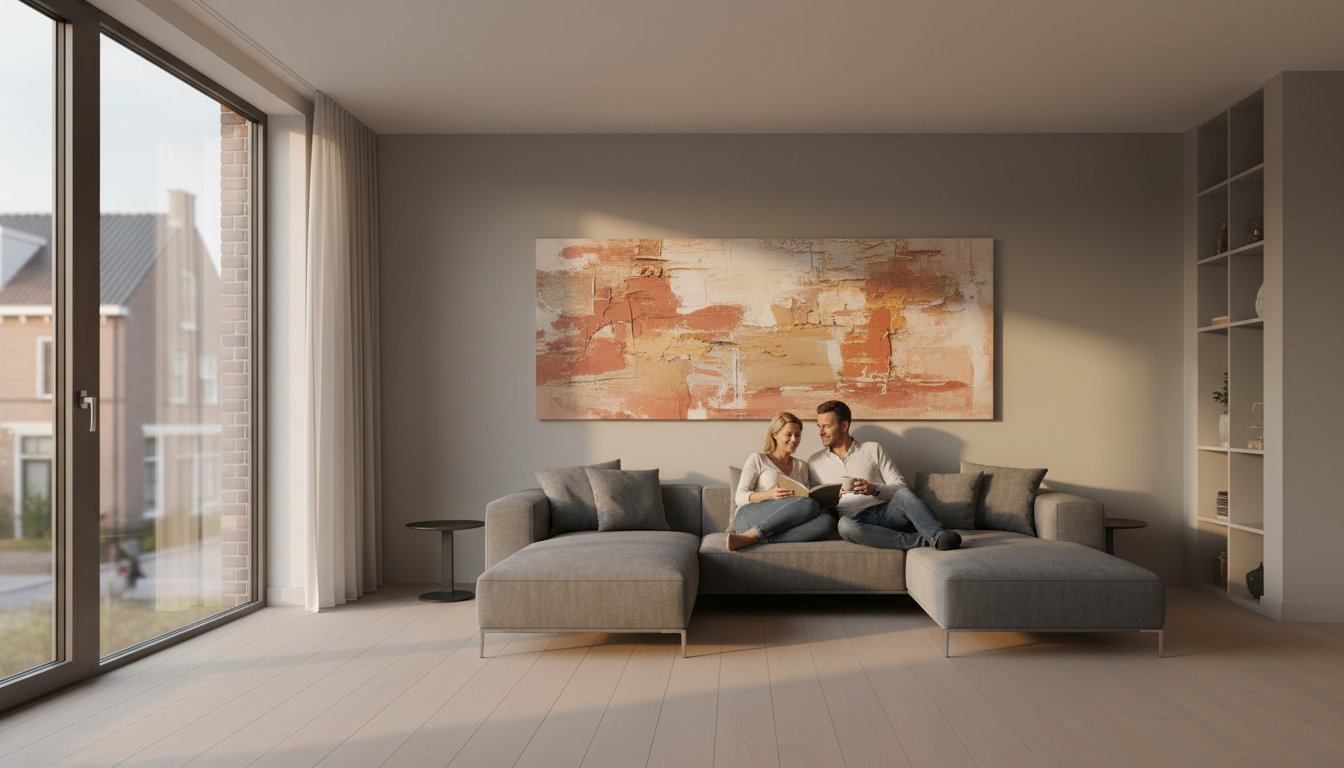
Design heating combines warmth with a deliberate place in an interior. An infrared panel can blend into a wall or stand out as a mirror or picture. Appearance does not change required capacity or installation conditions.
This guide combines appearance and technology for private and business end users, interior projects, installers and wholesalers. Preserve safe positioning, controls and maintenance access in every design.
Let appearance and function support each other
Check exact models, full installed dimensions and permitted finishes. Assess heat demand before fixing size. Ask about cables, controls, weight and clearances; decoration does not stop it being an electrical heater.
Design is a choice, not a fixed technical class
Design heating describes appearance, not mandatory thickness, glass or technology. Models may be flat, framed, illuminated or multifunctional. Compare the complete profile including brackets and connections.
A warm panel emits radiant and convective heat. Design does not prove higher heat per kWh or a fixed comfort-temperature advantage. Resistance heaters and heat pumps have different energy performance; compare equal demand.
Save space without hiding operating conditions
Wall or ceiling mounting may free floor space if approved. Consider furniture, curtains and connections. Concealment or recessing is permitted only as specified; a flat panel is not automatically a recessed heater.
Clean appearance need not hide controls. Choose accessible switches and representative sensor positions. Wireless flexibility does not permit arbitrary placement behind cupboards or at any height.
Glass, mirror, print and factory colour
Glass and mirror may add reflection; matt metal may look quieter. Weight, reflections, size and mounting vary. Glass type or thickness alone does not guarantee safety everywhere.
Photo panels require file, crop and colour checks. Request approval and print terms. UV or heat resistance does not universally promise an unchanged image throughout the heater’s life.
Colours and textures depend on the range. Check factory options and references; screen colours are not exact proofs. Do not repaint or modify panels without express approval.
Lighting may be separate or integrated. Compare output, dimming, maintenance and separate heat and light controls. Two-in-one does not automatically mean one supply or universal smart-home integration.
Match appearance to room function
Living rooms and kitchens need occupied zones, cupboards and circulation considered. Size from heat loss and use, not fixed watts. Preferred dimensions may require layout changes, but appearance does not remove demand.
Bedrooms also need control access and possible switching noise considered. Heating does not guarantee healthy sleep or dust-free air. Offices need design and position suited to workstations without uncomfortable uneven heat.
Bathrooms need exact-model, location, protection and connection assessment. IP44 does not approve every bathroom zone. A heated mirror may mist less under suitable conditions, but a fixed temperature does not guarantee condensation-free use.
Plan installation before ordering
Define model, orientation, fixings and cable routes; check support and clearances. Keep connections accessible as required. Not every wall model is ceiling-approved, and a box directly behind is not always allowed.
Assess load, controls, wiring and protection together. Fixed work and checks need a competent installer. Apply equal care to one decorative panel or a multi-unit project.
Clean only switched off and cool, as instructed. Glass, coatings and prints tolerate different products. Check fixings, cables and damage. Clean design does not remove checks, repairs or replacement.
Discuss your interior requirements
We supply private and business end users, installers and wholesalers. Share photos or plans, finishes and use. We discuss options and further technical data before ordering.
Frequently asked questions about design heating
Can a photo panel heat a whole room? Capacity, heat loss and layout decide. The image does not change these requirements. No universal 170-degree angle or four-metre range applies.
Is design glass safe around children? Surfaces can be hot and contact can injure. Use approved positioning and prevent access to hot parts where needed. Toughened glass is not unbreakable; follow damage instructions.
Does design provide fixed savings? No. Use, heat loss, controls, tariffs and alternatives determine costs. Separate aesthetic value and energy costs. Expected life is not warranty, and property appreciation is not automatic.