
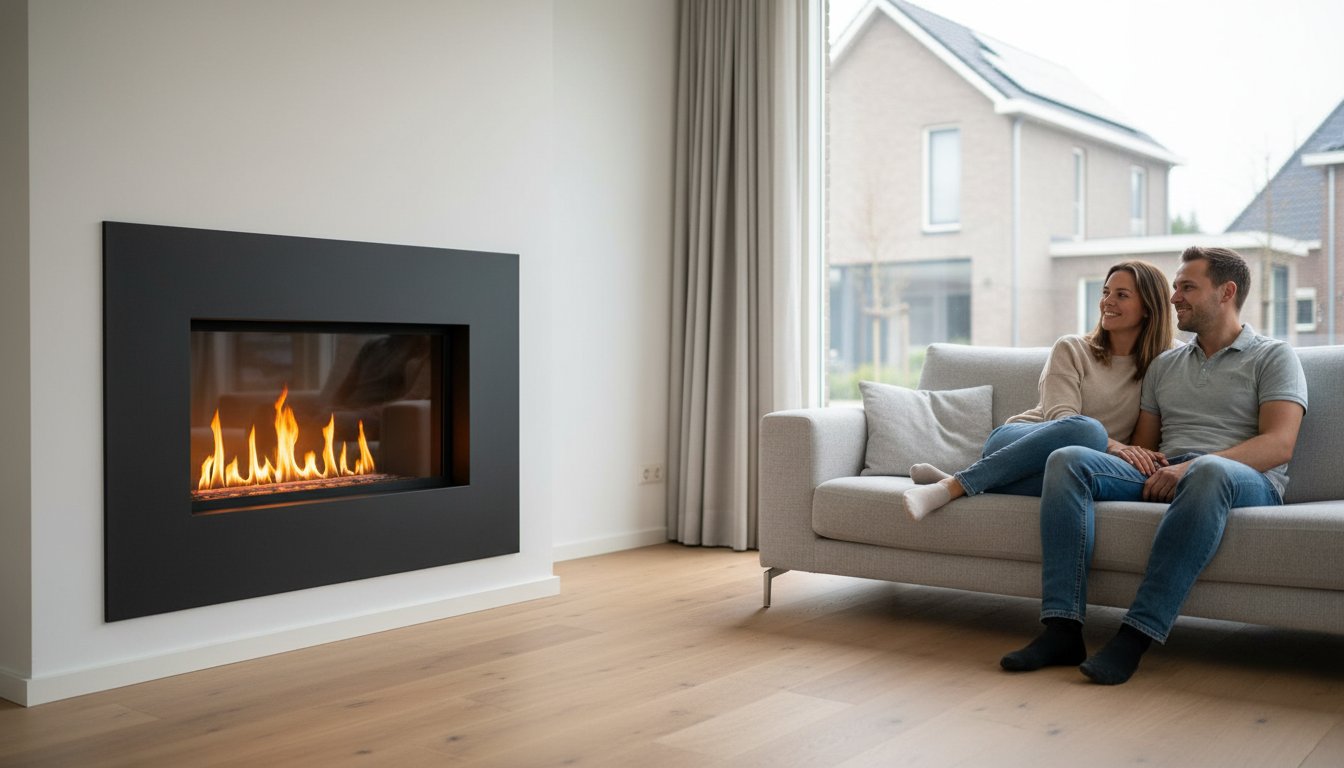
Looking for a fireplace appearance with electric heat? First check what the product name means. An electric decorative fireplace, an infrared panel showing a fireplace image and an appliance combining flame effects with heat are not automatically the same product.
This guide examines ambience, actual heat output and safe interior integration. We do not assume a particular element, flame effect, output or absence of a fan without model documentation.
Key considerations
Identify the appliance’s actual functions. Assess heating separately from decoration. Check mounting, hot surfaces, electrical load and maintenance. An electric fireplace is not automatically infrared heating or complete primary heating.
Separating product name and technology
The term designer infrared fireplace is not a fixed technical category. Ask whether heat comes from a radiant surface, convection, a fan or a combination. Check whether decorative effects operate independently of heating. This varies by version.
Infrared transfers heat to people and surfaces, but convection and air movement remain. A fanless appliance creates no fan-driven airflow; that does not make a room dust-free or guarantee healthier indoor conditions.
Assessing heat, comfort and electricity use
Almost all electricity used by resistance heating becomes heat. Radiant fraction is a separate property requiring product data. Carbon or ceramic elements do not automatically prove lower costs than another electric appliance for the same demand.
Size from heat loss, temperature and use, including insulation, glazing and ventilation. An energy rating or generic wattage factor is not a complete calculation. Primary heating requires assessment of all relevant rooms and electrical capacity.
Calculate electricity from actual power and hours, including decorative lighting, controls and other functions. Compare the same heating and schedules using your tariffs. Adding local heat alongside a heat pump does not automatically reduce total use.
Comparing fireplaces by function
A fully electric, non-combustion appliance needs no flue for that operation. This says nothing about required clearances, cooling or normal home ventilation. Wood, gas and bioethanol appliances have different fuel and ventilation requirements; compare manuals, not merely flames.
Some decorative fireplaces use water for visual effects. Maintenance, refilling and moisture output vary by version. We do not assume a universal humidity increase. Assess noise, cleaning and independent effect or heating operation too.
Preparing safe mounting and integration
A media wall, cabinet or recess is suitable only if approved for the appliance. Follow all dimensions, vents, clearances and material requirements. An open front alone is insufficient. Consider cables, maintenance access and temperature limits of televisions and other equipment.
Assess support, fixing and electrical supply. Not every outlet supports the load or every wall the heat. Use approved accessories and competent fixed-wiring installation. Choose controls compatible with heating and decorative functions.
Prevent hot-surface contact, especially for children, pets and vulnerable users. Brief contact is not automatically harmless and overheat protection does not prevent every risk. Do not cover the appliance; assess the exact version and complete installation for damp rooms.
Advice on technology and appearance
We help private and business end users and support installers and wholesalers. Share appearance preferences, dimensions, photos or plans and existing heating. We discuss suitable categories and locally available versions; availability of a particular fireplace is confirmed separately.
Check maintenance, cleaning, parts and warranty for the exact appliance. Electric products can also contain parts that wear or need replacement. European origin or expected longevity does not prove maintenance-free operation or freedom from future faults.
Specify ambience and heat in the proposal
Specify functions, output, controls, mounting and additional work clearly. This avoids confusing visual expectations with heating performance. We can advise on a solution suited to your space and use.
Frequently asked questions
Does every infrared fireplace have flame effects? No; the name alone does not prove this. Check actual functions and which visual, lighting and heating components are included.
Can I put a television above it? Only after checking both appliances’ instructions and the construction. Clearances, heat flow, cables and ventilation must work together. An insulated rear is not general permission.
Does the effect alone use less than heating? That depends on model and functions. Ask for input power in each mode. Do not use a universal hourly average across different appliances.