
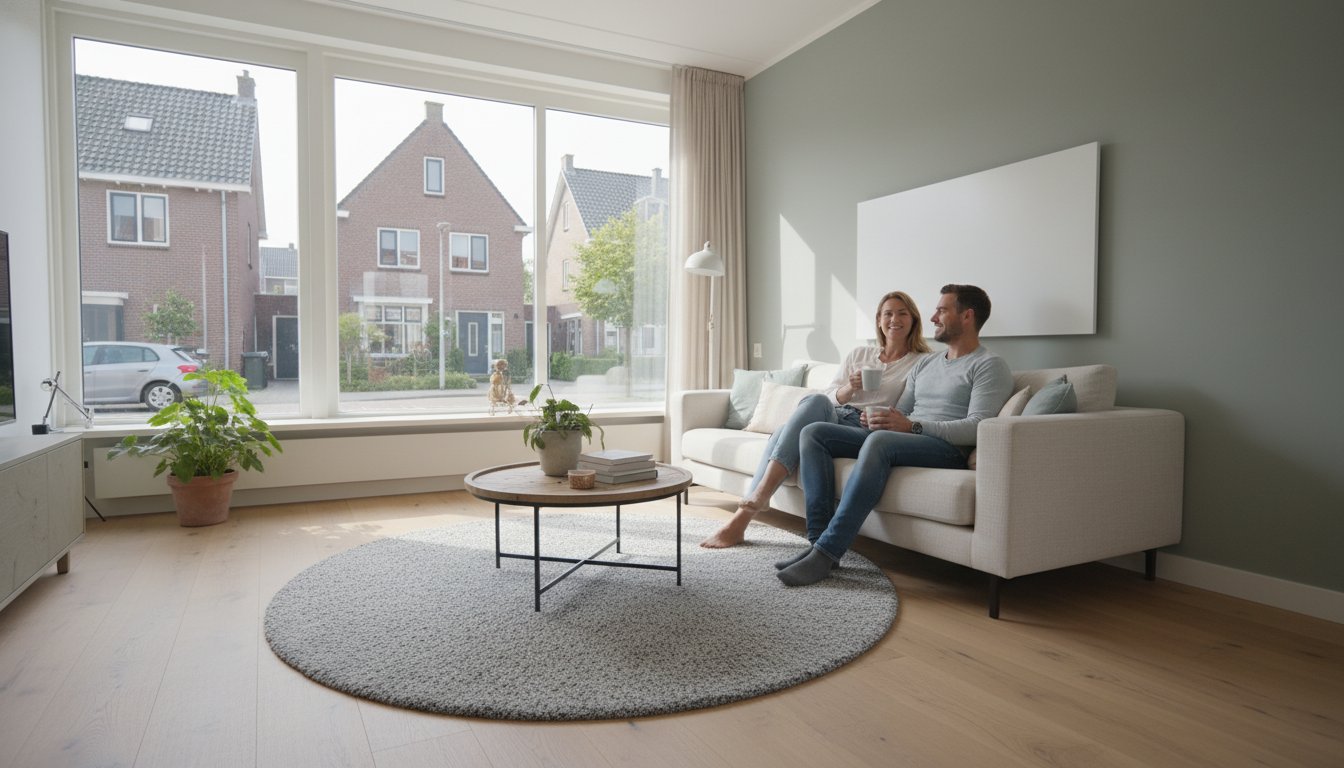
Economical heating starts with how much heat your building and its use actually require. An inexpensive appliance, low wattage or high conversion efficiency alone do not guarantee low costs. This guide compares the factors determining the choice of electric heating and infrared panels.
Assessing economical heating
First reduce heat demand where possible and compare systems for the same desired performance. Distinguish primary heating from local comfort. Include purchase, installation, consumption, maintenance and any connection costs using your own tariffs and building information.
What does economical heating mean?
More economical use can follow from better insulation, fewer unnecessary heating hours and suitable controls. Look at windows, roof, floor, gaps and ventilation before replacing only the appliance. Ventilation remains necessary; the aim is to manage heat loss without worsening indoor conditions.
To operate entirely without gas, assess domestic hot water and cooking alongside space heating. Include the electrical connection and any alterations in the overall plan. Energy prices, contracts and schemes may change; a fixed tax amount or legislative change does not automatically make one technology the cheapest.
Understanding radiant heat and convection
Infrared panels release heat through radiation and convection. People and surfaces within reach can absorb heat directly, while the air also warms. Ordinary radiators likewise release both forms of heat. Convection is not inherently wasteful; usefulness depends on the room and desired result.
With electrical resistance, almost all electricity drawn eventually becomes heat. This does not mean all of it is released as radiation at the front or every kilowatt-hour is useful in the right place. Heat stored in walls and furniture is previously supplied energy, not extra output. A thermal bridge does not disappear when a panel radiates towards it.
When may infrared panels be suitable?
For a temporarily occupied place, targeted radiant warmth may be useful if sufficient heating elsewhere can consequently be switched off. If the existing heating continues unchanged, an extra panel means extra consumption. The whole home requires a heat loss calculation and assessment of a heat pump as an alternative.
A heat pump moves heat and, in suitable conditions, can deliver more heat per kilowatt-hour of electricity than resistance heating. Seasonal performance depends on the installation. Compare total investment and use over an appropriate period; a fixed claim that infrared is cheaper over twenty years is unreliable without a project-specific calculation.
Controls and actual consumption
A compatible thermostat with a well-positioned sensor and suitable schedules can limit unnecessary use. Smart does not automatically mean energy is measured: check whether the displayed figures are measured or estimated. There is no fixed rule that a panel only needs to operate fifteen to twenty minutes per hour.
Assessing economical heating room by room
In the living room, positioning and output must match seating areas and total heat demand. Different times and temperatures may apply to a bedroom. Ceiling mounting is possible only if approved for the model; a panel above the bed is not standard advice for every bedroom.
In a bathroom, zones, product suitability and connection require joint assessment. Heating does not replace moisture removal. Only a specifically suitable version should be used beneath a desk. Industrial workstations have different distances, environmental risks and usage patterns from a home.
Solar panels and the energy balance
Self-generated electricity helps when production and heat demand coincide. High summer generation does not automatically cover a cold winter evening. Assess your contract, export terms and any storage separately. Avoid additional heating simply because electricity is temporarily available; unnecessary consumption is still not a saving.
Our advice on a suitable choice
We help private and business end users, installation companies and wholesalers. Share a floor plan, insulation details and each room’s use. We then discuss panel selection, controls, mounting and the limits of the chosen solution. Available colour or printing options and warranties are checked per version.
Request a comparable complete proposal
A good proposal identifies supplied components, work, consumption assumptions and maintenance. Have simultaneous electrical loads assessed alongside other large appliances; a 3 × 25 amp connection is not automatically sufficient for every home. Check any financial schemes for the actual investment.
Frequently asked questions
How do I calculate running costs?
Multiply kilowatts by actual operating hours at that output. A 600-watt panel running continuously for one hour uses 0.6 kWh. Multiply this by your electricity tariff. Annual consumption requires estimating or measuring total heating time; panel output alone is insufficient.
Are panels maintenance-free and safe to touch?
Low-maintenance does not mean maintenance-free. Follow instructions for cleaning and checking fixings, connections and controls. An operating panel can cause burns; consider children and pets and do not cover it. Mounting and clearances vary by version.