
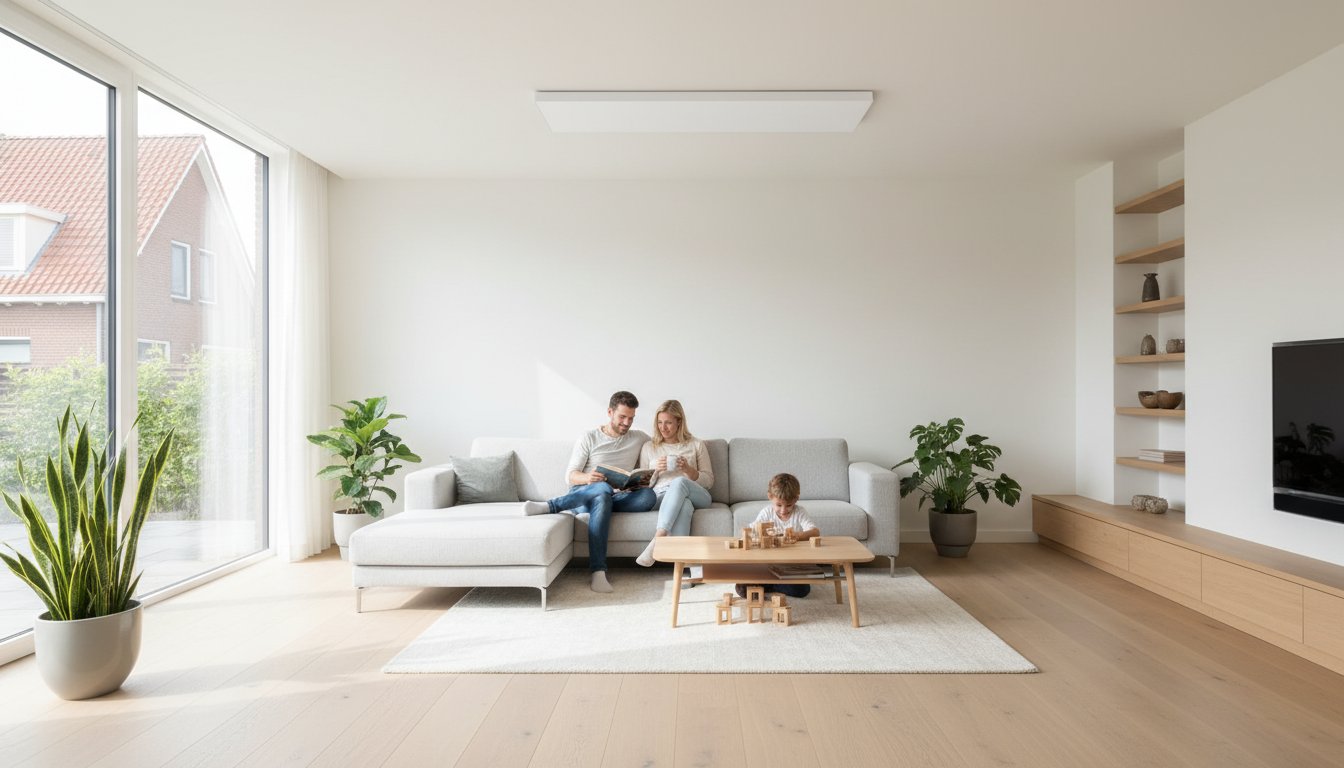
Infrared heating costs involve more than the panel price. Include installation, controls, electricity, maintenance and possible replacement. A monthly estimate or payback period is useful only when its underlying heat demand and usage are clear.
Key considerations
Compare current product prices and an actual installation quotation. Base output and placement on heat loss and comfort needs. Use your own energy tariff and compare complete systems under equivalent conditions, including domestic hot water where relevant.
Which costs should be included?
Allow for panels, thermostats, receivers, fixings, wiring and any electrical upgrades. Accessories are not always included. Wall, ceiling, mirror and picture panels differ in design and price; higher wattage does not automatically mean a proportionally higher price. Request an itemised quotation rather than treating generic price ranges or labour rates as certain.
What affects the investment?
Dimensions, insulation, glazing, ventilation, temperature, operating hours and the chosen heating zone determine demand. Wall strength, cable routes and electrical capacity also affect installation costs. Occasional use does not automatically mean a smaller panel will suffice. Check compatibility with the exact panel and any additional control components or services.
Consumption, savings and efficiency
Electrical output in kW multiplied by actual operating hours gives consumption in kWh; multiply by the applicable tariff for electricity costs. Thermostatic control means the appliance need not run continuously. Resistance heating turns almost all consumed electricity into heat, but that is not a fixed saving. Compare infrared, convection, central heating and heat pumps against the same demand. Savings and emissions also depend on system losses, electricity generation and use.
Practical steps
First describe which rooms and occupied areas need warmth. Collect dimensions, photos or a floor plan and insulation details. Assess main and supplementary heating separately and check the electrical installation. Then select panels, positions and controls, following model requirements. Compare quotations with the same scope. After commissioning, monitor consumption and comfort to adjust settings without assuming a universal temperature schedule.
Our support with selection
We help private and business end users, installers and wholesalers with product information and quotations. We compare suitable designs and clarify what is included. Manufacturing origin, certification, lifespan and warranty must be established from the particular model’s documentation. No universal five-year warranty applies to every product. Read the applicable terms alongside your statutory rights.
Making a complete comparison
Assess costs over the same chosen period and include maintenance, replacement and any standing charges. A gas contract can end only when other gas uses have also been replaced. Solar generation is not sufficient at every heating moment and does not automatically provide free winter heat. Smart controls may reduce unnecessary operating hours but prove neither fixed payback nor that infrared is always cheaper.
Frequently asked questions
What will I pay each month? This depends on actual usage and tariffs, not a generic amount per panel. Will it suit every home? Suitability requires assessment of demand, placement and electrical capacity. Is installation straightforward? That depends on model and site; have fixed wiring and protection professionally assessed. Is ventilation necessary? Yes: heating does not replace ventilation or provide medical treatment. Request advice and a quotation for an informed decision.