
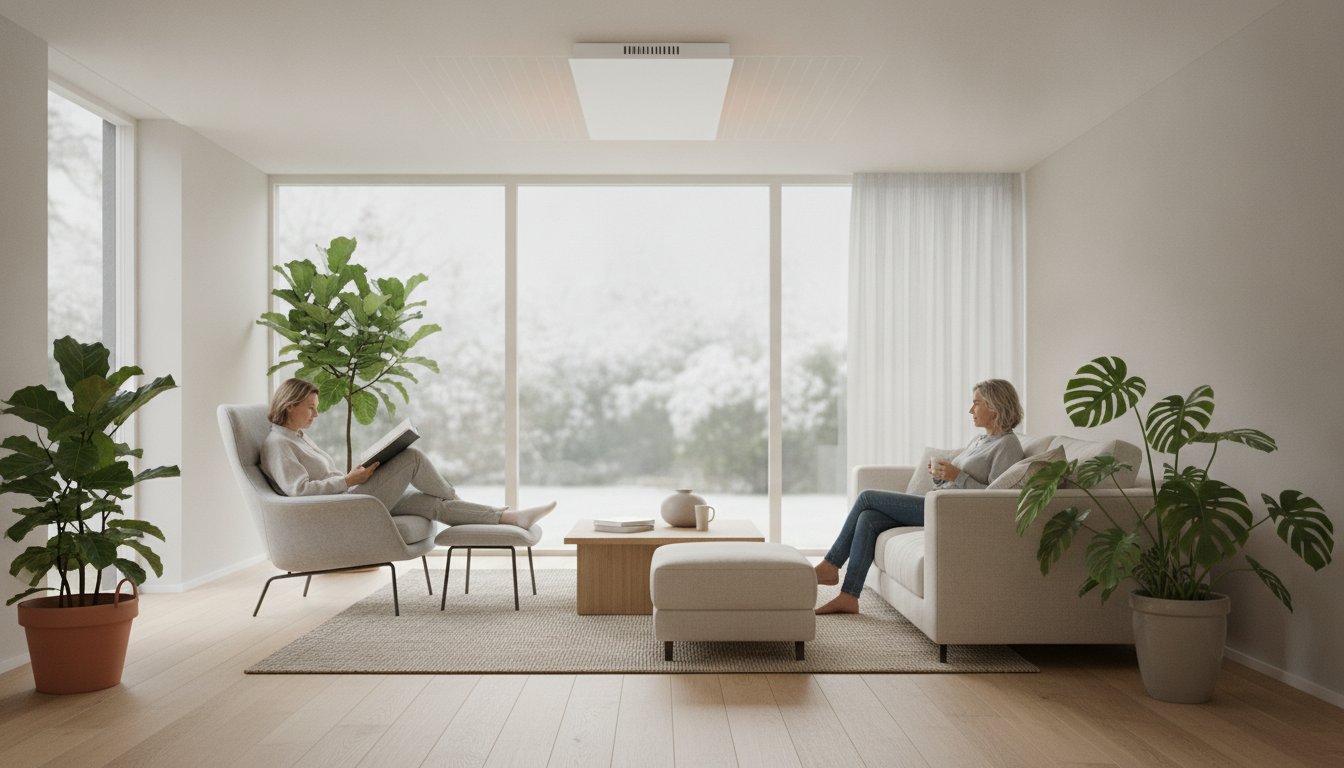
An infrared heating panel is an electric heat source with a heated surface. It may provide local supplementary warmth or form part of a calculated heating system. Whether it is a good choice depends on the room, usage, positioning and alternative costs. The product name alone does not predict savings.
Here we explain operation and the main choices. We advise private and business end users and also supply installers and wholesalers preparing projects.
Key points
Distinguish electrical conversion efficiency, radiant heat fraction and actual energy use. Compare versions using documented properties and assess primary heating with a heat-loss calculation. Material, colour and origin alone do not prove superior performance.
The basics of an infrared heating panel
Electricity heats an element and the panel surface. Energy is released by radiation and convection. People and surfaces absorb some radiation, and the air warms too. A water radiator also releases radiation and convective heat, in proportions depending on design and temperature. This is not an absolute distinction between heating people and heating air.
What efficiency does and does not tell you
With electric resistance appliances, almost all electricity ultimately becomes heat in the room. This also applies to many simple electric heaters. Radiant fraction is a different quantity and needs model-specific measurements. High conversion efficiency therefore does not tell you which system has the lowest running costs. A heat pump can deliver more heat per kWh of electricity.
Walls and furniture already have thermal mass and may release absorbed heat again. This does not prevent losses through ventilation, glazing or external walls. A poorly insulated room still demands substantial heat even when local radiation feels pleasant. Insulation and an appropriate heating plan remain relevant.
When can infrared heating be a suitable choice?
Consider extra warmth at an occupied workstation or a room where fixed pipes are undesirable. For an entire home, consumption and electrical capacity are important considerations. Do not confuse technical suitability with requirements of a particular construction or energy-performance project. Have those conditions assessed separately; the product name alone does not show whether your building project meets those requirements.
Comparing costs without fixed savings promises
Use current energy-contract tariffs, actual operating time and total heating consumption. Lower gas use alone does not mean a lower bill if electricity use rises. Scheduling and zoning may limit unnecessary hours. A fixed two-degree reduction or additional panel output does not guarantee savings.
A heat source does not remove moisture or treat allergies or sleep problems. Ventilation, cleaning and addressing moisture sources remain necessary. Even a fanless panel causes natural convection; dust-free air or elimination of draughts is not a general feature.
Versions for different applications
Metal, glass, printed and mirror panels differ in appearance, weight and construction. Do not choose by material alone: a metal domestic panel is not automatically an impact-resistant industrial appliance. Workshop conditions, dust, moisture and mechanical loads matter. Check custom options, colour and temperature behaviour by model.
A bathroom panel requires assessment of permitted mounting, IP rating and electrical installation together. A heated mirror may mist less locally, which differs from dehumidifying the room. Panels with lighting add a separate light function; check compatibility and independent controls before combining functions.
Installation and output: what matters?
Determine heat loss for complete room heating using construction, glazing, ventilation and desired temperature. Floor area or room function alone does not give a reliable output requirement. A twenty-square-metre room therefore has no fixed wattage answer. Extra capacity does not automatically reduce energy use and may increase connected load.
Wall, ceiling and freestanding mounting have different conditions. Follow only the model’s permitted positions and clearances. Assess obstacles, substrate strength and fixings. Have fixed connections, any earthing requirements and the complete circuit assessed by a competent installer. A general checklist does not replace the wiring diagram.
Controls and checks during use
Choose a thermostat compatible with the electrical system and position the sensor representatively. Check schedules and behaviour after power or connection failures. Account for hot surfaces: do not cover the panel and follow precautions for children and pets. A temperature limiter does not guarantee touch cannot cause burns.
Your heating plan with us
Share photos, a floor plan, insulation data and existing-heating information. We help private and business customers weigh options and coordinate documentation and product selection with installers and wholesalers. We also consider whether local supplementary heat, another system or insulation first better meets the need.
Choose with a complete understanding of the application
A substantiated proposal describes not only the panel but also positioning, controls, expected operating hours and conditions. Ask us for advice or a quote, then compare the complete solution.
Frequently asked questions about infrared heating
Is the radiation always harmless?
A blanket guarantee is inappropriate. Excessive heat exposure can affect skin and eyes, and hot surfaces can burn. Use the specific appliance according to its manual, at the correct distance and duration. Absence of UV alone does not establish unlimited thermal safety.
Is it maintenance-free and usable for life?
No. Follow requirements for cleaning and checking panel, cable, connection and controls. Parts can fail or wear. Expected life, repair options and warranty are different matters to check by model.