
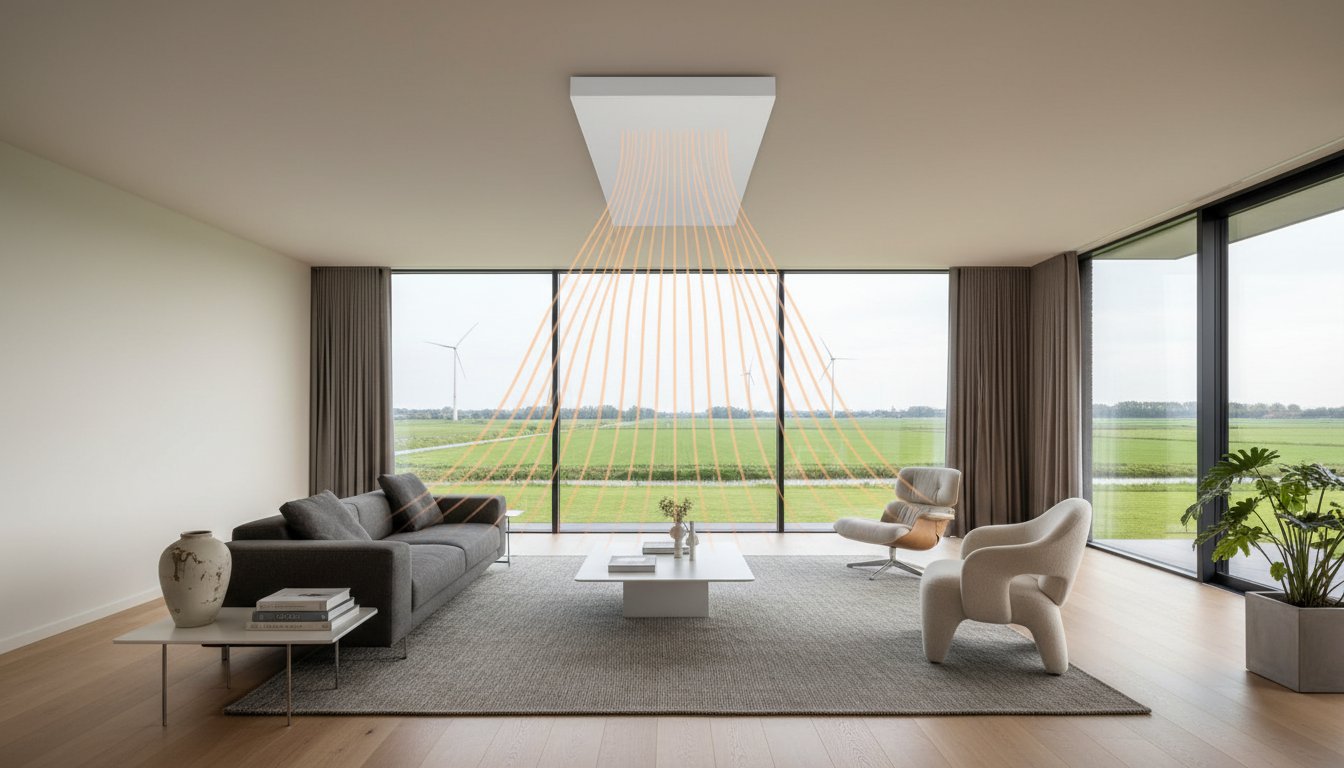
Planning heating panels starts with how each room is used. A product overview helps with finishes and dimensions, but a heating plan must also justify heat loss, positioning and controls. This guide puts the steps in order so you choose a suitable application, not just a panel.
Key points
Separate required power, distribution and consumption. More installed power does not automatically mean less electricity; shorter operating time must always be considered with power. Adding a fixed margin to a rule of thumb is not a heat-loss calculation.
From heat demand to product function
Define whether you need supplementary warmth in one position or main heating. An infrared panel emits radiation and convection heat. It can warm people and surfaces but does not make air dust-free or prevent building heat loss. Main heating also requires ventilation and any replacement of domestic hot-water provision.
Assess specifications for the exact model
Compare power, dimensions, weight, permitted mounting and documentation. There is no general 90°C minimum for a useful panel. Emissivity, radiant fraction and electrical conversion efficiency are different quantities. Use stated model data and measurement methods rather than a material name or country of origin alone.
Compare complete heating options
Assess purchase, mounting, electrical changes, controls, consumption and maintenance for the same heat demand. Heat pumps have different energy performance from resistance heating. A simple panel design therefore does not prove lower lifetime costs. Solar panels also do not generate at every heating moment. Request current project prices rather than using fixed investment or savings figures.
Justify sizing and distribution
Have heat loss and desired temperatures assessed by room. Then map possible wall and ceiling positions, furniture and seating. A fixed mounting height or watts-per-square-metre figure does not suit every model and building. Panel numbers follow both required capacity and suitable distribution, not a standard living-room size.
Design suitable connection and controls
Have capacity and protection assessed for the total electrical load. Thermostat, receiver and panel must be compatible; PID, Wi-Fi or window detection is not universal. Follow mounting, clearance and damp-room instructions. An IP rating alone is not general bathroom approval. Allow for hot surfaces and prevent accidental contact.
From proposal to checked operation
We advise private and business end users, installers and wholesalers. Share photos, a floor plan and usage data. Agree calculation, mounting and connection responsibilities. After commissioning, check comfort and controls and follow maintenance instructions; low maintenance does not mean components never wear.
Read about ceiling heating · View infrared panels · Discuss your heating plan
Frequently asked questions
Will more power warm a room faster? It may, but capacity alone does not predict warm-up time or prove lower total consumption. Starting conditions, heat loss, distribution and controls must also be assessed.