
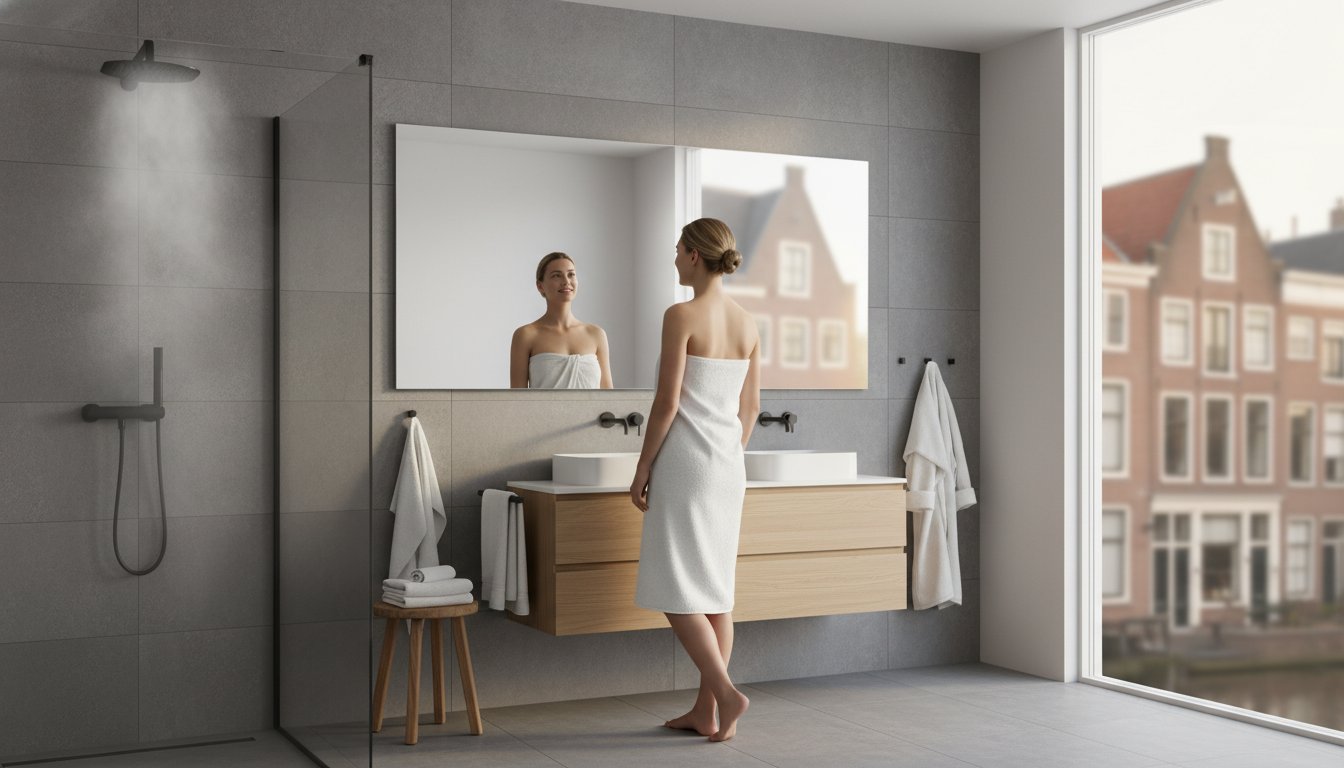
Heating panels for the bathroom are best chosen around your daily routine. Do you want a warm room in the morning, extra warmth at the basin or a heated mirror? These objectives do not always require the same appliance or programme. We cover preparation, installation and everyday use.
Key points
First record the function you need and which existing heating will remain. Have the product and mounting location assessed together. Then plan controls, connection and handover checks to avoid an attractive solution disappointing in daily use.
Matching bathroom heating panels to your routine
A panel releases heat through radiation and convection. Immediate warmth at one location differs from bringing the whole room to temperature. The appliance and cold building elements also need to warm up. Do not assume instant comfort when switching on or the same warm-up time for every bathroom.
Also assess what happens after showering. Sufficient ventilation removes moisture; warmer surfaces can help reduce condensation but do not guarantee prevention of mould. A panel is not a dehumidifier or treatment for health complaints. Persistent moisture requires investigating its cause.
Establish a safe mounting location first
Have a qualified installer assess bathroom layout, zones, water exposure and electrical provision. Current rules and the exact model’s manual together determine suitability. An IP rating, ceiling position or material choice alone does not provide general mounting permission.
In an IP code, the first digit concerns solid particles and the second water. A difference between IP44 and IP54 therefore does not automatically mean different water protection. Also check connection method, required protective devices, access to controls and distances from users and other objects.
Mirror, lighting or bathroom heating alone?
A mirror panel can combine two functions, but ask what output is available for space heating. A small mirror heater against condensation is not the same as primary heating. Reduced misting is possible if the mirror is warm enough; this does not mean every part stays clear in all conditions.
For metal, glass, printing or lighting, compare model data, weight and permitted fixings. A metal panel is not automatically suitable for every ceiling. With combined lighting, check whether both functions work separately and what connection is needed. A towel may be placed on or beside the appliance only when the manufacturer expressly permits it.
Output and controls for your bathroom
A heat loss calculation considers dimensions, insulation, windows, ventilation and desired temperature. A general watts-per-cubic-metre figure does not replace a calculation for your bathroom. State how long the room has to warm up and whether the existing system remains in use. An especially powerful panel does not automatically mean lower total consumption.
Choose the position according to where warmth is wanted and permitted mounting. Furniture, shower screens and towels can restrict radiant coverage. Ceiling mounting is not always best and does not produce the same result as actual underfloor heating. Check the design against the full layout, not just an available wall.
Adjust the programme during initial use
Have the thermostat and any receiver checked for compatibility and load. Position the sensor away from direct radiation, sunlight and other disturbances. Then measure how the bathroom responds and adjust the schedule. An app does not automatically show measured energy; ask whether consumption figures are estimates.
Installation, handover and maintenance
Follow product instructions for fixings, connection, cable routing and protection of the building’s waterproofing. Have fixed electrical work performed by a qualified installer. There is no universal cable type or sealant for every substrate; the actual construction and manual determine the correct solution.
At handover, check controls and switching off, fixings and available documentation. Have operation explained and keep the manual and warranty conditions. Low-maintenance is not maintenance-free: clean after cooling and also check connections and visible damage as instructed.
Our proposal for your bathroom
We help private and business end users, installation companies and wholesalers. Send photos, a floor plan and information about insulation and existing heating. We then discuss a suitable version and what the proposal includes, assessing appearance and technology together.
Frequently asked questions
How do I monitor consumption?
Use a suitable measurement solution for the installation or calculate power in kilowatts multiplied by actual operating hours. An example 800-watt panel uses 0.8 kWh in one hour of continuous operation. Scheduled hours are not always heating hours. Compare at the same temperature and operating conditions.
What attention does the hot surface require?
An operating panel can cause burns. Prevent unintended contact, consider children and vulnerable users, and follow clearances. Overheating protection does not automatically make touching safe. Stop using damaged equipment and have it assessed.