
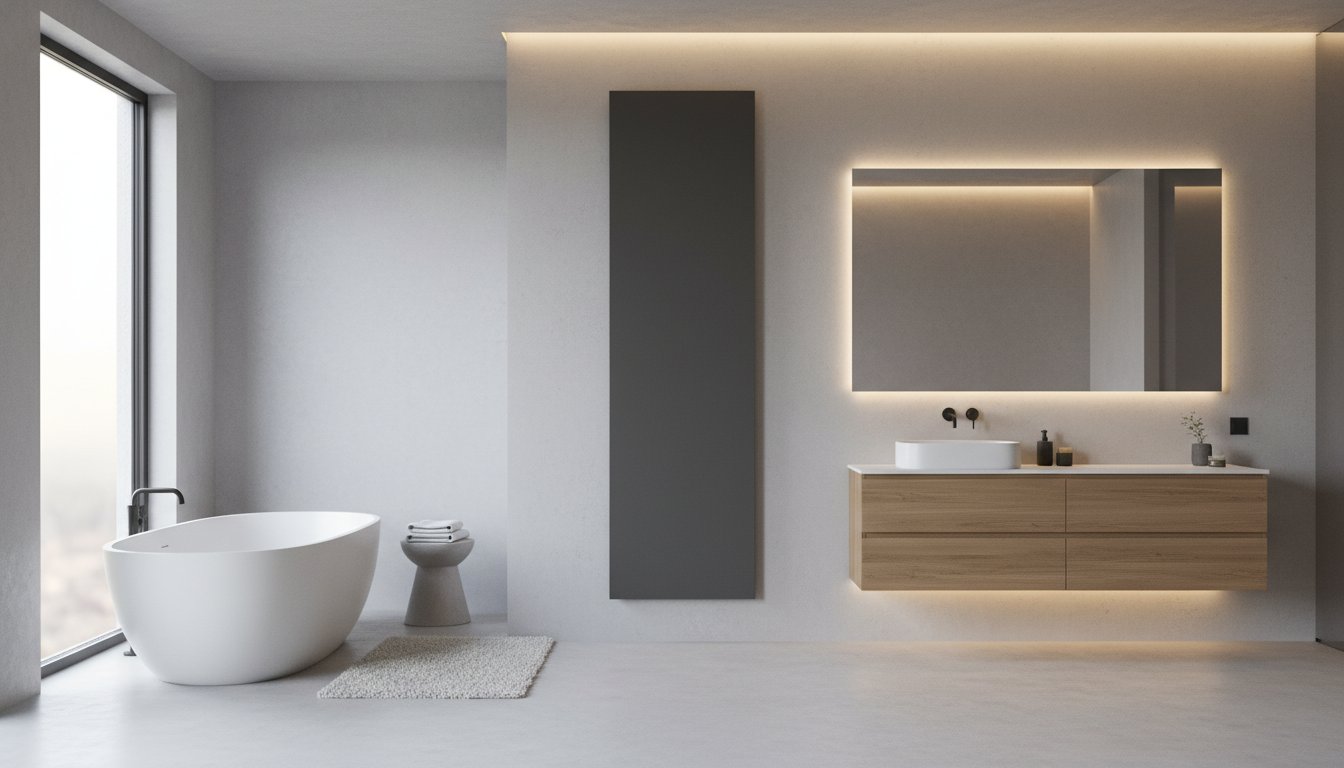
Bathroom wall panels can mean cladding or heating panels. These are different products. This article covers electric infrared heating panels. They do not replace waterproof wall construction, tiles or shower sealing.
Key considerations
Define heat demand and exact location before choosing. Assess approval, zones, IP and supply together. Preserve waterproofing and clearances. A heated mirror or smooth panel does not prove a mould-free bathroom or whole-room heating.
The purpose of a heating panel
Infrared panels emit radiation and convection. Warmth depends on position, power, controls and room conditions. Suitable wall locations may help at a basin or changing position, but not every location is permitted or instantly heats the room.
Metal, glass, mirror and printed finishes offer different appearances and options. Check the actual version. Demisting mirrors are not automatically primary heat. Colours, lights and towel rails must suit the model; do not hang towels over ordinary heating surfaces.
Assessing safety and capacity together
An IP rating describes specific protection tests, not general mounting permission. Have the installer assess layout, zones, approval, connection and protection. Do not use outdated zone names or a fixed 60-centimetre distance as standalone safety rules.
Calculate losses from dimensions, glazing, insulation, exposed surfaces and ventilation. Specify temperature and schedules. Fixed watts-per-area rules or a six-square-metre example cannot design every bathroom. Distinguish local comfort from full-room heat.
Compare heating with heating
Tiles and waterproof cladding are not heater alternatives: they serve different functions. Compare panels with suitable radiators, convectors or floors for equal comfort. Each needs its own mounting and controls. Thin or smooth surfaces do not prove better efficiency or hygiene.
Warmer surfaces may affect condensation, but moisture and ventilation remain important. Panels do not fix leaks, failed sealing or building defects. Keep extraction operating and address persistent mould at its cause. Heating is for comfort, not treatment of health problems.
Preparing wall, fixings and controls
Check support, wall build-up, hidden services and sealing before drilling. Existing tiles do not prove easy fixing. Specify suitable fixings and any waterproof-layer repair. Follow model clearances and orientation; eye level or a fixed angle is not a universal rule.
Check supply and total load. Choose compatible controls and representative sensor placement. Verify smart-home functions for the combination and adjust schedules after commissioning. An app or fixed temperature schedule does not guarantee comfort or savings.
Our advice for your wall panel
We help private and business end users, installers and wholesalers. Share plans, wall photos, insulation and supply data. We discuss versions and missing information. Finish, customisation and warranty vary by product and location.
Completing a bathroom plan
List product, fixings, controls and electrical work separately. Check operation and documents at handover and retain service access. Low maintenance needs instructed cleaning and checks. Compare energy for the same task without fixed savings or twenty trouble-free years.
Frequently asked questions
Can the panel waterproof a shower wall?
No. Heating panels do not replace purpose-designed waterproof construction. Plan sealing and electrical mounting separately and have both correctly executed. Product approval and the complete installation determine placement suitability.