
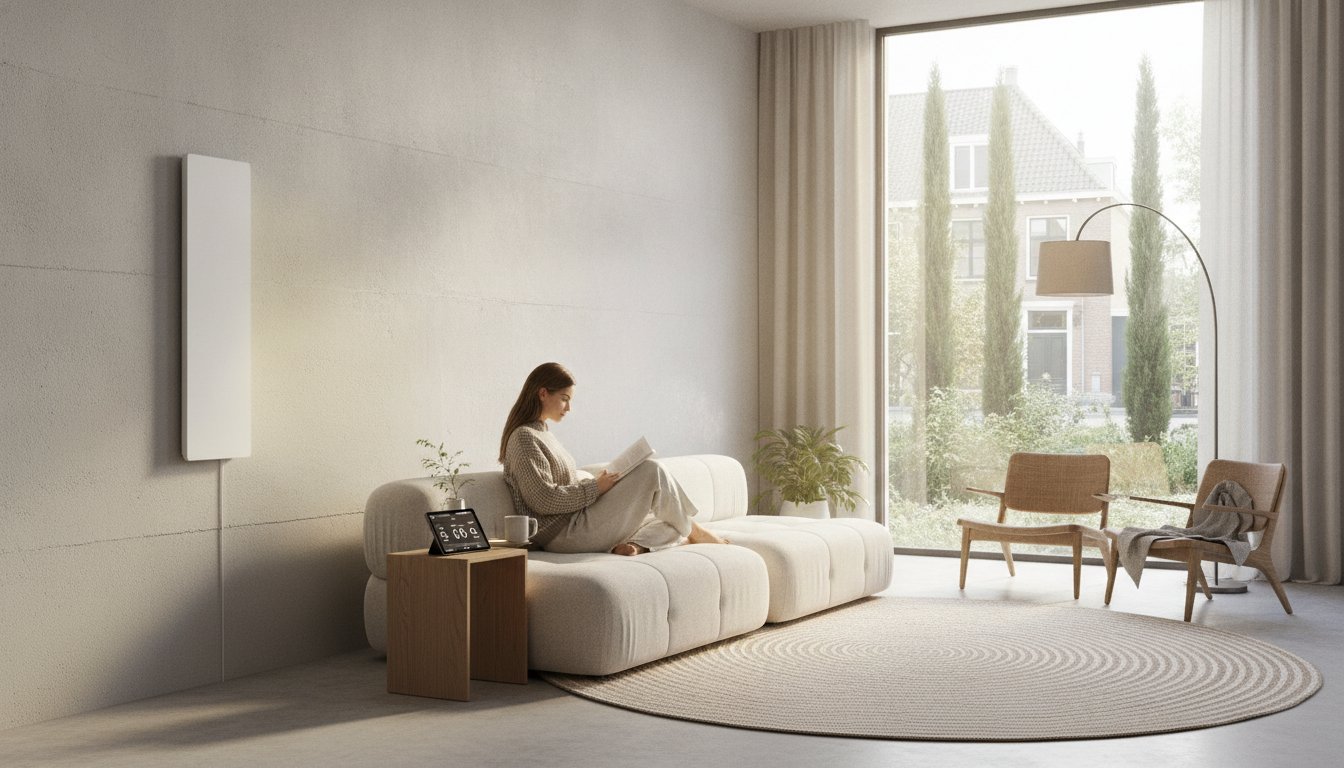
Searching for heating plates can reveal different products: water-fed panel radiators, electric convection panels or infrared panels. The name alone does not explain operation. This guide first identifies the product category, then compares heat emission, mounting and running costs.
Key points
Check energy source, output and controls before comparison. A thin panel is not automatically more efficient than a radiator. Assess the complete installation and intended comfort. Select design options within a suitable application and retain hot-surface and clearance requirements.
Which heating panel do you mean?
Water-fed radiators receive heat from a boiler or other source. Electric panels generate heat using electricity locally. Both can emit radiation and convection. For existing radiators, check output and water temperature: a heat pump does not automatically require replacing every radiator.
Understand heat emission and comfort
Infrared panels emit part of their heat as radiation to people and surfaces within reach, while air also warms. Furniture can intercept direct radiation. Distribution also depends on room, placement and controls; no panel guarantees instant comfort in every corner.
Walls and furniture absorb and release energy. This is no extra source and does not independently solve damp. Ventilation remains necessary and there are no general guarantees against dust, dry air or health complaints.
Compare radiators and panels at system level
Compare purchase, mounting, controls, maintenance and energy at equal use and comfort. Direct resistance converts electricity largely to heat; heat pumps add environmental heat and may need less electricity for equal delivery. Faster warm-up or fewer parts does not prove energy costs are offset.
Targeted radiation may suit a workplace. Count extra electricity and genuinely avoided main heating together. Whole homes need room-by-room heat-loss assessment. Fixed watts per m² or m³ do not replace insulation, ventilation and use assessment.
Plan mounting and controls first
Choose an approved wall or ceiling position with support and clearances. Check furniture, curtains, lights and hidden services. Brackets and fixings must suit weight and substrate. Have fixed connections or electrical changes competently assessed.
Check thermostat, receiver and switching capacity. Wi-Fi may ease operation but does not automatically measure energy. Bathrooms also need exact position, water exposure and protection assessed; an IP code alone is insufficient.
Our help with design and product selection
We supply private and business end users, installers and wholesalers. Share photographs, dimensions and use for advice. Metal, glass, mirrors and printed panels offer different looks. RAL colours, images and mounting vary by model.
Ask for model data, warranty and parts rather than inferring quality from origin or price. Heated mirrors can limit condensation on warm areas but cannot solve all moisture problems. Low maintenance still requires cleaning and checks as instructed.
A choice based on clear information
Ask for the complete configuration: appliance, controls, fixings and work. Calculate kW times on-hours with your tariff. Solar can cover simultaneous use but does not automatically make heating free or cheaper than all alternatives.
Heating panel questions
Can furniture stand in front of a panel?
Always follow clearances. Furniture can intercept radiation and overheat. Room heat distribution changes; extra output cannot fix unsafe or obstructed positioning.
How long does a panel last and is touching safe?
Life and warranty vary with model, use and surroundings. No pump does not mean elements, connections or controls never fail. Hot fronts can burn; prevent contact and keep children and pets safely positioned as instructed.