
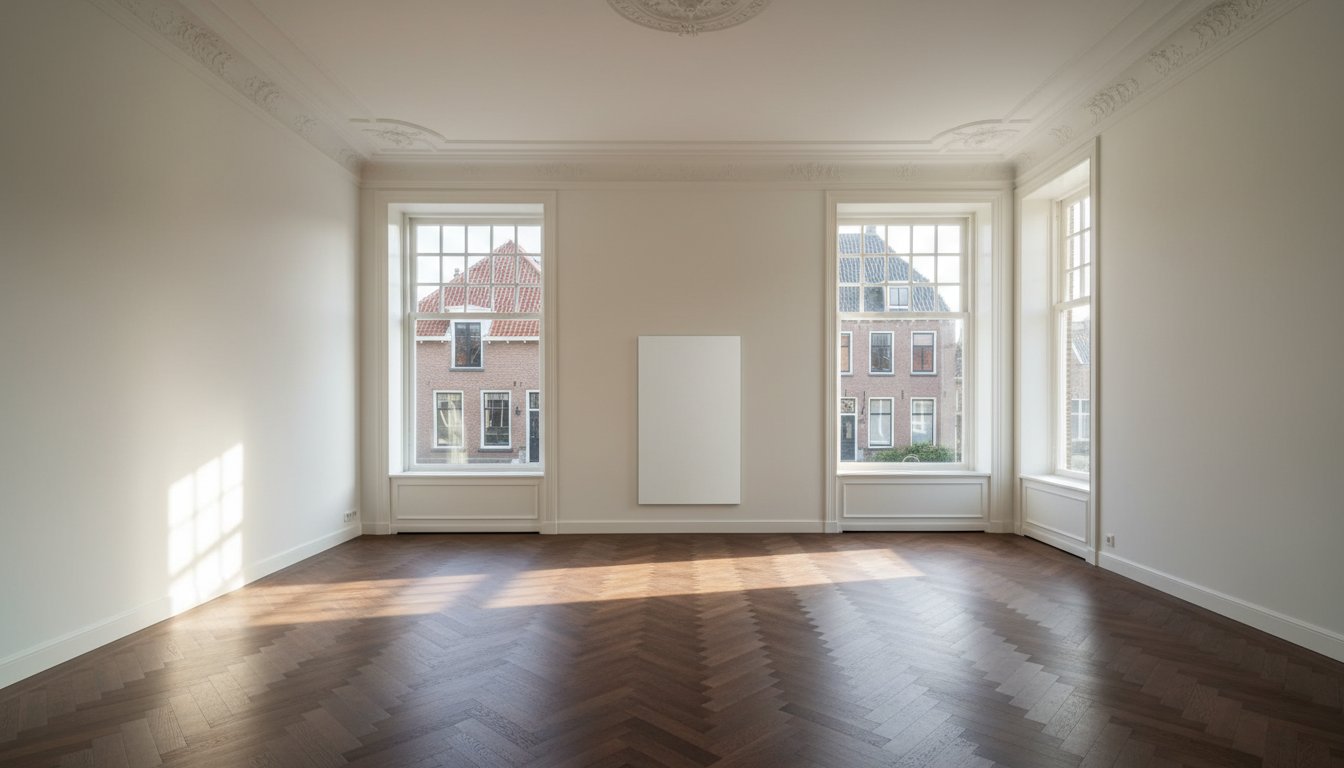
Heating a listed building involves comfort and historic materials. Electric panels can sometimes reduce new heating pipework, but do not automatically mean work without damage or intervention. Fixings, power cables and heat exposure must suit the building. Start with a joint heritage, installation and use plan.
Key points
Identify protected or vulnerable elements and work requiring prior consent. Assess mounting, electrics and material effects before ordering. Wireless control does not replace power wiring. Panels guarantee neither low costs, dry masonry nor preservation of art and antiques.
Survey building and heritage significance
Map ornaments, floors, finishes, panelling and existing services. With a specialist, identify suitable fixings and cable routes. Small drill holes may matter in protected materials. Screw fixing alone does not make an intervention fully reversible.
Check required permission and documentation with the competent authority and heritage adviser. Do not assume electric heating is always exempt or alternatives prohibited. Building status and the actual work determine the assessment.
When may infrared be an option?
A panel may provide local seating or workplace warmth where radiation reaches users. It also produces convection. High ceilings, draughts and limited insulation still affect losses and comfort. Primary heating requires full-demand assessment; a local warm sensation is insufficient proof.
Assess direct heating of art, wood, plaster and sensitive materials. Radiation does not automatically dry masonry cores or guarantee protection against condensation or mould. Investigate moisture sources. Coordinate ventilation and conservation requirements rather than assuming unrestricted heating or cooling.
Compare alternatives by total intervention
Compare improved existing heating, panels, heat-pump options and floor systems against the same demand. Include works, electricity, output, noise, space and heritage effects. Heat-pump suitability depends on the design and building; listed status does not universally rule it out.
For floor systems, include insulation, protection and finish in the complete build-up. One film’s thickness does not establish total height or suitability under historic parquet. Assess temperatures and construction. A ceiling panel can also warm flooring and does not automatically prevent wood movement.
Compare equipment, works, electricity, controls, inspection and replacement over the same period. Short mounting time or an existing socket does not guarantee low total costs. Electric heating is not automatically carbon-neutral, and solar electricity does not always make heat free.
Appearance, position and cable route
Assess visibility from normal viewpoints and where warmth is needed. Colour, print or mirror finishes may help but depend on model options. Do not casually cover historic finishes or apply an unapproved coating to a heater.
Wall and ceiling mounting need strength, clearance and approved fixings. Avoid ornaments and retain maintenance access. Wireless thermostats may reduce signal cables, but panels and receivers still need suitable power. Assess cable routes before choosing positions.
From survey to coordinated planning
Determine schedules, temperatures, losses and material sensitivity by room. Calculate electrical capacity and expansion alongside other loads. A standard supply or extra circuit is not adequate for every building. Record permissions, responsibilities and advice scope.
We advise private and business end users and support installers and wholesalers. Share building data, photos, heating positions and heritage constraints. We discuss available models; final permissions and historic material assessments remain part of specialist project work.
Test in stages and manage carefully
Test a representative arrangement and monitor comfort, energy and agreed material and climate conditions. A short trial in one room does not prove whole-building suitability. Record settings, checks and responsibilities and reassess changes. Keep intervention records.
Listed building questions
Can it really be installed without demolition?
Sometimes a careful arrangement uses existing routes and limits intervention. Fixings, safe power and adaptations may still need work. Specify affected surfaces, protection and reinstatement beforehand. Installation-day estimates make sense only after preparation.
Is funding or support available?
Assess current schemes for the measure, owner and listed status. Heritage renovation support does not mean every panel is funded. Include assistance only once eligibility and application timing are clear.