
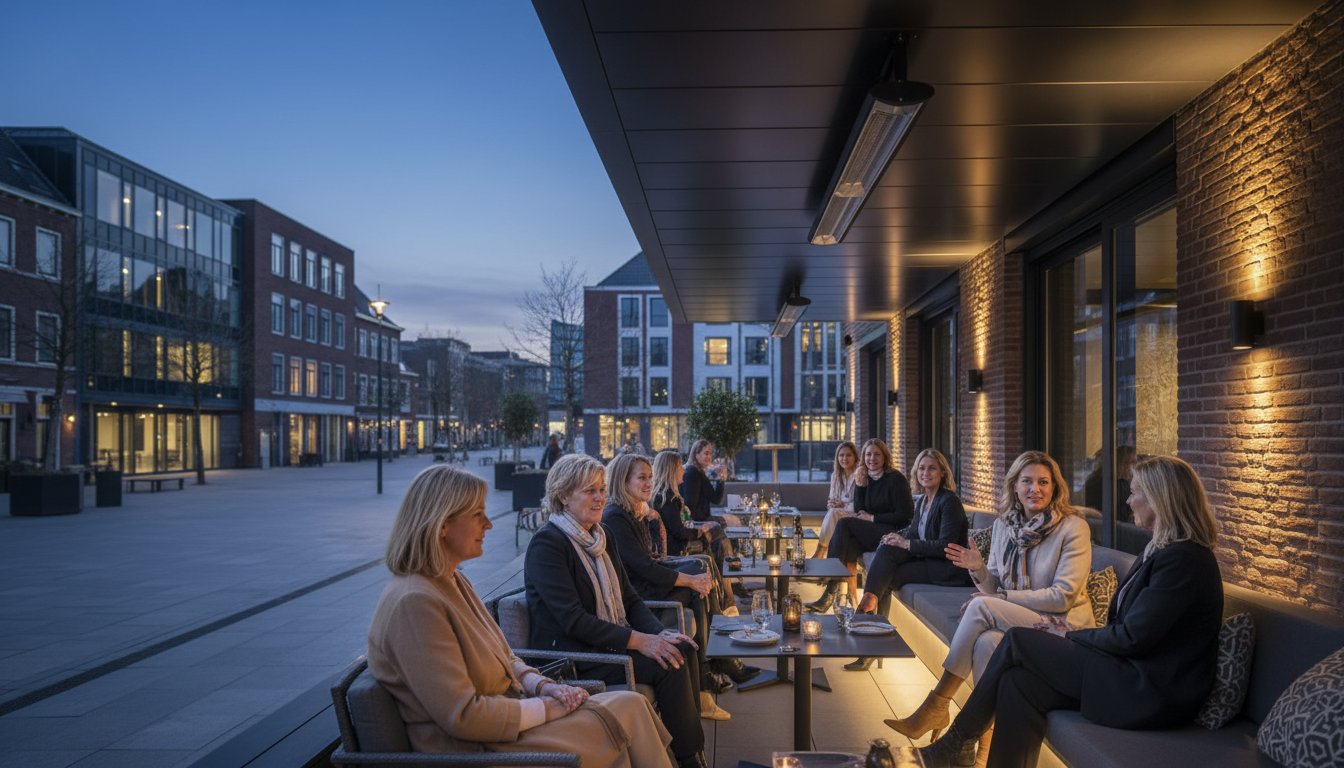
Dark heater generally describes a radiant appliance without a conspicuously glowing element. Heatstrip is also a brand name and is sometimes loosely used as a generic term. The name alone establishes neither suitability nor warmth at a particular seat.
Key considerations
Compare exact models, intended use, mounting, visible light, controls and permitted environmental conditions. Distinguish low-glare lamp heaters from heated-surface appliances. Ask for product data rather than inferring output or efficiency from a slim black appearance.
What the names mean
A product category and a brand are not mutually exclusive technologies. The same marketing term may cover different designs. Not every infrared heater visibly glows, and dark heaters do not all share construction, spectral output or applications. Check the actual model before drawing conclusions about light, warm-up and suitability.
Radiation, convection and efficiency
Heated surfaces radiate and also transfer heat to surrounding air. Spectral distribution depends partly on temperature and material; do not label all output exclusively IR-C without model evidence. Conversion into heat differs from radiant fraction and comfort at the seat. Long-wave warmth proves neither deep tissue heating nor health benefits. Wind can increase appliance cooling and heat loss from people; radiation is not simply blown away.
Compare models fairly
Assess dimensions, weight, surface temperature, housing, corrosion resistance and permitted mounting from documentation. Slimmer does not automatically mean more efficient or durable. No universal warm-up, lifespan or warranty applies. Recessed, suspended and wall installation require approved accessories and specified clearances. Concealed installation must not compromise cooling or fire safety.
Matching the application
A sheltered seating area differs from an open terrace, conservatory or industrial hall. Wind, height, distance, operating hours and occupancy affect results. Indoor or bathroom panels are not automatically terrace heaters, and powerful outdoor heaters are not necessarily suitable for living rooms. Zone heating in a hall may be useful but needs its own design. Calculate output for the situation rather than applying universal watts per terrace area.
Our advice for your project
We support private and business end users, installers and wholesalers with selection and quotations. Share photos, dimensions, shelter, mounting surfaces and occupied areas. We compare documented designs and check supported controls. Mention of a brand does not establish that we stock it; confirm supply and the exact version.
Safe, purposeful operation
Follow model instructions for height, distance, angle and combustible materials. Assess outdoor approval, moisture, corrosion and electrics together; an IP code is not blanket permission for direct rain or every outdoor arrangement. Have fixed wiring and loads assessed. Compare consumption using actual operation and tariffs. Lightless heaters can still have hot surfaces. Follow cleaning and inspection instructions; low maintenance does not mean no wear.
Frequently asked questions
Does a dark heater provide immediate warmth? Warm-up depends on the model. How high should it hang? Only approved positioning and a heating plan establish a useful answer. Does it work in wind? Assess exposure and the desired comfort zone without assuming performance at every wind speed. Is it cheaper than gas? Compare investment, consumption, tariffs, hours and maintenance; no fixed saving applies. Solar electricity does not automatically make heating free.