
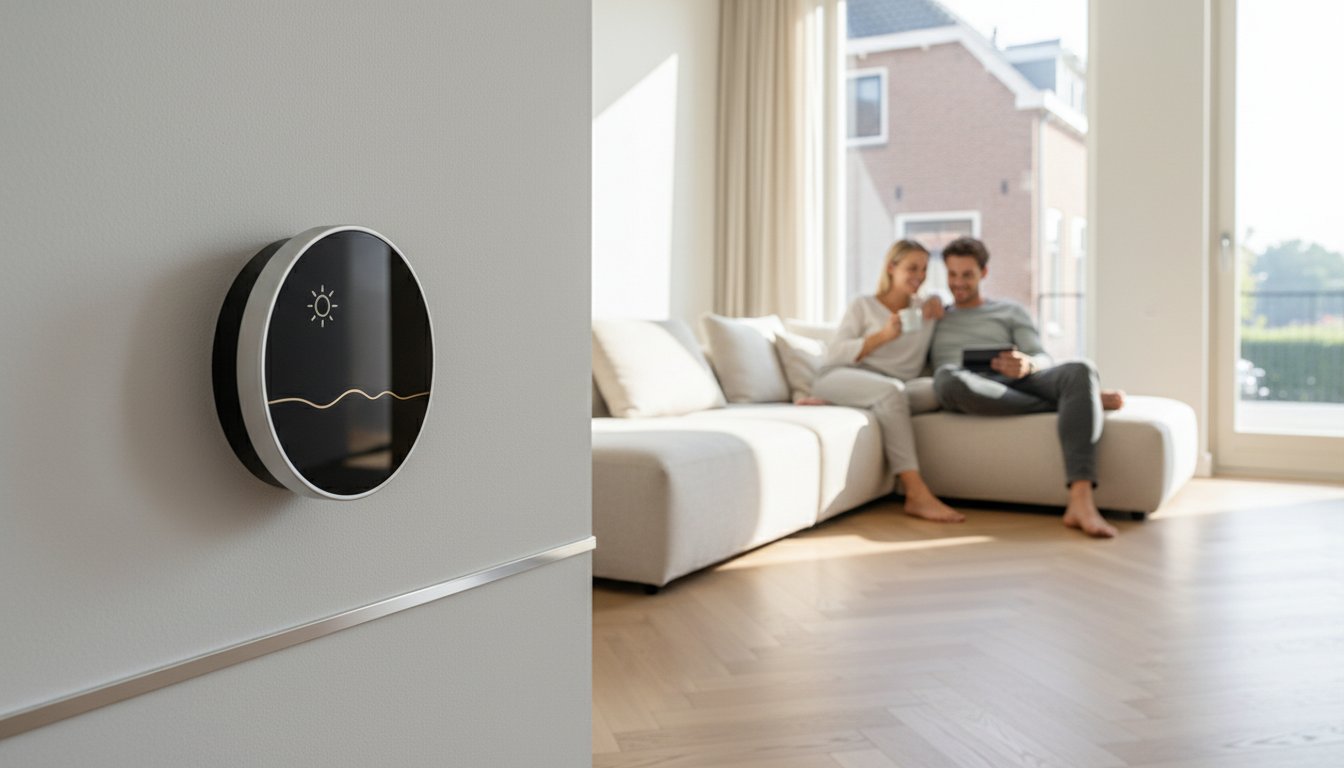
An electric underfloor heating thermostat must suit the heater, sensors, floor construction and electrical installation. Do not choose on appearance or Wi-Fi alone. An unsuitable combination may measure incorrectly or omit necessary temperature limits. Manuals for all components define the requirements.
Key considerations
Check switching load, supply, sensor type, control mode and permitted floor limits. Establish the functions needed and supplied components. No universal maximum floor area or schedule suits every installation.
The role of controls
A thermostat may regulate demand and use an approved floor sensor to enforce a required limit. Not every controller does both or monitors the entire floor condition. Electric heating can respond slowly because of floor construction; water-based heating is not controlled by thermal inertia alone. PID, on/off, hysteresis and adaptive start are distinct properties. Smart branding establishes neither higher conversion efficiency nor fixed savings.
Check loads and sensors
Have permitted loading assessed for the actual controller, connection and environment. Generic 16 A or 3680 W values do not establish a safe installation or universal floor area. External switching equipment must be supported and appropriately designed. For NTC sensors, check nominal resistance and the temperature characteristic; matching resistance at one point does not establish full compatibility. Floor limits come from system and flooring manufacturers, not a universal 28-degree rule.
Wi-Fi, schedules or simple operation?
Weekly schedules may suit regular use; simple operation may suffice elsewhere if required protection remains effective. Wi-Fi may enable remote control, but integrations, accounts, internet dependence and offline operation vary. Displayed consumption is not always measured energy. Open-window detection may recognise temperature changes without detecting every open window. Adaptive start estimates a start time and does not guarantee the exact temperature at every target time.
Installation and sensor placement
Follow the prescribed layout and wiring plan for sensors, any conduit and temperature limits. Keep room sensing clear of inappropriate sunlight, draughts or other heat sources. No universal mounting height or bathroom zone suits every thermostat. Have location, IP protection and electrical safeguards assessed together. A separate circuit follows from the installation assessment, not solely a generic wattage threshold. Have fixed connections, settings and operation competently checked and tested.
Our help with compatibility
We support private and business end users, installers and wholesalers with selection and quotations. Share heater and thermostat models, sensor information, flooring and total load. Confirm supplied components, compatibility, documents and warranty before replacement. Combining floor heating and infrared panels needs coordinated controls and does not automatically save energy. Origin or testing claims require evidence for the actual model.
Monitor operation and costs
Match schedules to actual occupancy and floor response rather than universal setback or comfort temperatures. Maintain required floor limits. Scheduling may reduce unnecessary operating time but proves no payback within 24 to 36 months. Check operation and use as the manual requires. Do not open electrical parts yourself when moisture, damage, smells or faults occur.
Frequently asked questions
Can a central-heating thermostat be used? Only when the complete switching and limiting arrangement is demonstrably suitable; never connect an unknown controller directly. What if the sensor fails? Switch off and have sensor, connections and settings checked. Do not bypass required floor protection by selecting room sensing alone. Can it run without a thermostat? Use only manufacturer-approved controls and protection; unrestricted direct power is no substitute. Seek advice if model data is missing.