
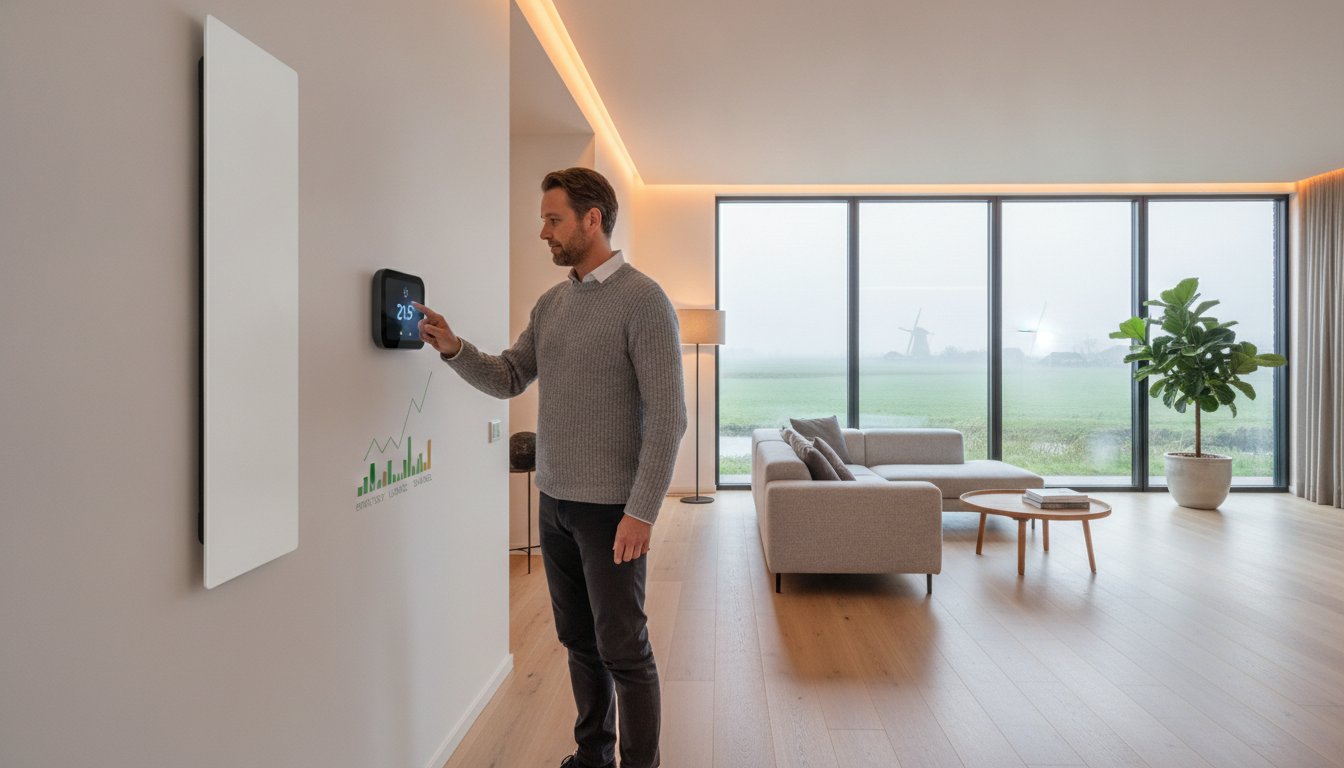
A thermostat for electric heating must match both the heater and its electrical connection. Not every controller switches the appliance directly; some command a separate receiver or switching device. This guide assesses sensing, communication, switching load and settings as one system.
Key points
Check wiring diagrams and permitted loads for every component. Boiler controls cannot be applied to an electric heater without assessment. Position sensors representatively, select floor limits where required and test operation. Smart functions neither guarantee savings nor replace safe installation.
Measure, decide and switch
The sensor measures temperature. The controller compares it with settings and commands a contact, receiver or suitable output. Output type, supply voltage and load rating vary. Not every thermostat carries the heater’s full current, and boiler thermostats do not all use the same signal.
A room sensor should represent its zone. Draughts, sun, hot appliances and direct radiation can affect readings. Follow model location instructions rather than one universal height. A warm sensor can stop heating while other areas remain cold.
Hysteresis and control behaviour
Hysteresis is the difference between switching points around a setting. Some controls use other or additional algorithms. Match settings to appliance, relay and thermal delay. Small hysteresis or PID does not automatically guarantee less use or no overshoot. Adjust as instructed.
Wired, RF, Wi-Fi, recessed or surface-mounted
Wired control needs suitable wiring and connections. RF links transmitter and receiver wirelessly; check compatibility and real-site range. Concrete and metal may reduce reception. Test signal loss, low batteries and restart after power failure too.
Wi-Fi may enable apps, sometimes using accounts or cloud services. Check network requirements and local operation without internet. Not every app measures kWh; estimates differ from meters. Recessed and surface controls also differ in space and wiring needs.
Panels and floors need suitable controls
For panels, use the actual model’s response; not every model warms instantly. Floors depend on their full build-up. Use required sensors and limiting functions and check sensor type. Maximum temperature follows system and finish, not universal wood or tile limits.
Combined air and floor control may regulate the room while limiting the floor if designed for it. Faulty or misconfigured sensors cannot provide reliable limits. Check settings and missing-sensor fault behaviour.
Check rated switching load, load type and manual restrictions. Not every controller is intended for 16 A or continuous maximum load. A suitable switching device may form part of a design but needs assessment with wiring, protection and circuits.
Install and test according to the design
Have fixed wiring, installation changes and load uncertainties competently assessed. Cable size, protection and connection materials follow the design and manufacturer instructions. One universal cable size or simple voltage pen is not a complete safety procedure.
For bathrooms, zone, location, water exposure and the whole electrical system matter together. An IP44 controller or transmitter outside is not automatically correct. Follow and assess the specific thermostat, sensor and receiver application.
Pair wireless components by their own procedure and test in final locations. Check manual switching, schedule, time zone and recovery after outages. Change measurement offsets only as instructed after checking location and a suitable reference reading.
Schedule for use, not fixed savings rules
Match schedules to occupancy and warm-up time. Constant 14–16°C is not always cheaper than setback or switching off. Consider comfort, damp and frost. Adaptive start and window detection vary and need checking; they do not replace ventilation.
Our advice on the right combination
We help private and business end users, installers and wholesalers. Send heater brand, model, number and output, existing wiring and intended zones. We advise on components. Inclusion in our range does not mean compatibility with every other product without checking.
A complete and checkable control plan
Record thermostat, receiver, sensors and switching devices used together. Keep settings and documentation for service. Check batteries, faults and warranty too. Reliable control comes from suitable components and correct installation, not a promise that smart technology never fails.
Thermostat questions
Can one controller operate several heaters?
Only with a designed and assessed combination. Add loads and check every component, connection and protection. A receiver or relay does not automatically increase the supply circuit’s permitted load. Ask before adding appliances.
How much does a smart thermostat save?
It depends on previous operation, building, settings and genuinely avoided hours. Controls do not change insulation. Measure under comparable conditions and assess comfort and kWh together. No fixed percentage applies to every installation.