
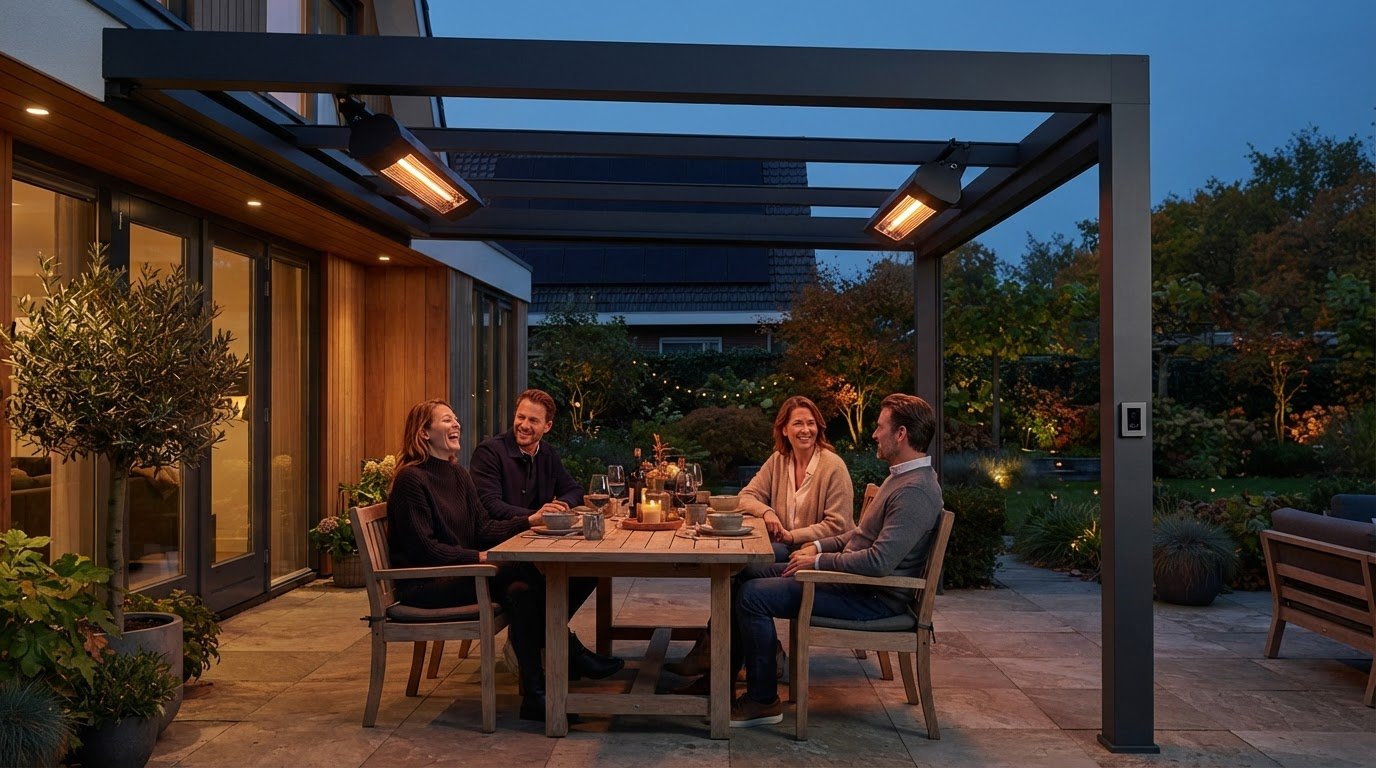
Heating a terrace differs from heating a living room. Start with the seats you want to use, shelter and available mounting points. Then choose suitable electric terrace heating. Adding power alone cannot solve poor positioning or a very exposed terrace.
Key points
Plan separate occupied zones, compare the selected heater’s heat distribution and check its manual for outdoor use, clearances and electrical connection. Wind still affects comfort. Consumption and costs depend on power, settings and operating time.
Electric terrace heating: planning targeted comfort
Electric infrared heaters transfer energy by radiation to people and surfaces within reach. They also release heat into the surrounding air. Outdoors, heating an occupied seating area is generally more useful than trying to bring the entire outdoor space to indoor temperature.
Electricity or gas: compare the complete situation
An electric heater produces no combustion gases on the terrace during normal operation. This does not mean zero energy use or climate impact. Compare purchase cost, electricity or fuel price, maintenance, operating hours and achieved comfort. Electricity is not cheaper than gas in every situation.
Solar panels can generate part of the electricity needed. Electricity generated during the day is not automatically available in the evening: simultaneous consumption, storage or grid supply matter. Outdoor heating remains an additional energy demand; targeted, limited use reduces it.
Infrared technology and outdoor comfort
Wavelength alone does not determine how warmth feels. The element, reflector, distance, mounting angle, clothing and outdoor temperature also matter. Use the manufacturer’s product data and coverage diagram to assess suitability for your seating area.
Radiation is not carried away by wind in the same way as warm air. However, wind can cool people and heated surfaces more strongly, reducing comfort. A short-wave heater is therefore not immune to wind. Shelter, coverage and positioning remain important for every type.
Protection against water and dust
An IP code describes tested protection against ingress of solids and water. It is not blanket approval for every outdoor location. IP65 and IP67 use different water tests and are not interchangeable. Check permitted exposure, mounting position and connection in the manual. Appliance protection does not replace a suitable electrical installation.
Comparing types of electric terrace heaters
Dark radiant heaters and heatstrips
Dark radiant heaters emit little or no visible light and can suit a discreet design. They provide both radiant and convective heat; they are not simply air heaters. Suitability for an open or sheltered terrace depends on the model. Allow for warm-up time and the manufacturer’s specified mounting range.
Heaters with a visibly glowing element
Lamp heaters vary in light colour, visible output, start-up behaviour and heat distribution. The terms carbon, halogen or quartz alone do not establish all performance characteristics or one fixed wavelength. Low Glare means reduced visible light for a particular version, not necessarily invisible operation. Compare specific models and dimming options.
Planning and installation: from layout to heated zone
1. Define use and shelter
Mark seating and standing positions on a sketch, how many places are occupied together and which sides are open. Also record intended seasons, obstacles and materials such as awnings, parasols and glass. A 15 m² terrace does not automatically require one fixed wattage: the occupied area may be smaller and conditions vary considerably.
2. Check coverage, clearances and mounting
Use the mounting height, permitted angle and safety clearances specified for the selected heater. There is no universal ideal height or angle. Check the supporting structure and distances to head level, combustible materials and moving parts. Do not place a heater behind glass or an obstacle assuming the same heat will reach the seating area.
3. Coordinate connection and controls
Have the existing electrical installation assessed for total load and any simultaneous use of other appliances. Starting currents, protective devices, residual-current protection, cables and outdoor sockets require case-by-case assessment. Suitable protection and wiring follow from that assessment and the appliance instructions. Fixed connections and installation changes require a competent installer.
Zone controls, timers or suitable dimmers can reduce unnecessary operating hours. Check heater and control compatibility; not every heater is dimmable. A motion sensor may fail to detect seated guests. Choose controls suited to actual use and make switching off easy.
Our advice for domestic and commercial terraces
We help private and business end users, installers and wholesalers choose electric terrace heating. Send photographs, dimensions, mounting heights and details of shelter. This helps us advise on heater selection, positioning and controls.
For hospitality terraces, changing occupancy, accessible controls and staff operation also matter. A smaller separate heated zone may suit a domestic canopy. We tailor proposals to the application; an offer does not guarantee a fixed outdoor temperature or savings.
A suitable plan for outdoor heating
Do not choose solely by wattage, appearance or a general coverage claim. Combine a suitable heater with shelter, safe mounting and controls matching the occupied zone. Ask us for advice before ordering if conditions or the electrical connection remain unclear.
Frequently asked questions
How do I calculate electricity use?
Multiply actual power in kW by operating hours. A heater using 2 kW continuously for one hour consumes 2 kWh. Multiply by your electricity tariff for energy cost. Dimming or intermittent use changes consumption and must be assessed at the actual setting.
Can a heater be exposed to rain?
Only if the manufacturer permits that application and mounting position and the complete connection is suitable. Do not assess the IP number alone. Connectors, cable entries, any canopy and maintenance instructions also matter.
How long does an element last?
This varies by model, use and conditions. Do not treat a stated operating-hour rating as a guarantee of a fixed number of years. Check whether the element is replaceable, which parts are available and who may replace it. Follow cleaning and inspection instructions even for a low-maintenance heater.