
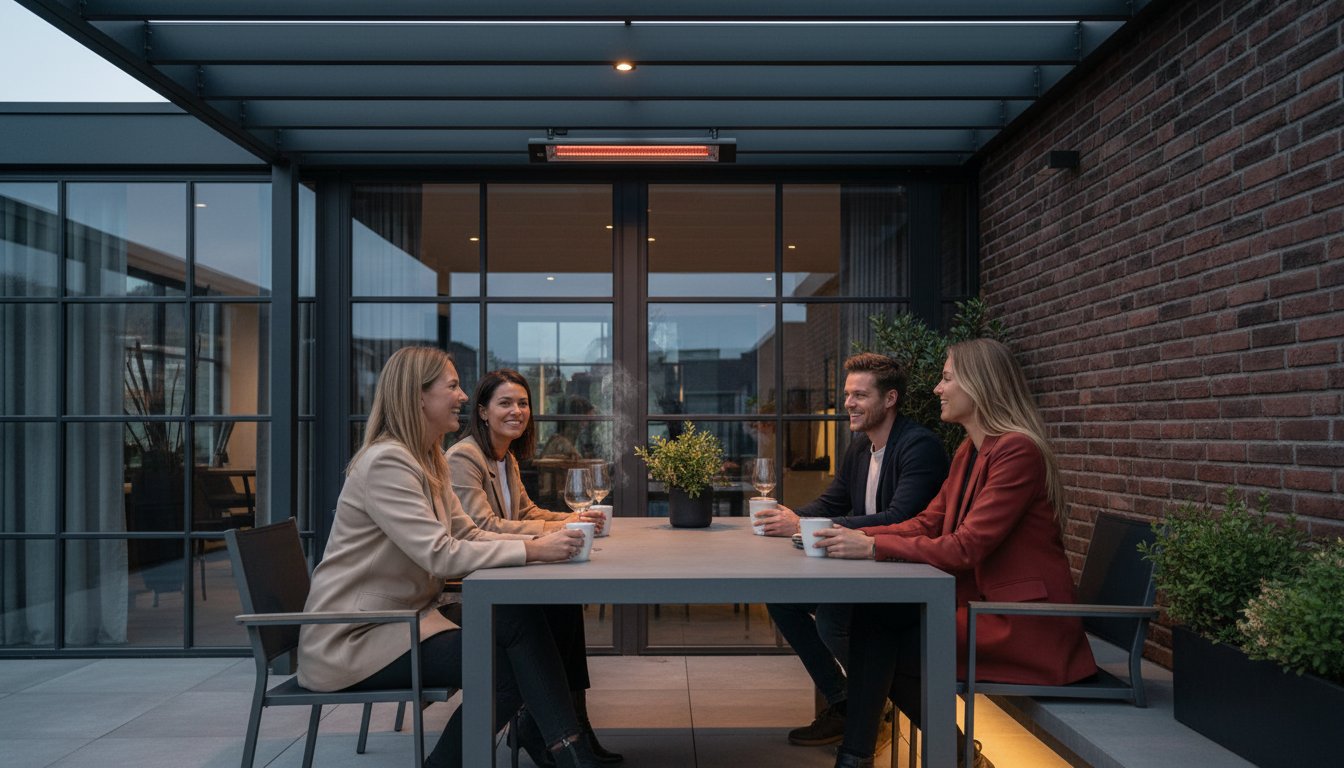
Choose a terrace heater for the people sitting or standing in a particular place. A sheltered veranda needs a different solution from an open hospitality terrace. Start with exposure, seating positions, available mounting points and intended use; total terrace area alone is insufficient.
Key points
Compare the exact model’s heat coverage, light output, controls and permitted outdoor mounting. Wind and cold still affect perceived warmth. An IP code, high wattage or the name “professional” does not prove universal suitability.
Outdoor comfort needs a targeted choice
Terrace heating can add local warmth when conditions are suitable. It does not automatically make an outdoor space comfortable all year or constitute a technical requirement for every home or business. Identify the seats that actually need warmth and switch on only the required zones when in use.
Emitter type, light and shelter
Infrared appliances differ in element, reflector, temperature and visible light. Wavelength alone does not predict comfort on a particular terrace. Distance, angle, shelter and air movement also matter. Radiation is not simply blown away, but wind can still cool people and surfaces. Dark emitters and visibly glowing appliances each need assessment for the actual application.
Comparing costs and use fairly
For electric heating, calculate input power, actual operating time and your electricity tariff. Compare any gas alternatives for the same usage period and intended comfort. Gas heaters can also emit radiant heat; the distinction is not simply that gas heats air and electricity heats people. Include purchase, mounting, connection, maintenance and any element replacement. No fixed payback period or lifespan applies to all heaters.
Planning a safe project
Map seating, canopy, obstacles and mounting substrate. Use the model instructions for mounting height, angle and distances from timber, fabric and other combustible materials. A general 20- or 30-centimetre clearance is not safe mounting advice. Recessed installation or a heat shield is only permissible when the manufacturer approves that combination. Have electrical load, controls and protection assessed professionally too.
Discussing product selection with us
We help private and business end users and work with installers and wholesalers. Send photos, dimensions, mounting heights and details of shelter and use. We discuss available versions, controls and information still needed for a proposal. Colours, accessories and corrosion resistance are assessed for the exact model.
Heat the right seats
A sound proposal identifies which positions will be heated and the conditions under which comfort is expected. That is more useful than a universal wattage per square metre or a promise that wind has no effect.
View Heliosa terrace heating · Request advice and a quotation
Frequently asked questions
Can a heater remain outside in rain? Only when the manufacturer permits the actual outdoor arrangement and exposure. An IP code describes specific tests and does not by itself establish resistance to all rain, snow, corrosion or every mounting angle. Include plugs, cables and controls in the assessment.
Is a dark emitter always best for hospitality? No. Visual light is one criterion alongside shelter, positioning, coverage and usage time. Compare the actual model and documentation; a general operating-hours figure does not predict your installation’s efficiency or lifespan.