
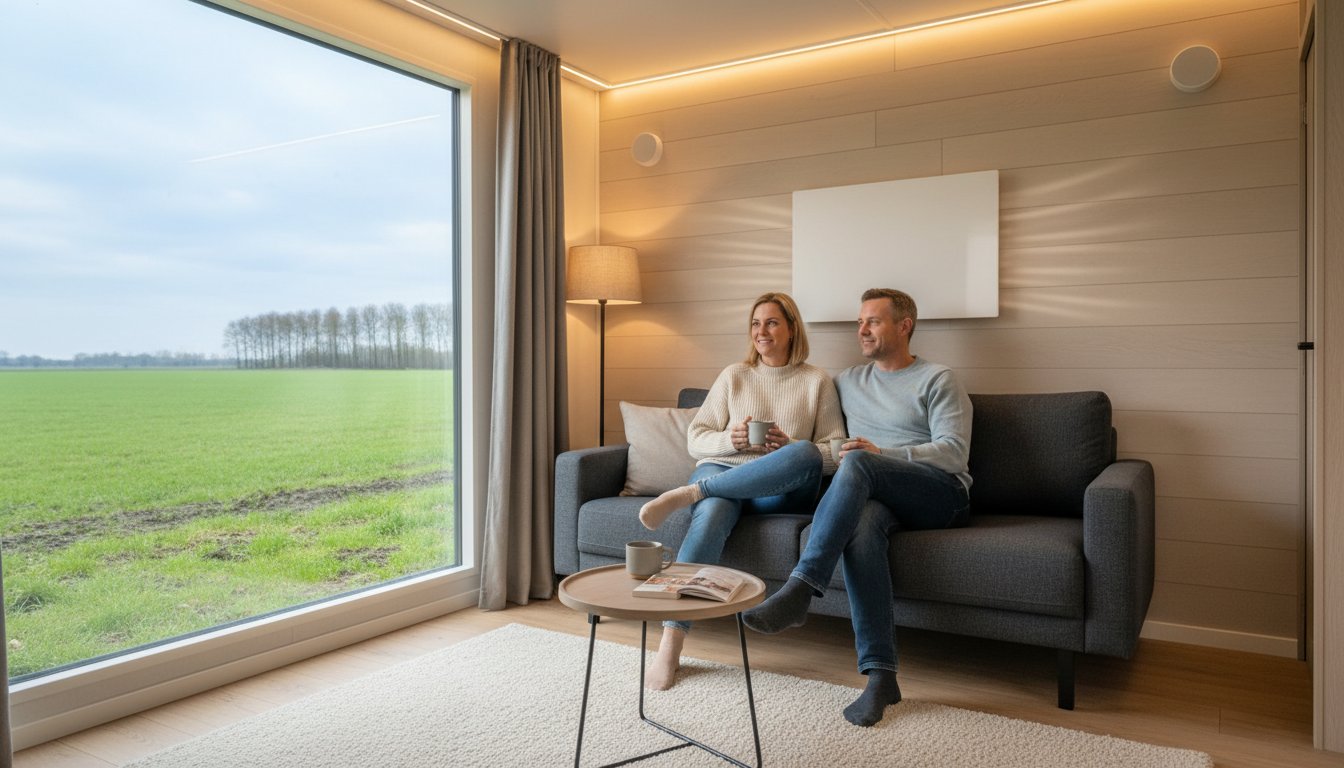
Year-round heating of a static caravan or chalet needs a plan for cold days, moisture, electricity and every room. Infrared panels may be an option, but suitability depends on the actual accommodation. Heating choice does not establish whether permanent residence is permitted; check separately with the authorities and site manager.
Key points
First check insulation, construction and actual site electrical capacity. Calculate primary heating and separately assess frost-sensitive pipes. A warm seating area does not protect pipes beneath the floor. Include ventilation, failures and absence.
Why winter use needs different preparation
Units vary in wall, floor, roof and glazing. Gather details of yours and assess losses for intended conditions. Insulation and draught improvements may reduce demand but must suit construction and moisture balance.
Cooking, showers and occupancy add moisture. Heating can change relative humidity but removes no water. Check ventilation, leaks and cold spots behind furniture. Panels do not guarantee moving the dew point outside the structure or treating mould causes.
What infrared can do in a compact space
Panels radiate to accessible people and surfaces and also produce convection. Sofas, cupboards and partitions affect distribution. Existing heat losses remain. Local comfort may need a different arrangement from heating living room, bedrooms and bathroom together.
Size output and panel count from losses, temperature and permitted positions. Fixed volume rules or average counts for a floor area do not form a winter plan. Check permitted operating duration and controls too.
Compare alternatives and energy costs
Compare existing heating, electric alternatives and improvements for the same demand. Include works, available electricity, tariffs, maintenance, space and safety. Resistance heaters ultimately convert almost all input to heat; radiant panels are not therefore always cheapest.
Electric panels need no combustion at the point of use. Hot surfaces, poor connections and covered output still require attention. Existing gas or combustion equipment remains part of safety assessment while present. Have alteration or decommissioning carried out appropriately.
Prepare for cold weather
Assess site supply and unit electrics alongside cooking, hot water and appliances. A socket or nominal rating does not prove simultaneous heating capacity. Check site restrictions and arrangements. Define overload prevention and failure response.
Check that lightweight walls and ceilings support prescribed fixings and weight. Maintain distances to bedding, curtains and cupboards. Use approved mounting only. Low ceilings and small bedrooms may limit positions.
Bathroom protection must suit model, exposure and connection. An IP code alone is not general permission. Overnight or unattended use varies by model. Choose compatible controls and representative sensors and test operation and restart.
Protect frost-sensitive pipes separately
A room sensor does not automatically monitor the coldest pipe location beneath or behind the unit. Assess routes, insulation and permitted additional measures. A fixed room setting or app is no frost guarantee. Plan long absence and power failure with the installer and manager.
Support for residents and managers
We advise private and business end users and support installers and wholesalers. Share construction, layout, temperatures and supply. Multiple chalets also need assessment of simultaneous loads, management and resident handover. Discuss limits before selecting.
Check winter performance
Check comfort, moisture and actual energy during representative cold periods. Mild-weather trials do not prove winter suitability. Maintain inspection records and respond to faults. Panels guarantee no healthy air, mould-free home, lower costs or carbon neutrality; these depend on the complete plan.
Chalet heating questions
How many panels are needed for winter?
This follows heat-loss calculations, layout and permitted positions. Check supply capacity too. An average area or standard package does not prove adequate cold-weather heating for your unit.