
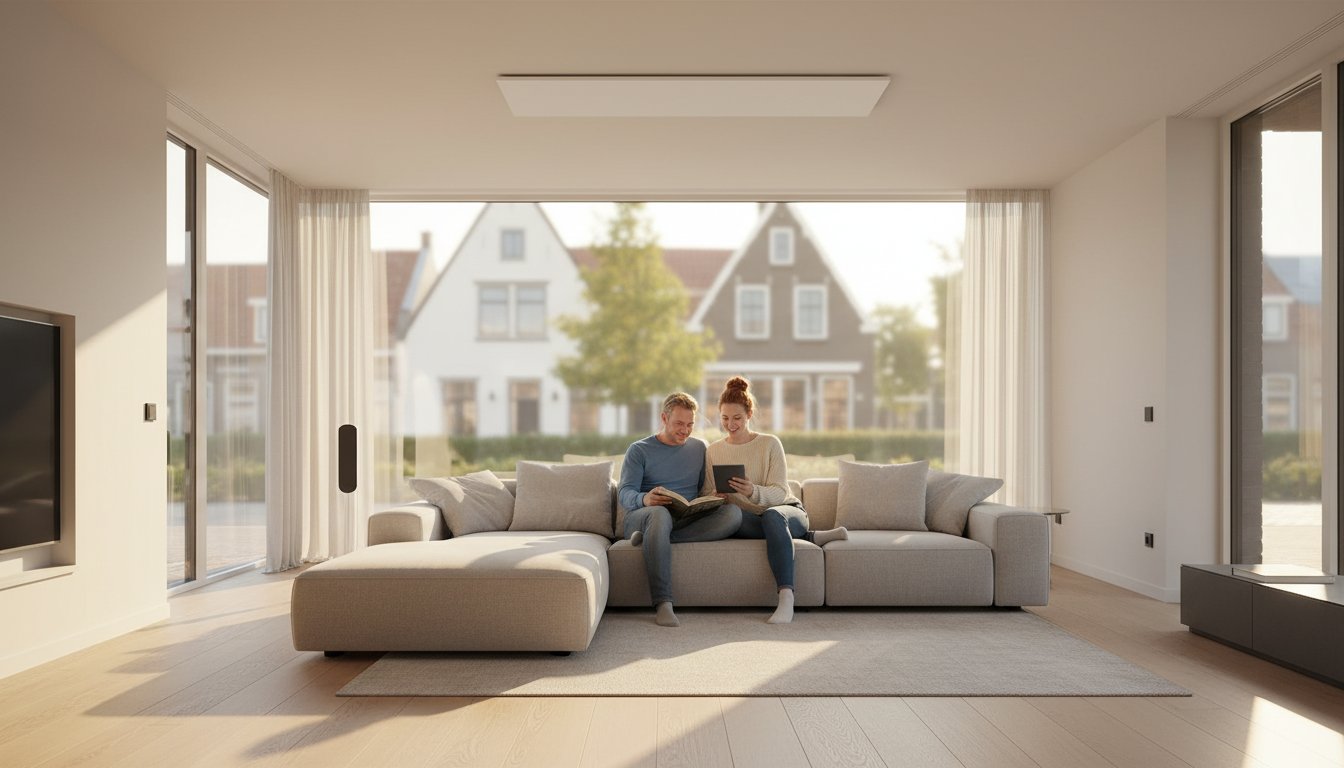
Disappointed with the comfort or consumption of infrared heating? First examine the application, heat loss, placement and controls. A panel may suit targeted supplementary heating, but is not the most economical main heating system for every home. An informed comparison helps avoid a purchase based on unrealistic expectations.
Key considerations
Assess the complete usage situation. Power, operating time, electricity tariff, insulation and radiant heat coverage together determine what you can expect. A general savings percentage, fixed payback period or comfort guarantee is not justified without supporting evidence.
Match expectations to the intended use
Do you mainly want comfort at one workstation or seating area, or to heat the whole home for long periods? These are different design tasks. Targeted supplementary heating can be useful if it reduces the heat required from the main system. The panel itself also uses electricity. Whole-home heating requires assessment of heat loss and comfort in every occupied room.
Radiant heat and convection
Infrared panels emit radiant heat towards people and surfaces. Convection also occurs and the air warms up. Perceived warmth depends on factors including distance, layout, air and surface temperatures, and personal preference. A panel does not prevent draughts and is not a treatment for medical conditions.
A cabinet, sofa or table can limit direct radiant coverage. Check that the mounting location reaches the intended seating or work area. Maintain the prescribed clearances and use only mounting methods permitted by the manufacturer. Ceiling mounting is not allowed for every model or room.
Size capacity using a heat-loss calculation
A rule of thumb in watts per square or cubic metre provides only an initial indication. Design also depends on glazing, external walls, roof, ventilation, target temperature and outdoor conditions. Insufficient capacity may prevent the desired temperature from being reached. More installed power does not automatically solve poor placement or high heat loss.
Include insulation and controls
Better insulation reduces heat demand regardless of heating type. Ventilation remains necessary for a good indoor environment. Choose controls that suit the model and usage pattern. Position temperature sensors according to the instructions and check programmes, schedules and any occupancy detection settings.
Our approach: assess the situation first
We supply private and business end users, installation companies and wholesalers. For advice, please provide dimensions, insulation details, the intended use and a floor plan or photo. We discuss available models and considerations for mounting and controls. A quote is not a blanket guarantee of savings or comfort; its assumptions must match your situation.
Compare total costs
Calculate electricity use as power in kW × actual operating hours. A 600-watt panel running at full power for a total of 3 hours uses 1.8 kWh. Multiply this by your own electricity tariff. Include purchase, installation, controls and maintenance for a fair comparison. Compare systems for the same heat demand; a heat pump can deliver more heat per kWh of electricity than electric resistance heating.
Frequently asked questions
Suitable as main heating?
That requires a whole-home design. Very good insulation and low heat demand make this application more promising, but comparison with other systems remains important. Have capacity, electrical supply, controls and annual energy use assessed before replacing an existing main heating system.
What should I check for cold feet or disappointing warmth?
Check whether the seat is within radiant coverage, whether furniture blocks the heat, and whether there are draughts or downdraughts near glazing. Also check settings, operating time and capacity. Keep following the mounting instructions; do not move a panel closer or elsewhere without checking that this is permitted.
How do I assess product quality and safety?
Compare model-specific data, warranty terms, permitted application and available instructions. A low price does not prove poor quality, and a high price alone provides no guarantee. Hot surfaces can cause burns. Maintain clearances, do not cover the device and follow maintenance and inspection instructions.