
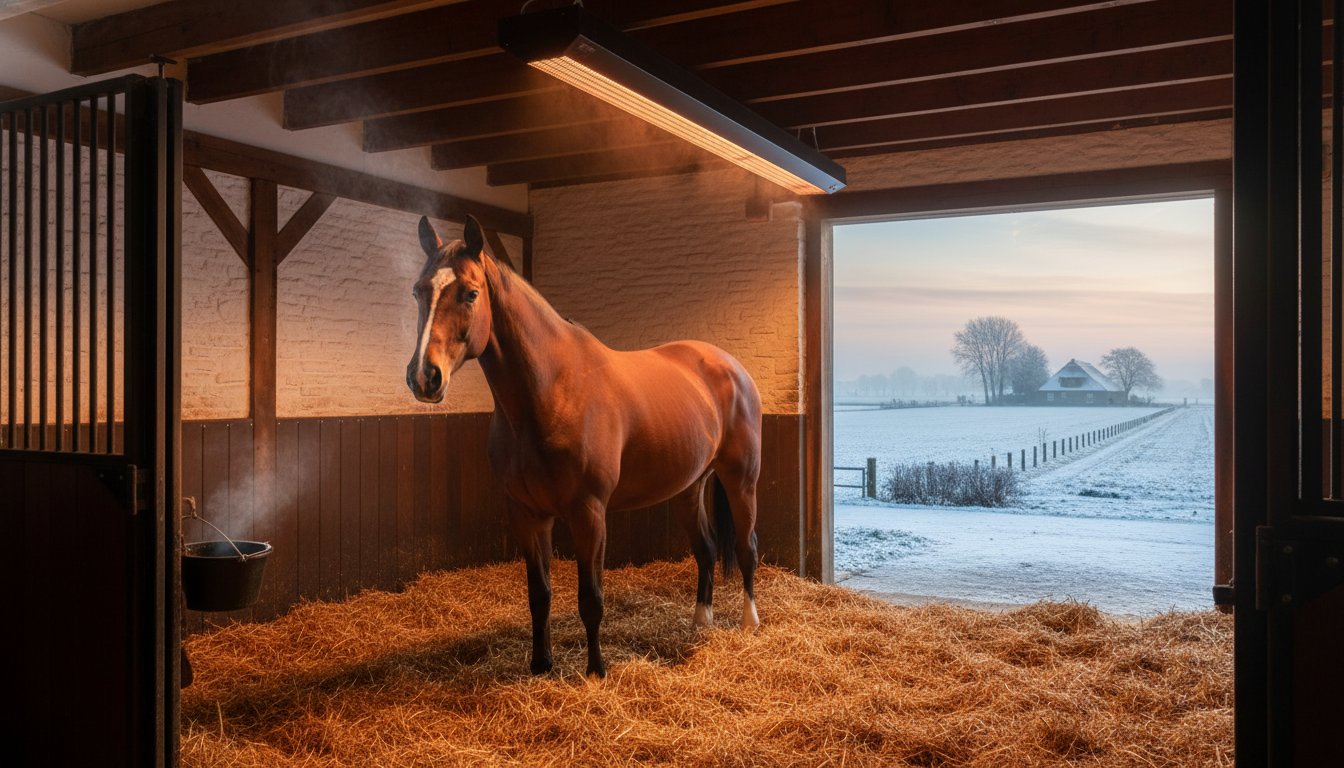
Keeping a stable frost-free starts with vulnerable components: drinkers, pipes, valves and other water-containing equipment. This differs from comfort heating for people or animals. An infrared panel does not automatically protect the whole stable. Develop a suitable frost-protection plan before selecting heating.
Key principles
Map every frost-sensitive point, including hidden locations. Have the system assessed by a specialist in agricultural conditions. Dust, hay, straw, moisture, ammonia and animal contact create specific requirements. A domestic panel, IP code or metal enclosure does not demonstrate suitability.
Frost protection as a separate task
Check drinker and pipework instructions. Not every pipe is exposed to radiant heat, and one temperature reading does not represent all locations. Establish technical measures, monitoring and winter procedures for reliable water management. A fixed room temperature is no general guarantee for every component.
Horse housing conditions depend on more than heating. Maintain suitable ventilation and care. Consult a vet about animal-specific environmental or health questions. A space-heating panel is not treatment for respiratory or muscle conditions or recovery, nor the same as an assessed equine solarium.
What radiant heat reaches and misses
A panel warms exposed surfaces and people or animals and also produces convection. Obstructions, distance and conditions affect results. Heat does not automatically pass through barriers to hidden pipes. Ventilation, openings and cold structures still cause losses with infrared.
Heating does not remove moisture, ammonia or dust or make a stable hygienic without cleaning and ventilation. Do not reduce air exchange because a panel is installed. Persistent condensation or damp requires investigating the cause.
Comparing solutions for the same vulnerable points
Compare suitable pipe heating, water systems, insulation and any local or space heating against the same protection task. Their functions differ. A panel above a drinker does not automatically replace designed pipe protection. Compare installation, actual operation, checks, maintenance and energy rather than purchase alone.
Calculate costs from actual output, running time and tariff. A standard stall does not automatically need 600 or 1,000 watts; critical locations and winter conditions determine design. There is no universal saving or lower total cost than other protection systems.
Professional checks of suitability and mounting
Request written suitability information for dust, moisture, corrosive substances and cleaning. A high IP code does not prove ammonia resistance or explosion protection. Hay, straw and potentially combustible dust need specialist risk assessment. No visible glowing element does not mean no fire risk.
Have clearances, structural support, electrical protection and cable protection assessed. Consider reaching, kicking, biting and moving materials. A fixed mounting height cannot make every stable safe. Use specified mounting and any approved protection without blocking heat output.
Match sensors and controls to protected components. Frost mode needs power and a working system and does not measure every pipe. Define independent checks, alarm response and failure procedures. Staff presence detection must not disable required frost protection.
Technical product advice from us
We discuss technical questions with private and business end users, installers and wholesalers. Send plans, photos of drinkers and pipes and environmental conditions. Do not assume a generic ammonia-resistant stable range: suitability must be demonstrated for the exact model.
Management during cold periods
Test before winter and inspect critical points during cold periods. Clean and check according to manuals and management plans. Reassess changes to feed, bedding or stall layout. Automatic controls do not remove the need for supervision.
Frequently asked questions
Can I thaw a frozen pipe with a panel?
Do not use a space panel as a general thawing method. Frozen or damaged water systems need assessment under their own instructions and, where needed, an installer. Do not improvise heater distances near bedding or pipes.