
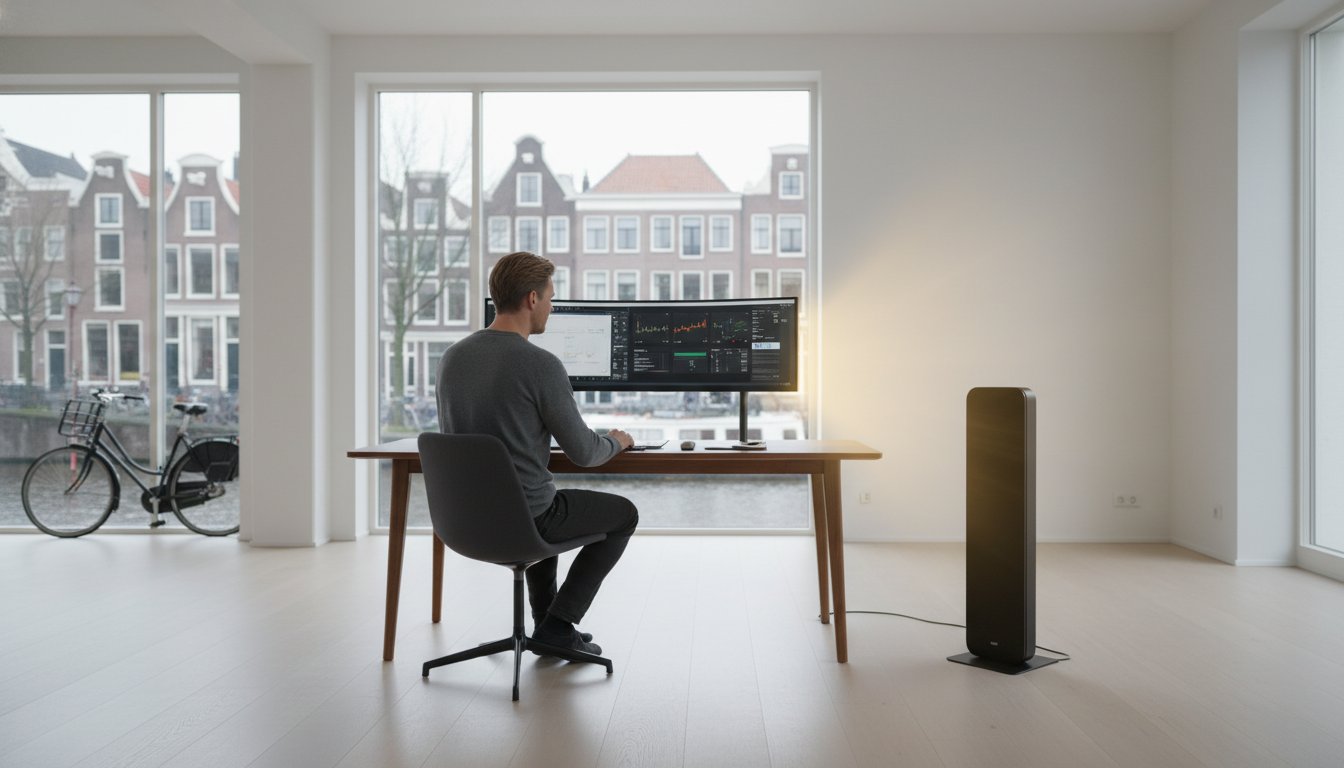
Portable infrared heating can bring warmth to a temporarily used position, provided the appliance is designed for it. Portable does not mean every room or surface is suitable. Decide beforehand where you want to use the unit, and check stability, clearance, electrical connection and temperature sensor position for each location.
This guide covers flexible zone heating and reassessment after moving rooms. We advise private and business end users and support installation companies and wholesalers. Choose only approved feet, wheels or stands; a fixed wall panel does not become portable simply by leaning it loosely against something.
Key points
Record the purpose and locations and check the complete combination. Keep cables away from walking routes and prevent covering or touching hot surfaces. Move only according to the manual, after safe shutdown and cooling where prescribed. A thermostat left in the old room does not automatically measure the new occupied position.
Operation and usable heating zone
A portable panel releases heat through radiation and convection. People and surfaces it can reach absorb radiant energy. A cupboard, tabletop or curtain can block direct warmth. Local warmth is not the same as a constant temperature throughout the room. Decide which of these goals you need before choosing output.
Almost all electricity drawn by a resistance panel eventually becomes heat, but this does not prove savings over another system. Wind, ventilation and building losses still have an influence. A fixed temperature reduction of two or three degrees with the same comfort cannot be promised generally either. Use model data for warm-up time and coverage rather than universal claims about minutes.
Purchase checks for multiple locations
Check that the complete unit is explicitly intended for freestanding and portable use. Review weight, exact dimensions, handles, carrying method and permitted surface. Also check overall size with feet or stand so the unit fits every intended position with all necessary clearance. A metal or glass enclosure does not prove the appliance withstands impacts or moving while hot. Also check whether a safety function is present and what it does.
Assess moisture, dust, temperature and any combustible materials at each location. IP alone does not prove suitability for a bathroom, caravan, outdoor position or industrial environment. A heater for a dry study cannot automatically be moved beside a shower or into a workshop with wood dust. Ask for confirmation for the specific application.
Capacity and electrical connection
A whole room requires an appropriate heat-loss assessment; a fixed watts-per-square-metre table is not complete advice. For local warmth, distance and posture matter. Check socket, cable and simultaneous load with other appliances. Connect an electric heater directly to a suitable wall socket. A plug does not prove every connection point has sufficient capacity; do not use an extension lead or power strip without assessment. Have an installer resolve uncertainty.
Using practical zone heating
A portable unit may suit changing work or reading positions if clearance and cable routing remain suitable. Also check whether other occupants or colleagues can change the arrangement. Ensure the unit does not obstruct a door, escape route or office-chair path. Use an under-desk product only if intended for that position; putting a larger panel behind or under a table is not equivalent.
In a bedroom, use during sleep must be assessed separately under model conditions. A portable heater is not automatically suitable for leaving unattended. In a bathroom, additional requirements apply to appliance, position and connection. Do not make a temporary arrangement permanent without reassessing the full situation.
Checks after moving
Check feet or stand, stability and cables again. Test which sensor controls the unit and whether the thermostat is still in the old room. Pair only according to the manual and check the heating response in the new situation. Do not simply carry over settings such as an old weekly schedule.
Energy use and a possible switch away from gas
Compare additional panel consumption with the actual reduction in existing heating consumption. A general ratio such as six hundred watts of infrared providing the same comfort as fifteen hundred watts of fan heating is not substantiated for every use. Neither is a fixed payback of three to five seasons. Use measurements or an estimate for the same comfort requirement.
Calculate electricity using actual power in kilowatts multiplied by operating hours and your own tariff. For solar panels, include simultaneous generation and demand and forgone export income. Portable panels are not a complete gas-free home solution without assessing all rooms, hot water and cooking. For primary heating, compare suitable alternatives such as a heat pump too.
A tax or other scheme does not automatically apply because a product is portable or electric. Have the competent body check current conditions for the investment and applicant. A general tax rate from a particular year is not an energy price and must not be treated as your complete tariff.
Choosing a suitable portable version with us
Share intended locations, photos, usage hours and any existing controls. We discuss product data and supply options with you and, where relevant, the installer or wholesaler. Ask whether feet, stand, thermostat and accessories are included in the proposal. Material or origin does not prove a safe rear temperature or long service life; check model information and warranty.
Maintaining a portable arrangement
Switch the unit off safely and let it cool before cleaning or moving according to the manual. Check cable, plug, feet and enclosure for damage. Store dry and according to storage conditions, and check again after storage. Low maintenance does not mean twenty years without checks; also ask about service and possible component replacement.
Frequently asked questions
Does the back remain cool?
That varies by model and use. An insulated construction does not mean the rear is safe to touch or may stand against furniture. Do not use a general limit of thirty-five or forty-five degrees as permission. Follow prescribed clearances around the complete appliance.
Can every unit be used in the bathroom?
No. The manufacturer must permit the intended portable application, and appliance, position and electrical installation must be suitable together. Do not move a dry-room unit into a damp space because it has a plug. If in doubt, seek advice before use and follow the exact version’s manual.
Sources and assumptions
- Desk panel with dimmer: product data
- Heating for the living room
- Browse the range
- Discuss your portable application
- Brandweerzone Centrum: electrical appliances
- Welltherm: installation and operating manual for glass panels (PDF)Open PDF in a new tab
- Australian Government: electric heating and heat pumps