
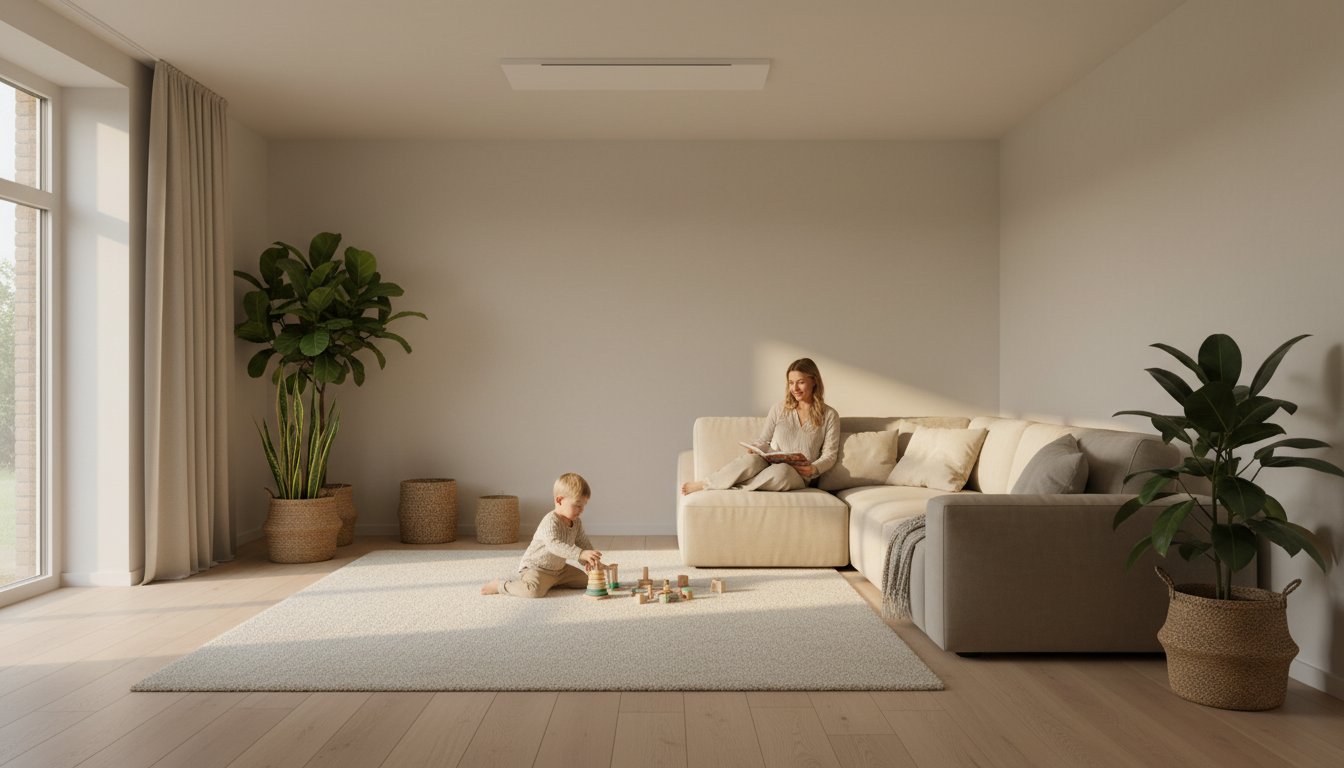
Is infrared radiation from heating harmful? For a useful answer, you need to consider the type of appliance, intensity, distance and duration of exposure. The designation infrared or non-ionising does not mean that every exposure is safe without limits.
What does infrared radiation do?
Infrared is electromagnetic radiation that can transfer heat when absorbed by a surface. It is not the same as ultraviolet, X-rays or radioactive radiation. Heating appliances differ in surface temperature and radiation spectrum.
A space-heating panel and a powerful patio or industrial heater therefore do not automatically require the same positioning or operating distance. Use the documentation for the specific model.
Why do distance and duration of use matter?
With sufficiently intense exposure, infrared can cause thermal injury to the skin or eyes. The international commission ICNIRP therefore describes exposure limits and protection principles. A general statement that infrared can never be harmful is incorrect.
Follow the minimum distances, mounting height and permitted operating position in the manual. Do not direct powerful heaters at people from unsuitable distances. Take account of circumstances in which people may be less able to perceive heat or unable to move away independently.
A warm panel can also be hot to the touch
In addition to radiation exposure, the temperature of the appliance itself matters. Choose a location where hot surfaces and cables do not present an unnecessary contact risk. For children, care settings and other vulnerable users, pay particular attention to the suitability of the model and whether users can reach it.
Do not cover the appliance or use mounting methods or accessories other than those permitted by the manufacturer. Keep combustible materials at the specified distance.
Space heating is not a medical treatment
Heat can feel pleasant, but a space-heating panel is not a proven treatment for asthma, allergies, pain or circulatory problems. Claims about medical infrared applications cannot simply be applied to heating a home or workplace.
Long-wave infrared is mainly absorbed in the superficial layers of the skin. A feeling of penetrating warmth does not prove a therapeutic effect or deep tissue heating.
Ventilation remains essential
A radiant heating panel does not make a room free of air movement, dust or moisture. Heat output also includes convection, and the air can warm up indirectly. Good ventilation and limiting sources of moisture remain necessary for the indoor climate.
The cause of damp and mould problems must be investigated. Additional heating can be part of an approach, but does not replace ventilation or repairs to a structural problem.
Choose the product to suit the application
- Check the permitted room and mounting method.
- Read the specified distances and conditions of use.
- Assess hot surfaces and whether users can reach them.
- Have the electrical connection and any damp environment assessed.
- If model information is missing, first ask for the correct manual.
Discuss your application with us
We supply private and business end users as well as dealers, installation companies and wholesalers. Provide the room, usage and any product codes. We help you match the version, placement and controls to your situation.
Request a quote Become a dealer
Sources and currency
Content checked on 16 October 2026. For conditions that may change, information from the administering organisation takes precedence.