
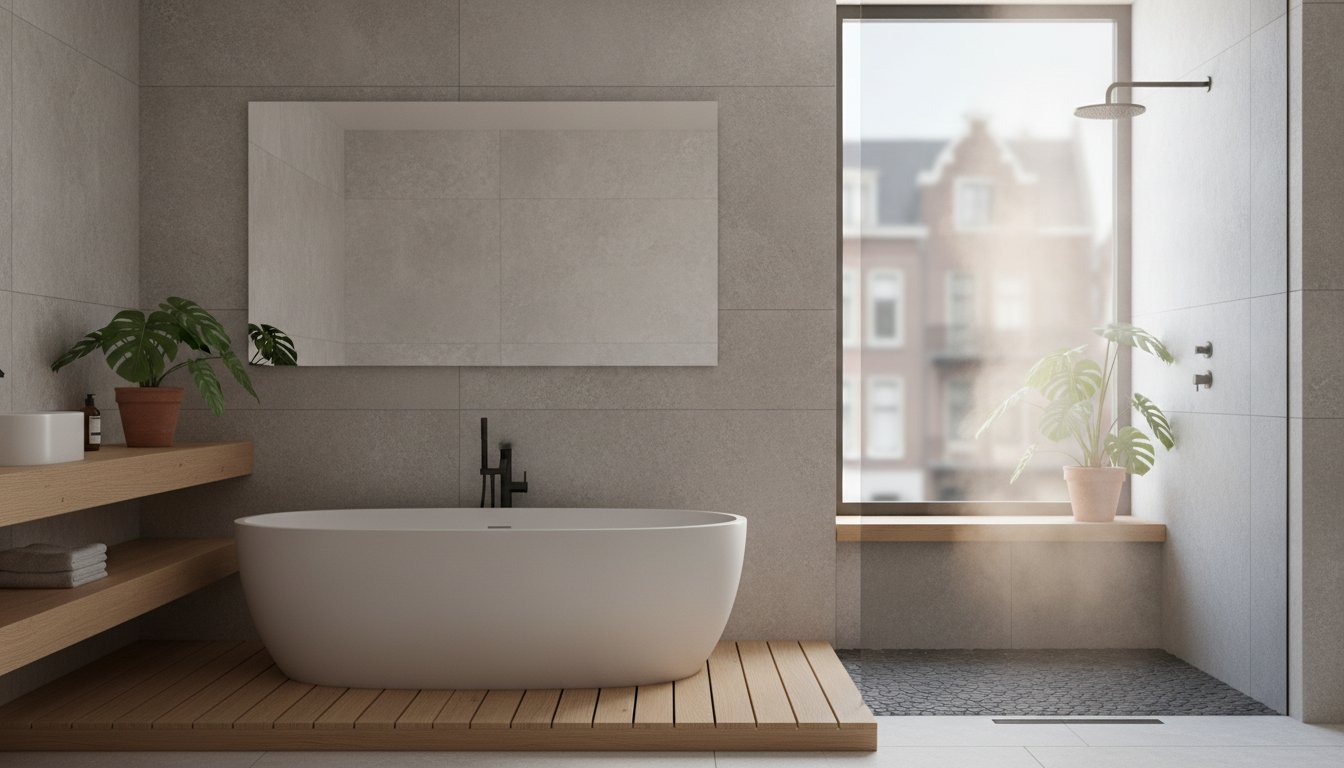
An IR panel in the bathroom can combine thermal comfort with a calm interior. A suitable version and safe installation are the starting points. This guide helps you assess use, placement, finish and controls together before choosing a product.
Key points
Have the specific mounting position, product suitability and electrical provisions checked together. Calculate the heat demand instead of relying solely on a fixed value per cubic metre. Heating does not replace ventilation or guarantee protection against condensation or mould.
How does an IR panel work in the bathroom?
The panel converts electricity into heat and releases it through radiation and convection. People and surfaces within range can absorb radiant heat directly. The air is also heated. Heat demand still depends on insulation, outdoor temperature, ventilation and the desired room temperature.
Targeted heat can feel pleasant during brief use, but the panel itself needs to warm up and the whole bathroom takes longer than one spot. A fixed warm-up time of five or ten minutes cannot be given for every version and room. Test the schedule in practice and account for a cold floor or external wall.
Heating and moisture remain separate issues
Warmer surfaces can reduce the likelihood of condensation. Whether condensation forms also depends on humidity and surface temperature. Remove shower moisture and address the causes of persistent damp or mould. A panel is not a dehumidifier and does not stop ventilation carrying heat out of the building.
Positioning an IR panel safely in the bathroom
A bathroom requires an assessment of zones, the risk of water contact, the connection method and electrical protection. Have a qualified installer do this in accordance with current installation requirements and the product manual. A short general explanation of zones is not enough to approve a specific installation.
An IP code describes enclosure protection against the ingress of solid particles and water. A higher first digit does not automatically mean better water protection. IP44 or IP54 alone does not permit installation beside or above a shower. Also check the permitted orientation, accessibility of controls and protection of connections.
Which IR panel suits your bathroom?
The finish helps determine appearance, weight and installation. Compare the exact versions rather than assuming glass always uses less energy or metal always warms up faster. A mirror panel can combine a mirror with heating, but a small mirror-heating element is not automatically sufficient for the whole bathroom.
A heated mirror can reduce condensation when its surface is warm enough, but “never steams up again” is not a general guarantee. Only use towels on versions approved for that purpose and otherwise keep the heating surface clear. For lighting or towel rails, check which parts are included, how they are controlled and what connection is needed.
Choosing output, placement and controls together
Calculate heat loss at the desired temperature and assess the pattern of use. External walls, windows, ventilation and insulation all matter; cubic volume alone is insufficient. Also state whether the panel will provide primary heating or extra comfort alongside an existing system.
Wall and ceiling mounting are only possible where the manufacturer permits them for the version. Compare coverage at the washbasin or changing area and possible obstacles. A ceiling panel is not automatically more efficient and does not replace actual underfloor heating. Follow the clearances and use fixings suitable for the substrate.
Choose a compatible thermostat, receiver and schedule where required. The sensor must take representative readings, away from direct radiation and other interference. Have the connected load checked. A motion sensor alone may respond too late for a cold bathroom or miss a stationary user; match the controls to actual use.
Choosing an IR panel for your bathroom together
We support private and business end users, installation companies and wholesalers. Using photos, a floor plan, insulation details and the desired functions, we discuss a suitable version. We assess heating, mirror use and any lighting as separate functions, so it is clear what your chosen product actually offers. Also explore the options for bathroom heating.
From bathroom plan to quotation
Request a quotation clearly describing the panel, controls, fixings and connection work. Compare not just the purchase price but also expected use and the existing heat supply. Adding a new electric heat source while leaving primary heating use unchanged means extra consumption, not automatic savings.
Frequently asked questions
Is the panel safe to touch?
An operating surface can cause burns. Consider children and other vulnerable users and follow the safety instructions. Do not cover the panel, including with a towel unless expressly permitted. Let it cool before cleaning or inspection.
How do I calculate electricity consumption?
Multiply the input power in kilowatts by the hours the appliance actually operates at that power. An example of 0.6 kW for one hour is 0.6 kWh. Costs follow from your electricity tariff. The thermostat setting and the time the bathroom is used do not automatically equal the actual on-time.