
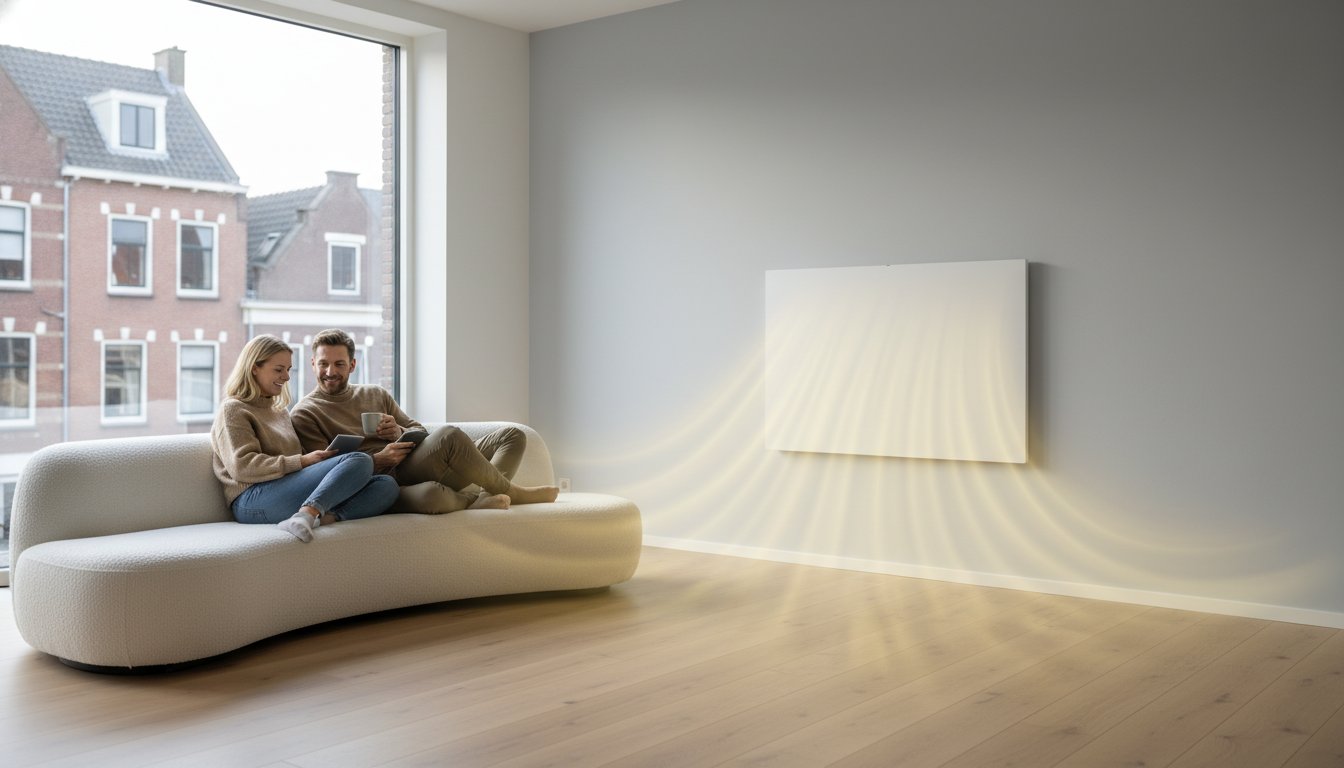
Searching for an infrared radiant heater brings up panels, lamp heaters and other designs. Names overlap and do not guarantee a particular application. This guide helps define the heating goal before assessing a specific model.
Key considerations
Define indoor or outdoor use, local or whole-room comfort and occasional or prolonged operation. Then check mounting, coverage, controls and electrical supply. Compare purchase and running costs for the same task. No name, wavelength or wattage replaces this assessment.
Radiant heat as part of heat transfer
A warm appliance radiates energy absorbed by people and surfaces. Convection also occurs and warms air. Different distribution does not make a room loss-free. Ventilation, insulation and air leakage continue to affect demand.
Radiant fraction differs from electrical conversion efficiency. Resistance appliances ultimately turn almost all electricity into heat without proving fixed savings. Lowering temperature by a few degrees with equal comfort cannot be promised for every layout.
Assessing IR-A, IR-B and IR-C
These labels describe wavelength bands, not complete quality classes. Appliances may emit across different parts of the spectrum. Ask about the model, application and manufacturer data on heat and visible light. Surface temperature or red glow alone is not a full classification.
Do not treat wavelength as a general health or safety guarantee. Hot surfaces and exposure require suitable mounting and distance. Follow approved use and duration. Heating is not medical treatment or a substitute for ventilation and cleaning.
From bathroom to workshop: different requirements
Homes may need local seating warmth or whole-room heat. Bathrooms additionally require assessment of position, zones, product approval, IP and supply. Do not assume an IP rating permits every bathroom location.
Industrial halls require work positions, height, vehicles, dust and schedules. Large size does not make infrared the only viable option. Terraces require wind and shelter assessment: wind does not simply blow radiation away, but cools people and surfaces.
Supporting capacity and positioning decisions
Collect dimensions, insulation, glazing, ventilation and zone goals. Fixed watts per cubic metre or insulation thresholds are not complete selection rules. Assess comfort locations and obstructions using model data. Extra power is not automatically more economical or able to fix poor positioning.
Check permitted height, orientation, clearances, structural support and supply. Generic 60-degree angles or mounting heights are not approval. Match controls and switching load to the heater; thermostats are not universally compatible.
Discussing a suitable proposal with us
We help private and business end users, installers and wholesalers. Share photos, plans and usage. We discuss products and missing information. Check finish, controls and mounting options by model. Origin or a premium label does not replace evidence of suitability.
Comparing costs, supply and service completely
List appliance, controls, fixings and installation. Calculate consumption from kilowatts and actual operating time, comparing alternatives for the same task. Lamps or other elements may have specific care and replacement requirements. Expected life is not warranty; low maintenance still needs cleaning and checks.
Frequently asked questions
Is a radiant heater automatically suitable as primary heat?
No. The model must be approved for use and the full demand covered by suitable positions and controls. Compare electrical capacity and total costs. Whole-home planning also includes hot water and other energy uses.