
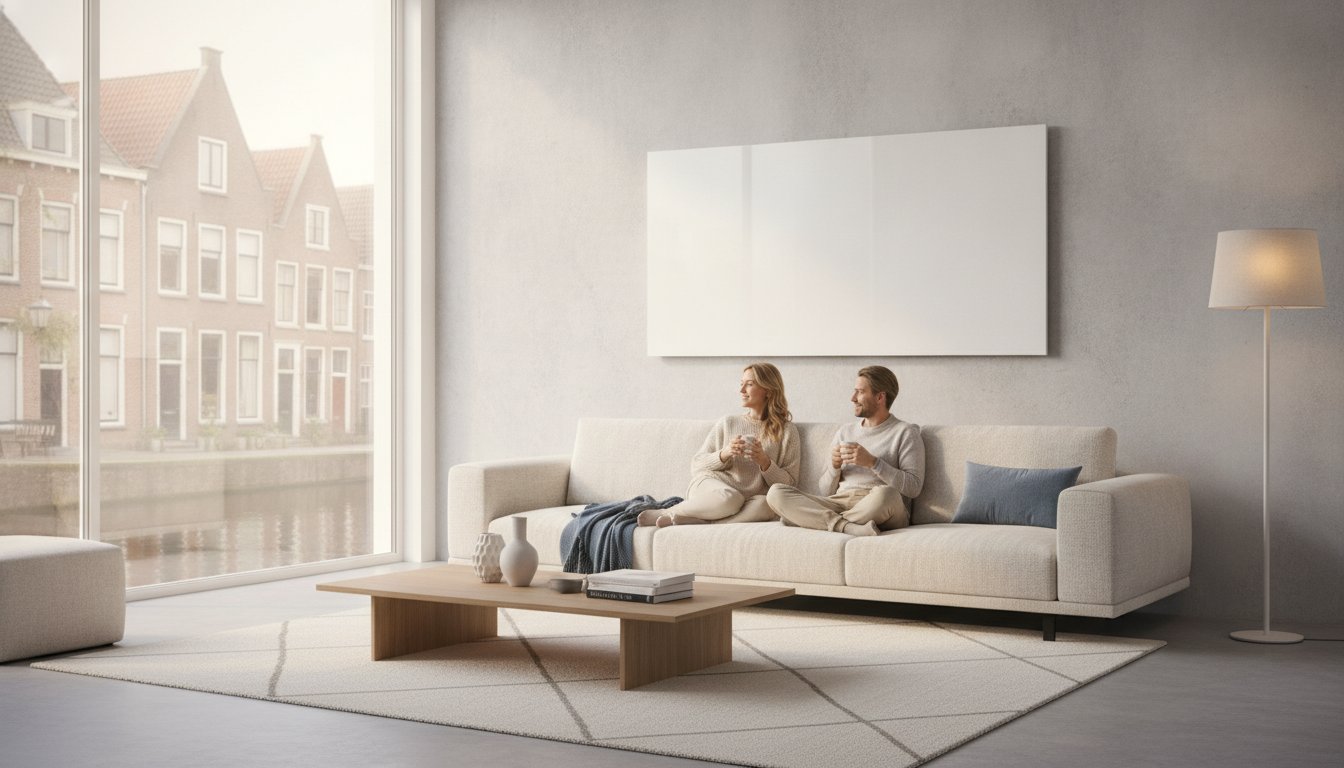
Infrared wall heating can combine a heat source with interior design. This guide concerns electric wall panels, not water circuits concealed in walls. It explains how to align wall space, intended comfort and safe mounting.
Key points
View seating and furniture from the possible panel position. Check support, specified clearances and connection access. Material and appearance belong within a sound technical plan. Wall panels do not automatically dry walls, eliminate dust or guarantee lower use.
How a wall panel emits heat
The warm panel emits radiation to people and surfaces within reach and convection to air. Proportions vary by model. Walls and furniture can store and release energy, but this does not prevent losses through walls or ventilation.
Radiators also emit radiation. Infrared therefore does not mean no air movement. Relative humidity depends on temperature, moisture production and ventilation. Use heating panels for comfort, not to treat respiratory complaints or guarantee a healthy home.
Choose wall positioning around use
A clear radiant path may suit seating, but a fixed 100–150 cm height is not universal. Approved heights and clearances depend on model. Check doors, curtains, movable chairs and places children or pets can reach.
A sofa or cupboard in front can intercept direct heat. Ceiling mounting may be an alternative if approved. Neither position is always better: compare coverage, fixing, comfort and visible wiring in the actual room.
Metal, glass, mirror and images
Compare weight, dimensions, finish and data rather than treating material as proof of efficiency. Metal or glass alone does not establish warm-up or room consumption. RAL colour and printing are options for specific models.
A heated mirror can reduce misting on its heated area, not guarantee clarity everywhere. Bathroom approval needs more than an IP number: assess appliance, location and installation together. Kitchen mounting must account for heat, moisture and use too.
Mounting, capacity and maintenance
Choose fixings for wall material and weight and follow the manual. Check hidden services before drilling. Conceal cables only as permitted. Fixed wiring or changes require a competent installer; assess total load and controls too.
Main heating starts with losses and use, not fixed 60–100 watts per m². Thermostats and schedules may reduce unnecessary hours. Calculate kWh as kW times on-hours. Payback or lower total use requires appropriate data.
Cleaning and checks remain necessary as instructed. Keep connections accessible where required and investigate damage or unusual behaviour. No pump does not eliminate possible wear of elements, connections or controls.
Our advice for homes and business projects
We help private and business end users, installers and wholesalers. Share comfort location, wall photographs, dimensions, insulation and existing heating. We advise on combinations. Documentation, warranty and parts matter more than unsupported origin or delivery promises.
A wall panel that fits the plan
Before ordering, establish model, controls, mounting and required work. For full conversion compare alternatives such as heat pumps. For supplementary use assess extra electricity and genuinely avoided energy elsewhere.
Wall panel questions
May I paint or wallpaper a panel?
Add finishes only with model-specific manufacturer approval. Paint, wallpaper or covers can change emission and safety. Ask instead for an approved colour or print matching the wall.
Is the front safe to touch?
Panels can become hot and brief contact can burn. Follow placement and clearance instructions and prevent unintended contact by children or pets. A temperature limiter does not automatically remove this risk.