
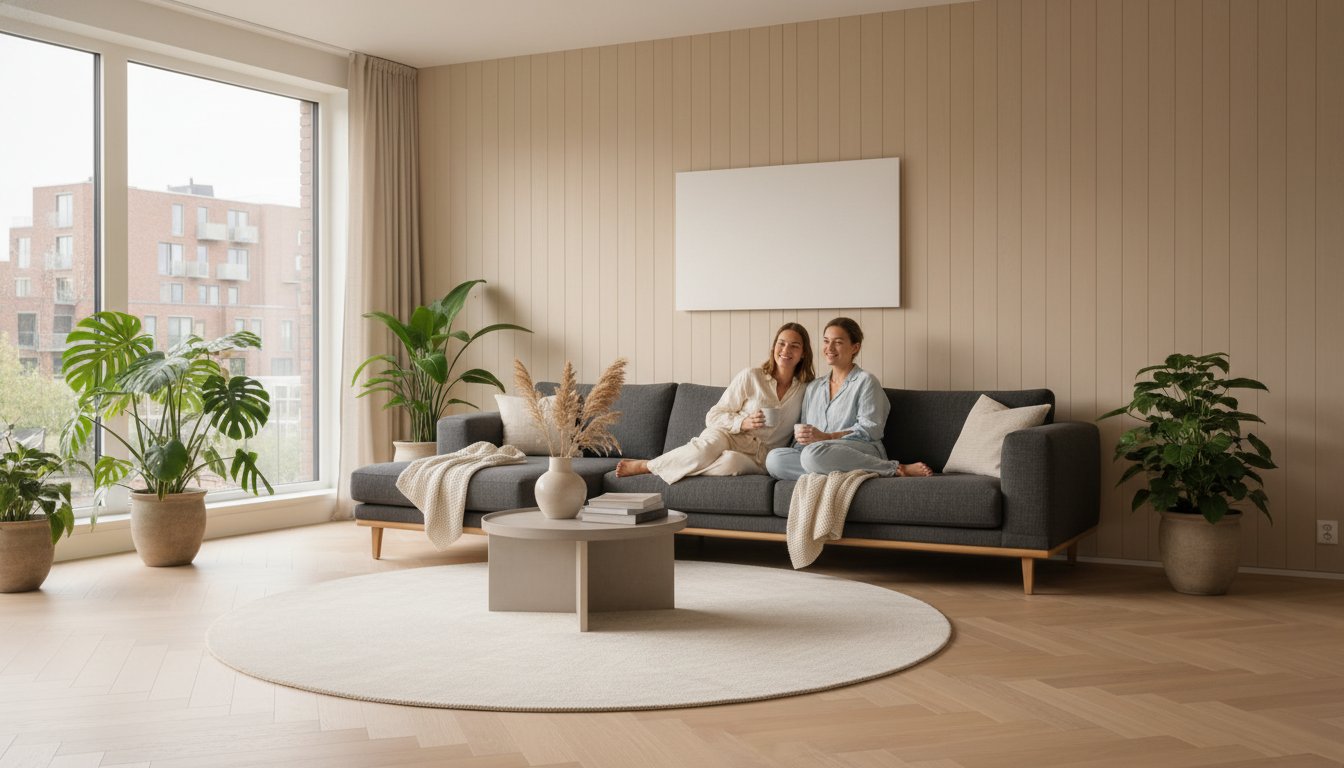
Installing an infrared wall panel starts with the available wall and where you want to feel warmth. The panel combines heating with a fixed place in the interior. Available wall area, furniture and user positions help determine whether that location is practical. Start with a heating and placement plan before choosing a version by colour or size.
Key points
Match output and distribution to heat loss and use. Check the mounting substrate, clearance and accessibility of hot surfaces. Compare materials and product measurements for each model. Costs, comfort and savings follow from the complete situation, not the word infrared alone.
What is an infrared wall panel and how does it work?
The electrically heated surface releases heat through radiation and convection. People and surfaces absorbing radiation become warmer; the air also warms up. The panel does not build an unlimited heat store or eliminate losses through walls or ventilation. Thermal comfort depends on factors including distance, surrounding temperatures and user position.
Wall mounting can bring direct warmth beside a workstation or seating area. This does not mean every spot in the room receives the same radiation. A sofa, cupboard or partition may change distribution. Ordinary radiators also release some heat through radiation; a comparison must include actual use and controls.
The right output and material for your wall panel
For space heating, insulation, windows, ventilation, outdoor conditions and desired temperature matter. For local comfort, radiation distribution at the occupied spot also counts. A fixed wattage rule per square or cubic metre does not replace that assessment. Multiple panels may distribute heat differently from one panel with the same total output.
Metal, glass, mirror and printed versions offer different design options. Weight, warm-up behaviour, permitted fixings and maintenance must be compared per product. A material name does not prove higher efficiency. A mirror may help demist the heated mirror area, but is not completely condensation-free in all conditions. Available colours and prints depend on the model.
Installing an infrared wall panel: preparing the mounting
Start with a sketch of the wall. Record free width and height and draw doors, windows, connection points and furniture. Compare panel size together with prescribed clearances; measuring the outer dimensions alone is insufficient.
Map seating, walkways, curtains, doors and furniture. Check coverage from the planned position and maintain prescribed distances. There is no universal mounting height or radiation angle for all wall panels. Assess windows and external walls as part of the whole heating plan; one general placement rule does not predict the result.
The wall and fixings must handle the weight and mounting method. Use the prescribed brackets and check whether horizontal or vertical mounting is permitted. Retain the required space behind the panel; rear insulation does not mean the panel may be placed directly against every material. Finish cables without creating heat problems, trapping points or inaccessible connections.
Hot surfaces can cause burns; brief contact is not automatically risk-free. Choose a suitable position around children, pets and users unable to react independently. Do not cover the panel or place furniture against it. Have the electrical connection and protection assessed for the chosen room and load.
Comparing energy use, controls and costs
A room thermostat and suitable programme can limit unwanted continued heating. Check that the controls suit the panel and where temperature is measured. Local heat may sometimes allow a lower room temperature, but a fixed difference with the same comfort cannot be promised. Consider other users, ventilation and building conditions.
Radiant fraction, electrical conversion efficiency and actual energy use are different quantities. For product comparisons, use traceable data for the version and measurement method concerned. By transferring heat, a heat pump can deliver more heat per kWh of electricity than direct electric resistance heating. Total costs also depend on investment, use and maintenance.
Calculate kWh using input power and actual on-time and compare the same comfort demand and outdoor conditions. General household averages do not prove savings for your home. Solar panels do not automatically make a house energy-neutral: production and heat demand do not always coincide. For primary heating, discuss the entire design and any project requirements.
Our advice before you install an infrared wall panel
We help private and business end users, installation companies and wholesalers coordinate panels, controls and placement. A floor plan, photos, insulation details and room use provide a good basis. Ask about the current version, documents, warranty terms and supply options for each product; general brand claims do not automatically apply to every panel.
From design to everyday use
After commissioning, check temperature measurement, programmes and comfort at occupied spots. Keep the space around the panel clear when the interior changes. Follow instructions for cleaning and checking fixings, cable and controls. Low-maintenance does not exclude faults or replacement.
Frequently asked questions about infrared wall panels
How many panels does a living room need?
This requires assessment of heat loss, layout and comfort goals. Floor area alone is insufficient to determine number and output. A placement plan must show how occupied zones are reached and what mounting space is available.
Is a more expensive panel always more economical or healthier?
No. Compare demonstrable characteristics such as version, controls, product measurements, documentation and warranty. A heating panel is intended for thermal comfort and does not treat allergies or asthma. Ventilation, cleaning and addressing moisture problems remain necessary.