
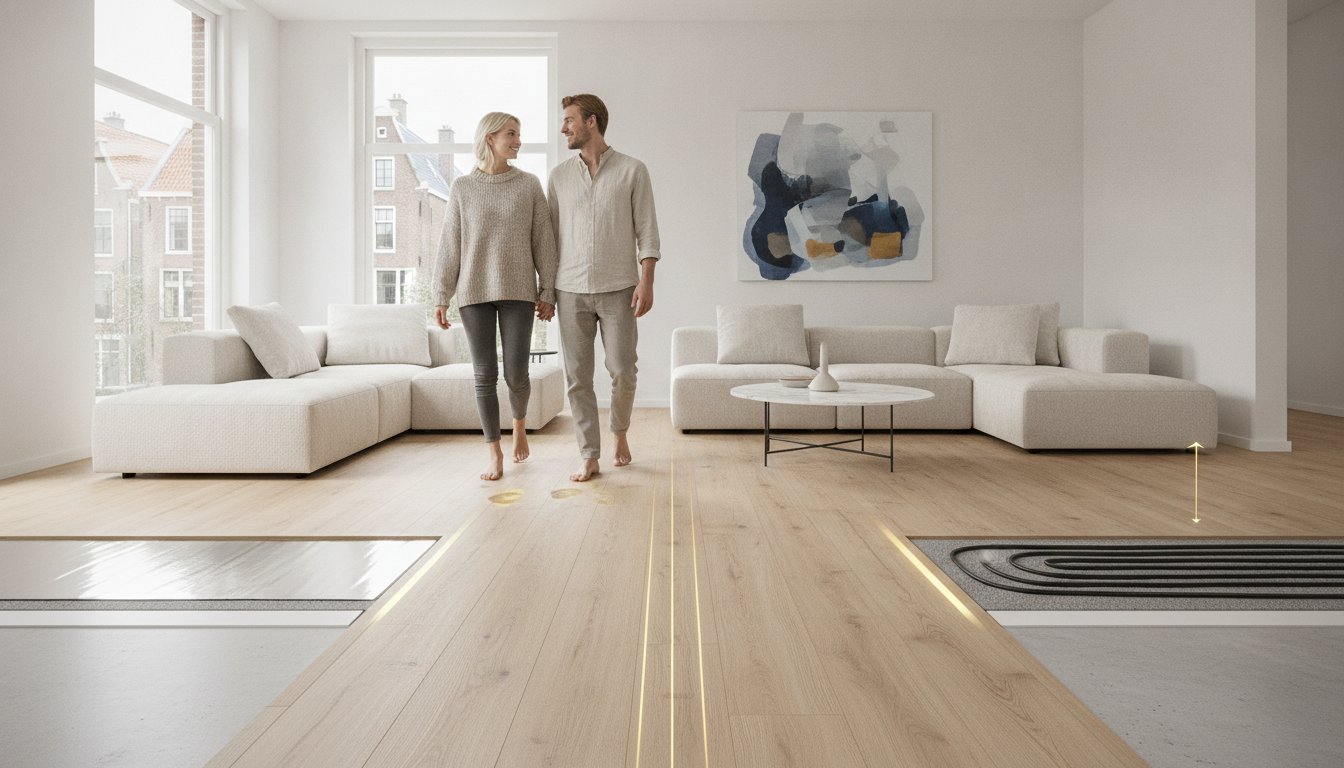
Infrared underfloor heating is often compared with electric underfloor heating, but electrically powered heating film is itself electric underfloor heating. A more useful comparison considers film, cables and heating mats within a complete floor construction. Floor finish and installation requirements determine suitability.
This guide assesses technical differences without declaring one system automatically the cheapest or fastest. It covers heat transfer, build-up height, floor compatibility, controls and installation.
Key points
Compare the complete build-up and approvals from both heating and flooring manufacturers. Film beneath flooring does not heat occupants through the finish with an unobstructed radiation beam. The heated floor surface ultimately transfers heat into the room. Choose controls and temperature limits suitable for the complete system.
The common basis: electric resistance heat
Film, heating cables and electric mats convert electricity into heat. That heat reaches the upper surface through the floor materials. The warm floor transfers heat to the room by radiation and convection. The distinction is not that film only radiates while cables only heat air.
Consumption mainly depends on heating demand, insulation, controls and operating time. Consider heat-pump options too when assessing whole-home heating. An infrared product name does not prove greater heat per kilowatt-hour than another electric resistance floor.
Film: assess the complete dry-build system
Some film systems are intended for specified dry constructions beneath certain floating floors. Check required underlay, protection, connections and load-distributing layers. Not every film may go directly beneath every laminate or PVC floor. Film thickness alone is not the total floor-height increase.
A low build-up may help renovation, but check doors, thresholds, transitions and support including every layer. Warm-up time depends on output, mass, insulation and starting temperature. Thin film does not guarantee a warm room within ten to fifteen minutes.
Compare construction, controls and actual costs
Cables or mats may sit in specified adhesive, levelling or screed layers. Overall construction determines mass and response. A thinly embedded mat and a deep cable in a heavy floor are not equivalent comparisons. Request complete layer specifications and suitable controls for both options.
Compare purchase, preparation, underlays, controls and installation. Calculate consumption from input kilowatts, actual operating hours and your tariff. Fixed consumption per square metre per hour does not predict your home. Account for downward heat flow too; insulation matters for both systems.
Suitability for laminate, PVC, wood and tiles
Have the flooring manufacturer and heating supplier confirm the whole combination. Check maximum temperature, permitted thermal resistance, laying method and restrictions on rugs or fixed furniture. A general limit of 27 or 28 degrees does not replace specific requirements. Protective layers may be needed; do not place film directly beneath a finish without approval.
For tiles or stone, choose an approved system including adhesive, levelling, substrate and any waterproofing. Heat-tolerant tiles do not permit unlimited floor temperatures. Bathroom construction and electrical provisions must also be suitable together.
Choose specified controls, sensors and limits. Place sensors and connections as instructed and perform required checks before, during and after laying. Have electrical connections and protection installed by a qualified professional. Keep the layout, test results and product documents for maintenance.
Choosing a suitable floor-heating plan together
We advise private and business end users and work with installers and wholesalers. Share flooring choice, available height, substrate, insulation and heating objective. We can compare suitable systems and identify missing information. Combining wall or ceiling panels may be considered but is not automatically the most economical route.
Choose based on the complete floor construction
Do not let names outweigh technical suitability for floor and room. Both electric systems need adequate capacity, limited losses and suitable controls. Check warranties and care by component and assess damage before reuse. Low build-up or quick response belongs to the actual construction, not a universal promise of film or cable.
Frequently asked questions
Can film be primary heating?
Assess heat loss, available heated area, permitted output and temperature limits. An energy label alone cannot establish suitability. If the floor cannot supply enough heat within its limits, another heating plan is required.