
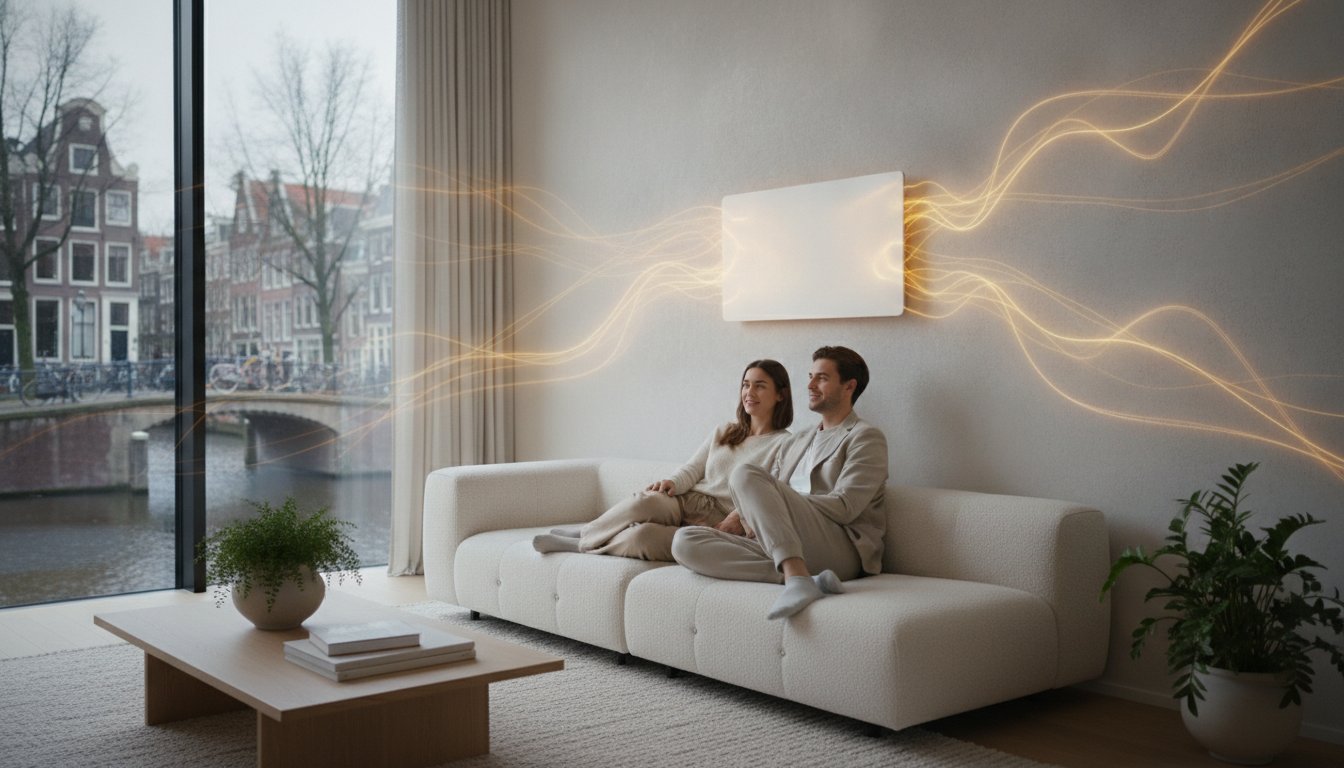
Illustration: the yellow wavy lines beside the panel have been added; infrared radiation itself is not visible.
Infrared heating or an electric heater: what suits your room? An infrared panel is itself electric heating. Comparison with an electric heater is therefore mainly about different heat-emission methods and use. This guide compares a panel with a convector or fan heater without assuming one appliance is best for every room.
Key points
Compare the same heat demand, duration of use and comfort location. Distinguish electrical-to-heat conversion from heat distribution. Calculate total costs including controls and installation. A panel does not guarantee lower air temperature, payback or health benefits.
Infrared heating or electric heater: the difference
A convector emphasises air heating; a fan heater actively moves air for this. An infrared panel releases some heat by radiation to people and surfaces and some through convection. Ratios vary by model. Radiators and other hot surfaces also radiate.
Radiation may directly reach a seat if unobstructed. This may feel different from warm air but does not change the room’s fundamental heat losses. Walls and furniture can absorb and later release heat with various systems.
Comparing consumption fairly
With direct electric resistance heating, electricity largely becomes heat at the point of use. Two appliances drawing the same power for the same on-time use equal electricity, apart from other functions. Different radiant fraction does not equal higher electrical conversion efficiency.
Consumption differences may arise from operating duration, setting, placement and actually heating a smaller zone. A fixed two- or three-degree reduction with equal comfort does not apply to everyone. Use your tariff and calculate kWh as kW multiplied by actual on-time.
For primary heating compare a heat pump too, which may transfer ambient heat and require less electricity for the same warmth. Include purchase, installation, maintenance and replacement. A more expensive panel does not automatically pay for itself against a simple heater.
Assessing comfort and indoor climate fairly
A fan may be audible; a fanless panel may still make switching or expansion noises. Relative humidity depends on temperature, moisture production and ventilation, not just appliance name. Heating does not automatically remove moisture or guarantee dust-free air.
A panel does not treat allergies or asthma. Damp or mould still requires ventilation and addressing the cause. Radiant heating can also become too hot: follow distances and operating durations and avoid hot-part contact. Comparison with medical applications does not prove medical effects of a space heater.
Choosing for your seat or the whole room
For brief comfort needs at a desk, targeted radiation may suit. For even air temperature throughout a room, other heat emission may be relevant. Assess warm-up time by model and room. Not every electric heater is exclusively for occasional use, nor every infrared panel for daily primary heating.
In bathrooms, appliance, mounting zone and electrical protection need joint assessment. In halls or workshops, height, dust, draughts and actual working area matter. A residential appliance is not automatically an industrial or outdoor solution.
Our advice on the comparison
We help private and business end users, installers and wholesalers. Share operating times, dimensions, insulation and existing heating. We help consider output, placement and controls, distinguishing product technical data from a calculation for your application.
Choosing based on the complete situation
A good proposal names appliance, mounting, controls and work. Compare the same comfort goals and include genuinely avoided primary heating for supplementary use. Solar panels do not change heat demand or always generate during winter operating hours.
Frequently asked questions about the comparison
Does a panel need fewer watts than a convector?
Not as a general rule. Required capacity depends on heat demand and comfort objective. Do not compare a per-m³ value for one appliance with an unclear unit for another. Have suitable output calculated and account for intended use.
Can I combine it with existing central heating?
This may suit local extra warmth. Coordinate controls and check total consumption and comfort. A lower gas bill alongside a higher electricity bill is not automatically a net saving. Retain ventilation and a suitable background temperature for the building.
Further comparison
The explanation from Milieu Centraal about infrared panels distinguishes local supplementary heating from heating the whole home. Include this distinction when comparing appliances for your situation.