
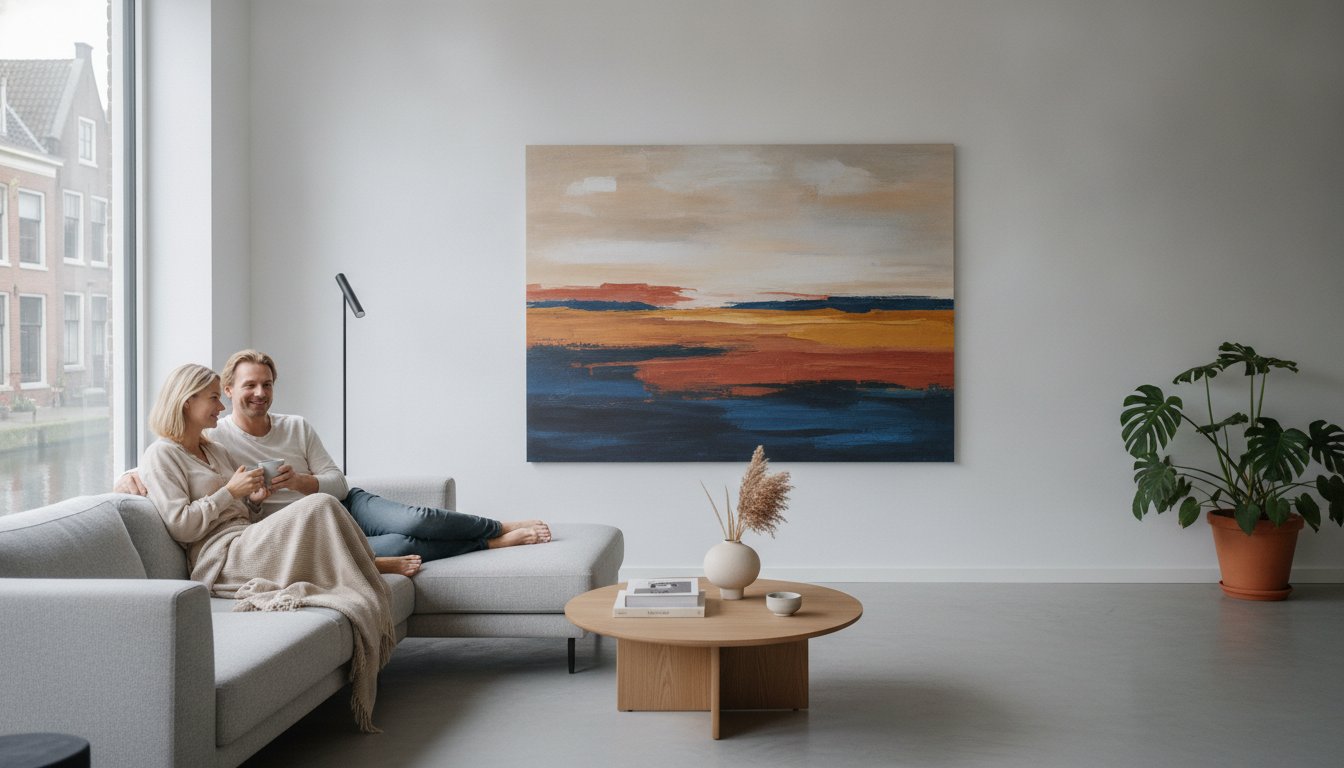
An infrared picture heater is a heating panel with a printed finish. It combines an image and heating in one position. It remains an electrical appliance with mounting and safety requirements. Choose not only by the image, but also by required output and a suitable room position.
This guide covers image choice, technical assessment, mounting and care. Printing does not automatically make a panel more economical or suitable for every wall. Unlimited colour stability and fixed coverage cannot be promised for all versions either.
Key points
Match picture dimensions and heating capacity. Check approved printing, any frame, safe clearances and fixings. For personal photographs, ask about resolution, crop and a proof. Assess controls, consumption and warranty for the specific model.
What does an infrared picture heater combine?
An electric heating element sits behind the printed finish. The panel transfers heat by radiation and convection. Material, construction and temperature vary. The image is part of the product design; do not add paint, wallpaper or fabric yourself, since these can alter heat transfer and safety.
Direct warmth depends on distance, position and obstacles. A fixed three-to-four-metre range is not universal. Radiators also emit radiation as well as convection; the difference is not simply air-only versus object-only heating. Assess comfort in the actual arrangement.
Assessing printing and heating performance
Ask which printing method applies and whether quoted performance covers the printed version. Do not assume universal ink absorbed into the coating or unlimited heat resistance. The manufacturer must approve the finish. Check colour-stability conditions, cleaning and sunlight effects in the product information.
Emissivity describes a surface property and is not a saving percentage. Electric resistance heating ultimately converts almost all electricity to heat. Running costs depend on demand, controls and operating time. A printed face or European origin alone does not prove lower total consumption.
Choosing an image that suits the heating position
First decide between extra seating comfort and full room heating. The latter needs heat-loss assessment including insulation, glazing, ventilation and temperature. A general 75-to-100-watt-per-square-metre rule is insufficient. Assess required panel size and available wall together.
Then choose an image suited to size and viewing distance. For a personal photograph, check resolution, crop and orientation on a proof. Use an image for which you hold the required rights. Frames must be approved for the heater; ordinary picture frames may interfere with heat transfer or clearances.
Mounting and maintaining it as a heater
Choose a load-bearing position with space for required clearances. A panel behind furniture may heat the wrong area. Determine height from safe model instructions and coverage, not picture eye level alone. Use specified mounting equipment and fixings suitable for wall and weight.
The surface can become hot and even brief contact may burn. Material structure does not guarantee safe touching. Consider children and pets and never cover the appliance. Have fixed connections and alterations carried out by a qualified installer and check combined electrical load.
Bathroom use requires approval for the specific panel and position. Assess zone, IP protection, connections and safeguards together; IP44 alone is not general permission. Clean only after safe shutdown and cooling with approved products. Check cable, mounting and controls for damage or faults too.
Personal advice on image and heating plan
We help private and business end users, installers and wholesalers. Share wall dimensions, photographs, heating needs and preferred image size. We discuss suitable versions and controls. Before ordering, check the proof, specification, warranty and lead time. Expected life is not a guarantee of twenty years of identical colour or performance.
A functional picture with realistic expectations
Value comes from combining a suitable image with usable heat at an appropriate position. The panel does not guarantee healthier air, less dust or lower bills. Solar panels do not automatically make it circular or energy-neutral. Ventilation, cleaning and considered heating schedules still matter.
Frequently asked questions
Can I add a different picture later?
Ask about the specific product’s options. Do not paint, stick over or cover a printed heating surface without approval. Some products only allow factory finishes. Have proposed changes assessed before adding material to the hot surface.
How much electricity does it use?
Multiply input kilowatts by actual running hours. A 1000-watt panel operating continuously for one hour uses about 1 kWh. Multiply by your tariff. Printing does not change this calculation; controls and demand determine required operating time.