
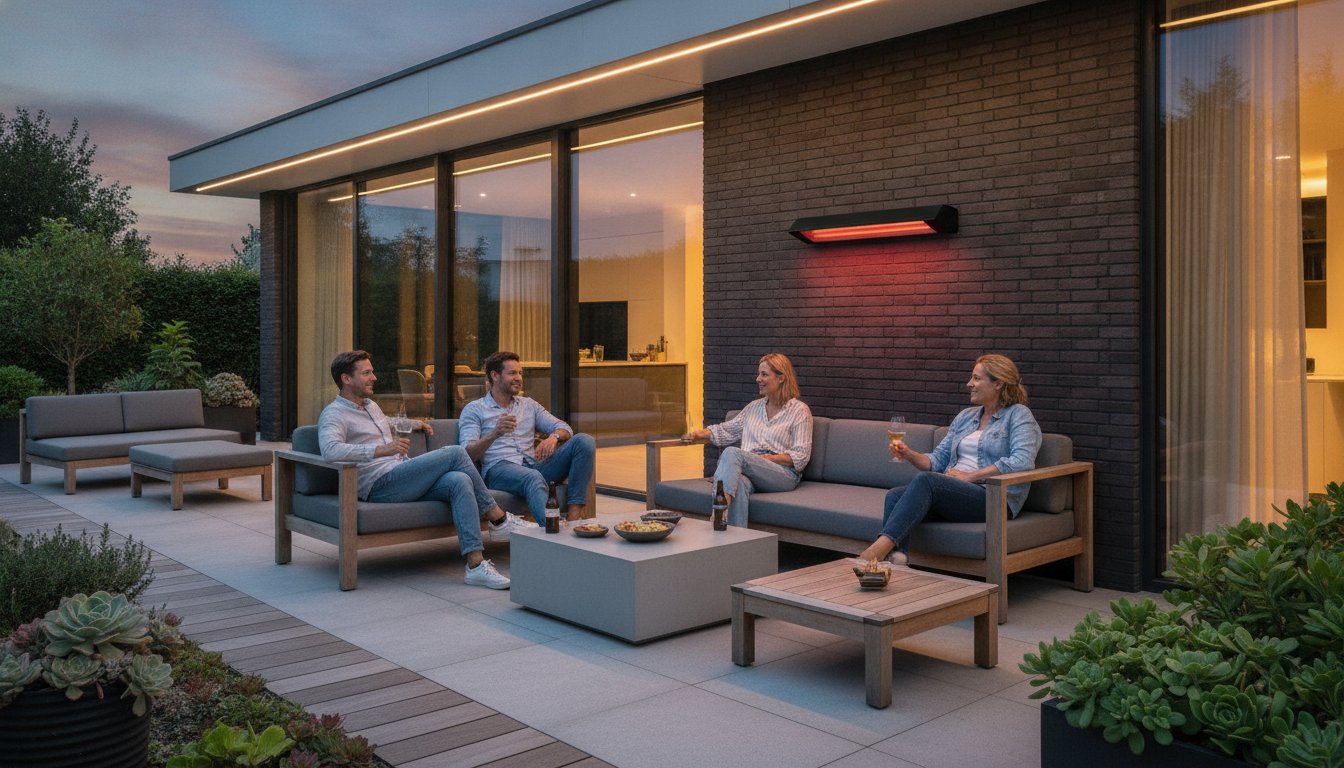
Infrared patio heating can provide local comfort where people sit or stand. Results depend on shelter, wind, outdoor temperature, mounting and the chosen device. Start with seating and operating times rather than a promise to keep an open terrace warm in every weather condition.
Key considerations
We supply private patios and verandas, business end users such as hospitality venues, installers and wholesalers. A plan and photos of the roof, open sides and mounting points help us prepare a proposal. For commercial terraces, also check applicable local conditions.
Understanding focused outdoor warmth
A radiant heater transfers energy to people and surfaces within range. Wind still removes heat from the body and warmed surfaces. Infrared radiation does not make a terrace windproof or eliminate heat loss. Gas patio heaters can also deliver radiant heat; compare specific systems at the same comfort level.
Electric patio heating needs no burner or gas cylinder at the point of use. Electricity consumption and environmental impact still matter. Self-generated solar electricity is not available at every heating time. An electric connection therefore does not automatically make use free or emission-free.
Compare technology, light and coverage
The marketing term heater does not establish wavelengths, surface temperature or light output. Some versions glow visibly; others have no visible glow. Even a device without light can have hot surfaces and high local exposure. Assess coverage using manufacturer data.
An open patio and sheltered veranda may need different versions. Assess stated coverage at the actual mounting height and seating area. Terms such as short-wave, long-wave, black heater or heatstrip do not replace radiant-distribution assessment or approval for outdoor use.
Match power and positioning to seating
Measure terrace size, mounting height and user distance. Record open sides, wind direction, roof materials and curtains or blinds. Wattage per square metre alone cannot predict comfort. One powerful source may perform differently from multiple devices with suitable distribution.
Follow the exact device’s mounting height, orientation and clearances. Consider head height, accessibility and combustible materials. Use only approved brackets or stands. Dimmers, remote controls and zone controls must suit the heater type and connected load.
Check outdoor use, connection and maintenance
Check explicit approval for outdoor use and exposure to rain, moisture or corrosion. IP rating alone does not describe every use condition; mounting position, connection and accessories matter too. Have an installer assess supply, cables, protection and switching for the complete combination.
Check substrate, load capacity, fixings and clearances according to the manual. Ceiling installation is not always best. Have a competent installer assess supply, protection and combined electrical load. A plug or wireless thermostat does not make every connection or location suitable.
Do not replace a circuit breaker type based on heater power alone. Where start-up current is high, protection and any starting aid must suit the installation and manufacturer instructions. Have this assessed competently instead of following blanket advice to fit a C-curve breaker.
Switch off, isolate and let the device cool before carrying out maintenance as prescribed in the manual. Do not casually touch reflectors or heating elements, or use one general cleaning method for every model. Low-maintenance can still require cleaning and inspection.
A proposal for patio or hospitality projects
Send dimensions, photos, shelter details, mounting points and intended use. We can discuss suitable versions and controls. Installers and wholesalers can add quantities, project phases and technical questions. Specify supplied accessories and any installation work in the proposal.
Compare running costs and product terms
A 2000-watt heater running continuously at full power for one hour uses about 2 kWh. Multiply actual consumption by your total electricity tariff. This example does not predict comfortably heated area. Lamp or element lifespan and warranty vary by version and are not a fixed operating-hours guarantee for every device.
Patio heating FAQs
Can the surface become hot?
Yes. Surface temperatures vary by version and can pose a contact risk. Choose an approved location considering children, pets and other vulnerable users. A temperature limiter does not automatically make touching safe. Do not cover the device unless expressly permitted.
Does a patio heater work in wind?
That depends on device, shelter and desired comfort. Wind still removes body heat and can reduce comfort. Discuss actual conditions during selection; a wavelength or coverage claim in favourable conditions does not guarantee comfort in strong wind.