
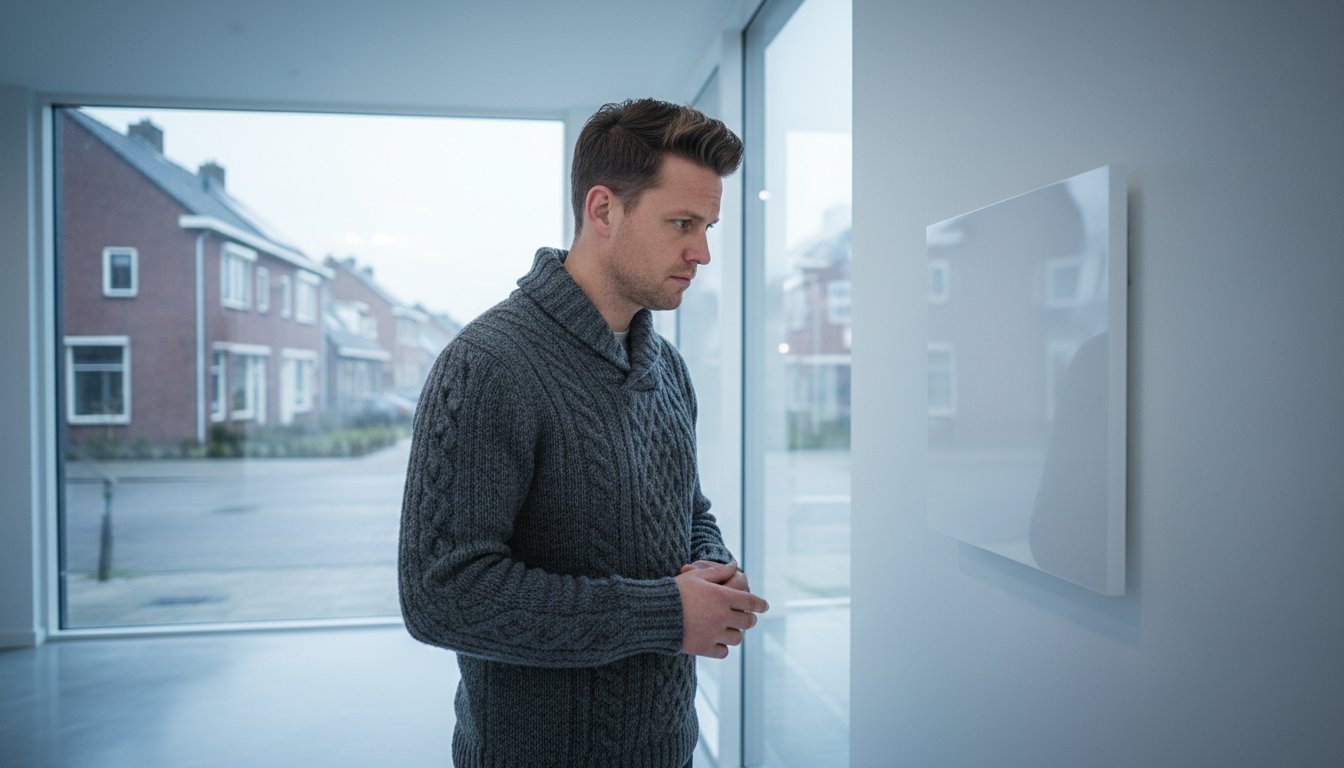
Infrared is not a universal replacement for every boiler or heat pump. Assess heat loss, use, mounting space and the heating you compare it with. Good planning can reduce limitations but cannot remove every disadvantage.
Key considerations
Consider radiation obstruction, hot surfaces, warm-up behaviour, electrical load and actual costs. An energy label or area alone does not establish suitability. Choose after assessing the exact version and placement.
What the technology does and does not do
Panels emit radiant and convective heat in model-dependent proportions. Exposed people and surfaces may warm, but panels do not make a cold room instantly comfortable or prevent heat loss. There is no fixed temperature reduction with identical comfort. Continuous operation or full shutdown is not universally the best strategy either.
Consumption and costs
Electric resistance heating converts almost all electricity into heat, as do convectors. Radiation share, consumption and savings are separate matters. Compare actual boiler or heat-pump performance at the same demand and schedules. Use your tariffs, hours, installation and maintenance costs. There is no universal heat-pump COP, wattage by energy label or fixed infrared saving.
Range and shadowing
Cupboards, tables, curtains and seating position can obstruct direct radiation. Distance and direction affect exposure; panels have no universal range limit. Ceiling mounting may suit the room but does not guarantee warm feet or even coverage. Ventilation and open windows still cause heat loss even when surfaces store heat.
Practical installation limitations
Appliances need approved mounting, adequate supports, clearances, power and compatible controls. Consider visible cables, wall space and hot parts near furniture or vulnerable users. Have total load assessed rather than treating a generic wattage threshold as an installation rule. An on/off thermostat is not automatically unsuitable; PID, modulation or Wi-Fi must fit the combination.
How product advice helps
Heat-loss calculations and layout plans help choose suitable heating or an alternative. Compare dimensions, finishes, warranty and measurements for the exact model. Material or price alone does not establish quality or savings. Share photos, layout, usage and existing-system details. We support private and business end users, installers and wholesalers with product information and quotations.
Agree expectations and management
Assess comfort at occupied spots and consumption across the whole system. Supplementary panels alongside radiators or floor heating need coordinated controls. Follow cleaning and inspection instructions; low maintenance is not maintenance-free. Absence of a fan does not guarantee lifespan or freedom from faults.
Frequently asked questions
Main heating needs room-by-room assessment; poor insulation still creates high demand. Warm-up and surface temperature vary by appliance. Hot surfaces and radiation require suitable distance and operating duration; prevent accidental contact. Panels are not health treatments or air purifiers. Have electrical upgrades and coordination with existing heating assessed by a qualified installer.