
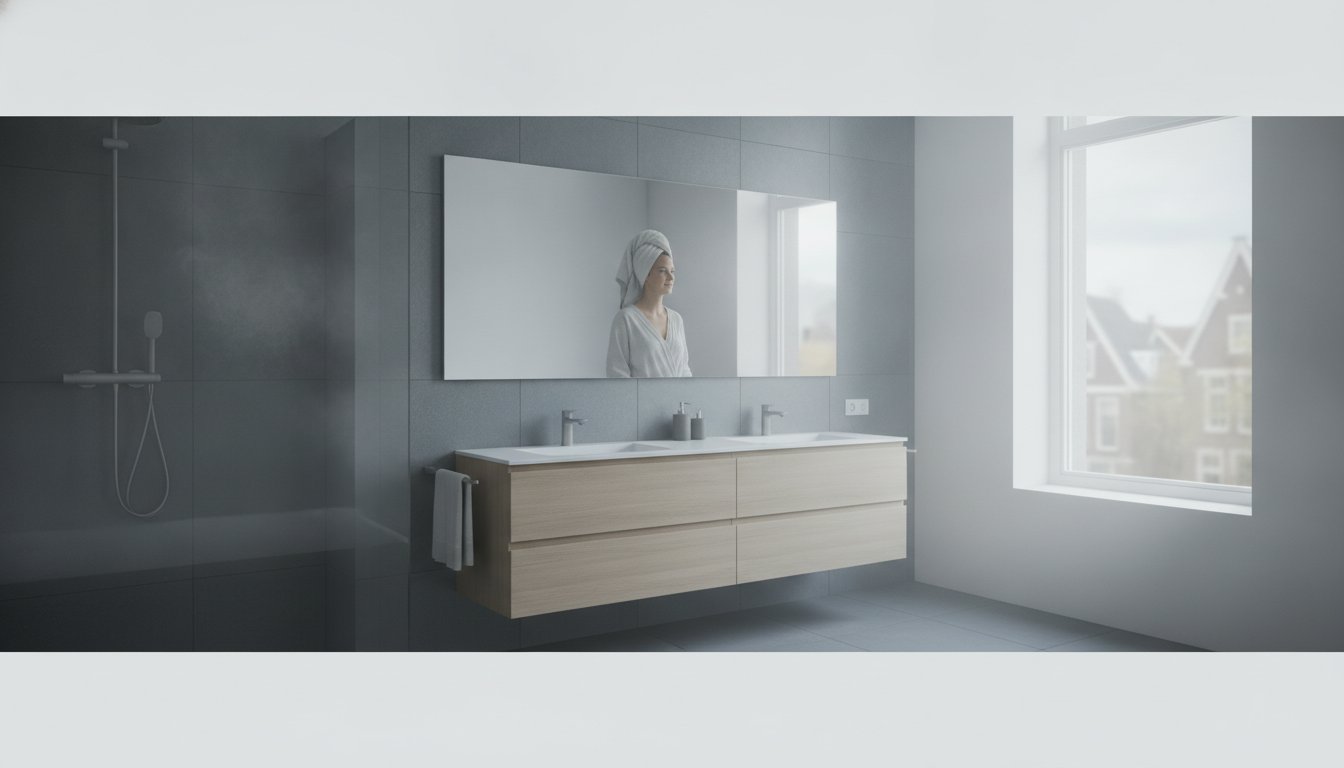
Infrared bathroom heating may be wall-mounted, integrated in a heated mirror or provided by a suitable ceiling model. What suits your room? The choice is not only about design. A bathroom needs suitable mounting, electrical safety and sufficient warmth at occupied spots together. This guide helps discuss those choices as a whole.
Key points
First assess the desired function and safe mounting positions. Have the electrical combination assessed for the actual bathroom. A panel may become hot and even brief contact may cause burns. Heat does not replace ventilation, and an IP code alone does not approve a complete bathroom installation.
Matching infrared bathroom heating to your routine
An infrared panel releases radiant and convective heat. Direct radiation may feel pleasant while dressing or at the basin if coverage and distance are suitable. This does not mean air or the whole room immediately reaches temperature. Warm-up time depends on model, position and starting temperature.
Choose between extra warmth alongside existing heating and complete primary heating. Primary heating must account for heat demand including ventilation. A timer may limit unnecessary hours, but required start-up time and desired comfort remain decisive. Lower air temperature with equal comfort is not guaranteed for everyone.
Safety data for the specific model
Check permitted application, orientation, clearances, connection and protection in the model manual. Have mounting zone, water exposure and electrical safeguards assessed together. A general zone description or IP code does not replace this assessment.
Determine output from insulation, external walls, glazing, ventilation and desired temperature. A general value per cubic metre does not replace a calculation for your room. Available safe mounting space and radiation coverage must also match heat demand.
Which version fits: wall, ceiling or mirror?
Wall mounting may suit the basin; ceiling mounting can free walls. Check approved orientation, load-bearing capacity and coverage. The ceiling is not automatically more efficient and does not guarantee floor heating like a built-in underfloor system.
A heated mirror may reduce condensation on the heated section but is not always clear everywhere. Towels are only permitted on an approved rail or provision; an ordinary panel must not be covered. Check whether any lighting or demisting function has separate controls.
Comparing dimensions and clearance
Measure available width and height at the basin or ceiling. Mark doors, cupboards, lighting and bath or shower position on the floor plan too. Check prescribed clearances alongside panel size. Required output and a safe mounting position must both fit.
Combining with electric underfloor heating may be suitable if controls work together and total capacity is assessed. A constantly warm floor plus extra panels is not automatically more economical. Count both energy uses and any avoided heating together.
Checking installation and operating settings
Choose fixings after assessing substrate and weight. Concrete or plasterboard does not automatically mean one standard wall plug fits. Have fixed connections and alterations carried out competently. A dedicated circuit alone does not prove a safe combination; connection, controls and protection must align.
Test thermostat and schedule for morning and evening routines. Wifi can be convenient but is not required for good control. Check measurement position and receiver compatibility. An app does not automatically show measured kWh, and no algorithm guarantees zero unnecessary hours.
Our advice on selection and implementation
We help private and business end users, installers and wholesalers. Send a floor plan, photos, existing heating and desired function. We help consider suitable models and controls, reviewing dimensions, mounting conditions, controls and available documentation together.
Heating and ventilation belong together
Warmer surfaces may reduce condensation risk, but heating does not remove water vapour. Mould or recurring damp requires ventilation and investigation of the cause. A heating panel is not medical treatment and does not guarantee a healthier indoor climate.
Frequently asked questions about bathroom panels
Are running costs always lower than with a radiator?
No. Compare the same heat demand and comfort objectives. Calculate kW × actual on-time × electricity tariff and include any avoided gas use. An 800-watt panel operating continuously at full power for one hour uses 0.8 kWh; daily use is not fixed.
Is briefly touching an operating panel safe?
No, even brief contact can cause burns. Prevent unintended contact, especially by children and pets. Follow mounting and clearance requirements for the exact version.