
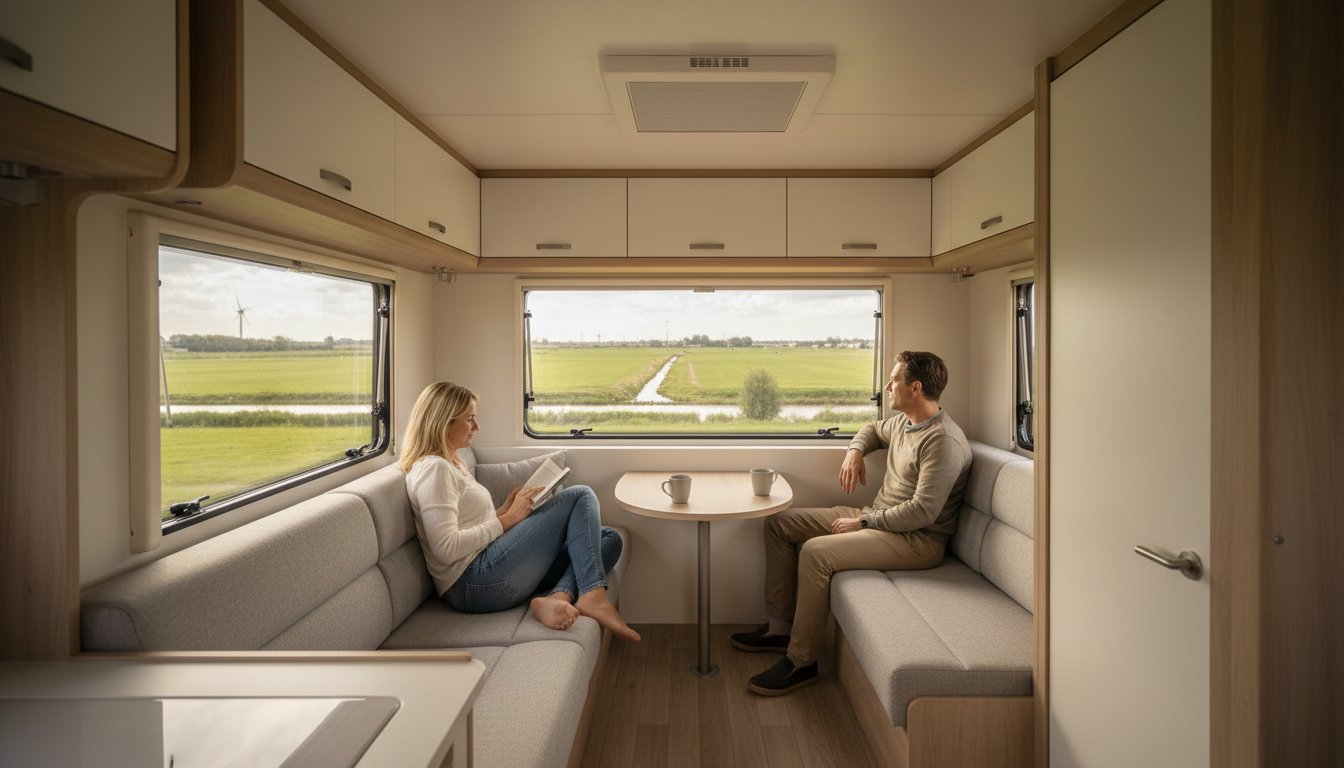
Infrared heating in a caravan requires more than a small plug-in panel. First check whether the appliance is approved for this use. Lightweight construction, limited space, electrical supply and travel conditions distinguish a caravan from a home. A standard domestic panel is not automatically suitable.
Key points
Assess the appliance, fixings, clearances and total electrical load together. Low wattage does not guarantee a warm caravan or simultaneous operation of other appliances. Have uncertainties assessed by a caravan installation specialist.
What can radiant warmth contribute?
A panel emits heat through radiation and convection. In a suitable position it may improve local comfort, but furniture, distance and heat loss affect the result. Infrared does not eliminate ventilation or structural heat loss. Ventilation openings must not be blocked to retain warmth.
Campsite supply and consumption
Check the supply and restrictions at the pitch. Add simultaneous loads from heating, cooking, water heating and other appliances and have the caravan installation’s capacity assessed. A thermostat can interrupt heating but is not automatically a load limiter. Calculate costs using actual consumption and the campsite tariff; a panel’s rating does not prove savings against gas or a convector.
Safety without blanket guarantees
An electric appliance burns no gas at its point of use, but this does not eliminate electrical, fire or combustion risks from other equipment in the caravan. Hot surfaces can cause burns. Protect children and animals and keep bedding, curtains and luggage outside the specified clearances. Also follow the caravan manufacturer’s instructions and retain existing safety provisions.
Assessing mounting and heating needs
Do not use a general watts-per-cubic-metre rule as a final calculation. Outdoor temperature, insulation, use and ventilation help determine heating demand. Check the exact weight and have structure and fixings assessed for both stationary use and transport. Thin walls or standard cavity fixings are not automatically suitable. Wall or ceiling mounting and cable routing must follow the permitted application.
Ask for documented suitability
We supply private and business end users, installers and wholesalers. Share vehicle type, photographs, supply details and intended use before selecting a product. We can help assess product information; without confirmed suitability, we do not recommend an arbitrary domestic panel as caravan heating.
Make a checked choice
First establish whether the aim is occasional supplementary heat or main heating in winter. Test the final solution under suitable conditions and follow maintenance and operating instructions. Heating does not automatically resolve leaks, moisture production or inadequate ventilation.
Discuss the application with us
Frequently asked questions
Can it run all night? Only when the manufacturer permits the appliance and operating mode and the complete installation is suitable. A thermostat or assumed overheating protection is not general permission.
Can the same panel be used in an awning? That is a separate application. Assess suitability for moisture, outdoor conditions, tent fabric, mounting and electrical supply. Higher wattage does not make an indoor appliance suitable for an awning.