
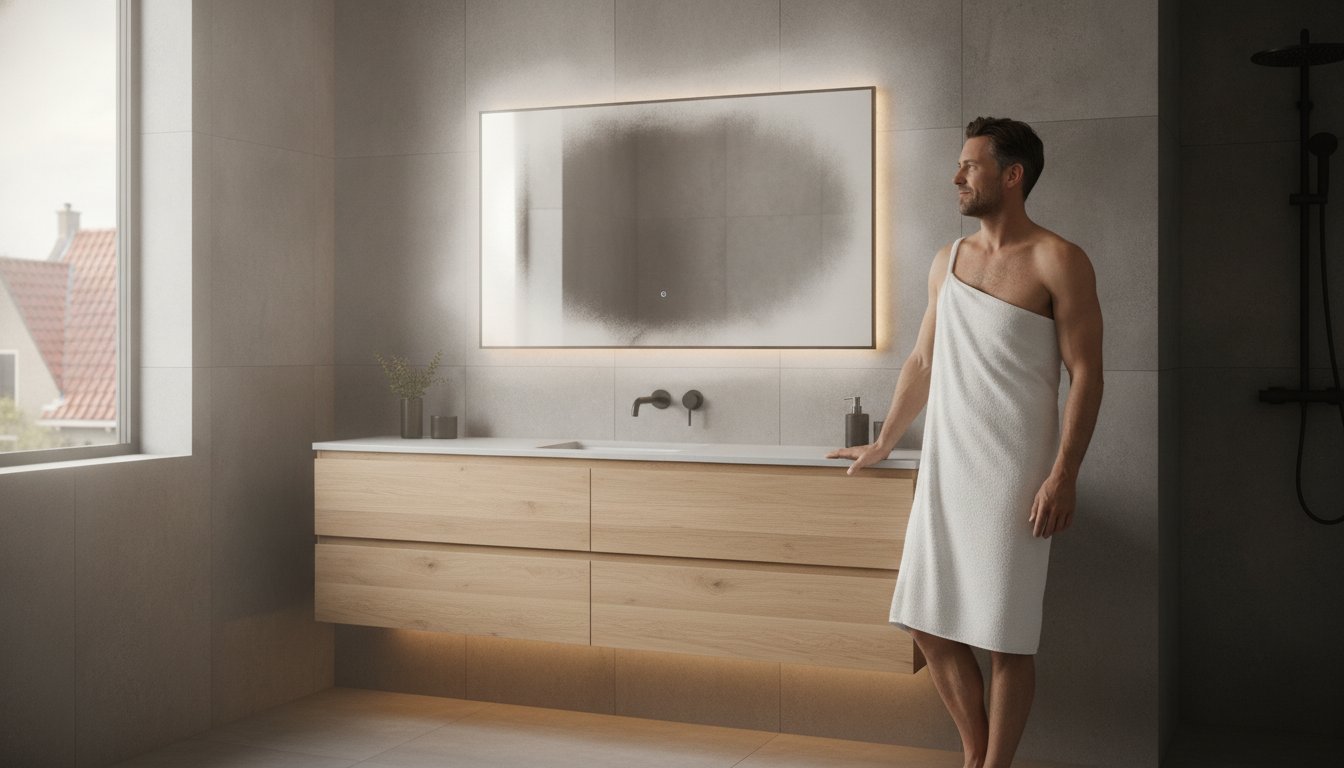
Bathroom infrared heating may supplement or provide the full heat supply. First define the task: warmth at the basin, a comfortable room or an addition to existing underfloor heating. Then choose a technically and spatially suitable model. This guide helps prepare that choice.
Key choices
Compare heat demand, available positions, water exposure, electrical capacity and controls. Mirrors, wall panels and ceiling panels have different conditions. Assess the complete combination and check permitted placement before buying. An IP code or design name alone is insufficient.
Which comfort need are you addressing?
Panels radiate towards exposed people and surfaces and also produce convection. Shower screens, furniture and open doors affect results. The panel and cold room need warm-up. Test necessary preheating rather than expecting instant comfort on every visit.
Ventilation still removes moisture and causes heat loss with infrared too. Panels do not sterilise, prevent all condensation or treat health conditions. Investigate ventilation, leaks and construction when damp persists. Heating alone cannot resolve those causes.
Water, electrical safety and product documents
Have the actual position and water exposure assessed with approved use, connection and protection. Generic zone distances or a blog’s standard number are not an installation design. Ceiling location or an IP code alone does not approve mounting beside or above a shower.
Request the exact model’s manual and documents. Material or European origin does not demonstrate corrosion resistance or life. Read test marks within their documented scope. Correct mounting and hot-surface precautions remain necessary, including around children and vulnerable users.
Mirror, wall, ceiling or lighting
A heated mirror combines mirror use and heat. Check whether it provides room heating or only demisting: these are different functions. A warm mirror may reduce condensation, but clear glass immediately after every shower is not universal. Assess distance and access to hot surfaces.
Ceiling mounting frees walls but needs approved equipment and support. It is not automatically the best distribution or a replacement for actual underfloor heating. Compare permitted options from occupied positions. Integrated LEDs also need suitable light output, switching and supply.
Output, mounting and control strategy
Calculate heat loss for full heating using insulation, glass, exposed area, ventilation, height and target temperature. For supplementation, define the existing heater’s role. Fixed W/m³ figures or slight oversizing are not universal savings methods. Check coverage and comfort from actual positions too.
Choose compatible thermostat, receiver and panels. Position sensors as instructed and test preheating, switch-off and failures. Combining with underfloor heating requires coordination and its own limits. An app or central controller does not automatically support every system.
A suitable proposal from us
We advise private and business end users, installers and wholesalers. Send photos, plans, mounting options and existing heating and ventilation details. Compare models and controls for the application. Full replacement is not always necessary; supplementation or better setup may also fit.
Review comfort and costs after installation
Assess performance during real visits and meter use where possible. Costs depend on actual hours, output and tariff, not a fixed promise that infrared beats other electric heating. Clean and inspect as instructed; expected life is not a warranty period.
Request a quote for your bathroom
Frequently asked questions
Can a panel fully replace the radiator?
Assess heat demand, approved mounting, distribution and electrical capacity. Do not remove existing heating solely because a panel has equal rated output. Check the complete design and controls first.