
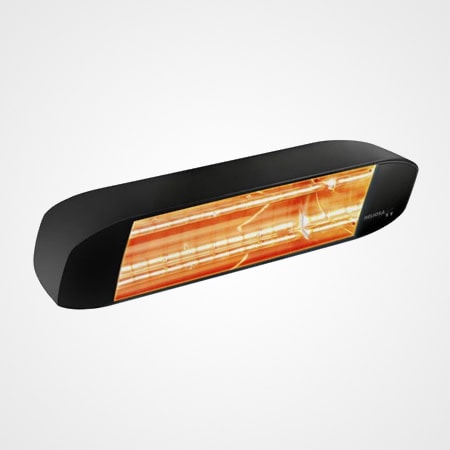
A small infrared radiant heater can provide extra comfort in a targeted spot, such as a workbench, counter or seating area. Its usefulness depends on the appliance, distance and conditions. First decide which people and activities you want to support; a compact housing says little about heat coverage or the required safety clearance.
Key points
Compare radiation distribution, visible light, permitted applications and controls. Maintain the clearance specified in the manual. Calculate consumption using actual power and on-time. Targeted supplementary heating is not automatically the lowest-consumption solution for a whole room.
How does a small infrared radiant heater work?
The heating element emits infrared radiation among other things. People and surfaces that absorb radiation take up heat. Convection also occurs and the air warms up. Furniture, screens and other obstacles can block the direct radiation path. How quickly warmth becomes noticeable varies by element and version.
Wavelength and element temperature influence the sensation of heat and any glow. They do not independently prove suitability for a terrace, bathroom or workshop. Compare the complete product data, including the permitted environment and position. An appliance without a fan does not eliminate air movement or dust either.
When can targeted supplementary heating save energy?
Savings are possible when local warmth helps reduce heating elsewhere without compromising comfort or building conditions. If existing heating continues unchanged and the radiant heater is added, total consumption may increase. Compare the same operating hours and comfort; a fixed comparison of wattages is insufficient.
Consumption in kWh is input power in kW multiplied by actual on-time. Multiply by your electricity tariff. Power settings and controls affect the calculation. Solar electricity is not available at every heating moment and also has an economic value; include it in the comparison.
Choosing a small infrared heater: what should you check?
Assess radiation distribution at the intended distance, mounting position, visible light and permitted operating duration. A reflector can influence direction, but material names alone do not prove higher overall efficiency. Check whether built-in safeguards are present and which restrictions remain; tip-over protection does not replace stable positioning.
For damp or outdoor environments, have permitted application, exposure and the complete electrical connection assessed together. An IP rating alone is not general permission for every location. Also check the suitability of the plug, socket and controls in the chosen spot. Connect an electric heater directly to a suitable wall socket; do not use a power strip or cable reel. If in doubt, have the connection assessed.
Applications: from bathroom to workshop
At a desk or counter, the position of the seated or standing user matters. Avoid excessively heating just one body part or placing documents and equipment too close. Choose the position according to the work process and prescribed clearance, not one standard height or angle.
A bathroom requires a version approved for that purpose and a suitable installation. Heating does not replace ventilation or address the cause of damp or mould. In a workshop, dust, flammable materials, vapours, machinery and movement routes must also be considered. An ordinary heater is not automatically suitable for every industrial process.
For terrace use, air temperature, wind and shelter still affect comfort. Radiation is not carried away in the same way as warm air, but wind can further cool people and surfaces. A wavelength description alone therefore does not prove a comfortable or safe outdoor setup.
Advice on a suitable radiant heater
We support private customers, business end users, installation companies and wholesalers with product selection. Share a photo or floor plan, operating duration, user positions and environmental details. We can then advise specifically on the appliance, controls and placement, considering the available electrical installation.
A suitable choice for targeted warmth
Before use, check stability or fixings, cable route and clearance. Only move an appliance as the manual permits and let hot parts cool first. Clean and inspect it as instructed. Expected lifespan depends on the model and does not guarantee that elements, connections or controls will never need maintenance or replacement.
Frequently asked questions about small infrared heaters
Is it a health product?
A space-heating appliance is intended for thermal comfort. It is not a treatment for pain, allergies, asthma or circulation problems. Consider hot surfaces and the prescribed distance from people. Anyone with reduced heat sensation or unable to react independently requires extra care in selection and operation.
Can the appliance serve as primary heating?
Size or name does not establish this. Heat loss, distribution, operating duration, controls and product suitability determine primary-heating suitability. A pleasant local sensation does not prove the whole room is heated adequately.
Does the electrical installation need alterations?
Have the connected load assessed alongside other appliances. A fitted plug does not mean every socket or circuit is suitable. For fixed mounting and special environments, fixings, connections and controls must also suit the application.