
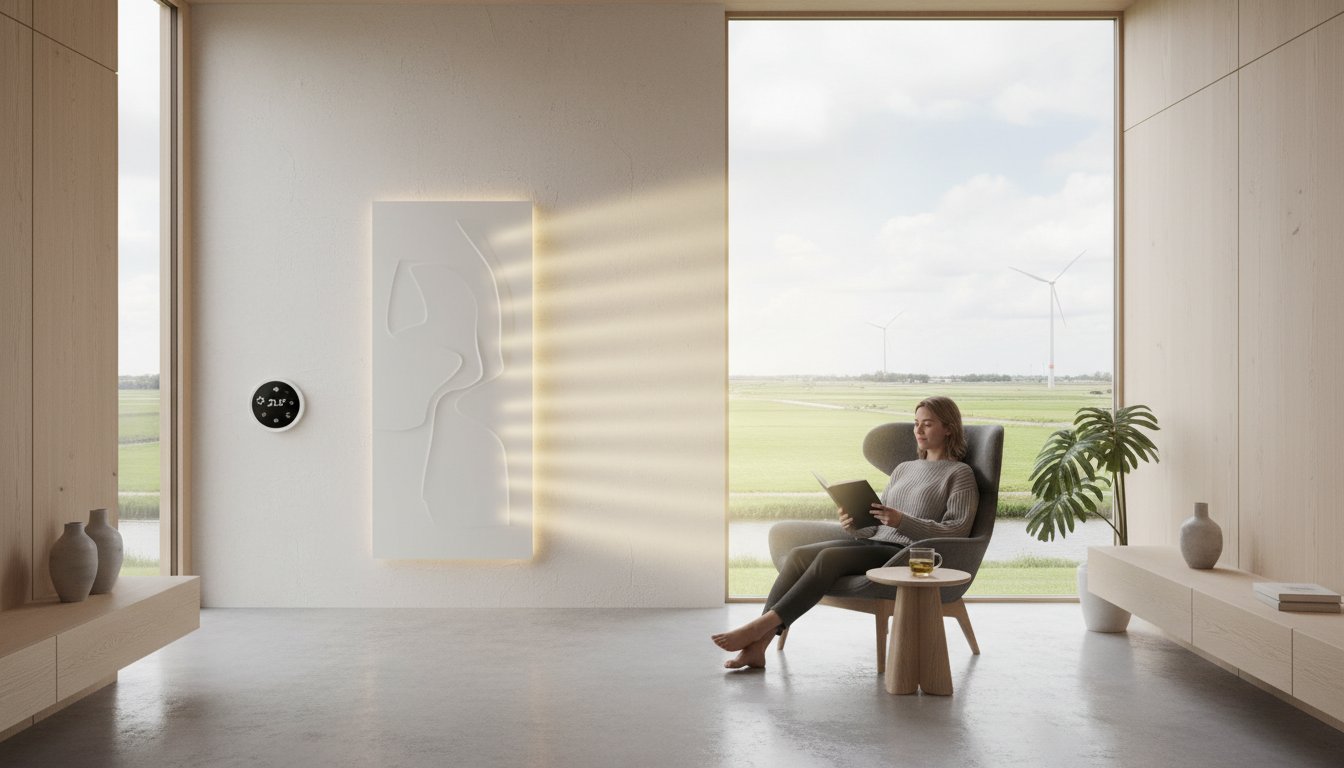
Illustration: the light lines have been added to represent heat transfer. They show neither visible light from the panel nor measured heat distribution.
The name infrared radiator is used for various electric heating products. The name alone says little about radiant fraction, shape or performance. Look at the exact appliance and first determine whether you want to heat an entire room or a specific position.
Key points
Distinguish output, consumption and comfort. Have heat demand and electrical possibilities assessed and check mounting and controls for each model. Low maintenance needs do not remove cleaning or checks. Savings and suitability as primary heating do not follow from the product name.
Radiant warmth and convection
A warm surface transfers energy through radiation and convection. People and surfaces can absorb radiant warmth; air also gets warmer through heat transfer. Water-fed radiators emit both forms too. It is not an absolute choice between heating only air or only objects.
IR-A, IR-B and IR-C refer to wavelength ranges. Do not use these labels as medical recommendations or general safety guarantees. Ask about intended use, distances and permitted mounting. A panel can become hot and must not be covered.
Determining output and electrical connection
Square metres give an initial impression of the space but are not a complete calculation. Height, glazing, insulation, external surfaces, ventilation and desired temperature matter too. The Rc thermal-resistance value of one building element does not independently determine required output. Do not therefore use a general fixed-watts-per-square-metre table as a guarantee.
Local warmth needs assessment of the seating or work position and possible shielding. Primary heating must meet the full heat demand. More output does not always solve an unfavourable position. Have the installer also check suitable load, protection, connection and switching alongside other connected appliances.
A thermostat must suit panel and electrical switching capacity. Wireless or smart does not mean every system works together. Position the sensor representatively and ask what happens after power or connection failure. Zone control does not automatically limit total electrical peak load.
A fair comparison with other heating
Compare solutions for the same operating duration and comfort goal. Electric resistance ultimately converts almost all electricity into heat, while a heat pump also moves environmental heat. This does not automatically make a panel the most economical whole-home heating. Targeted heating may be useful if it prevents unnecessary heating elsewhere but requires a situation-specific comparison.
Heating does not repair air leaks or guarantee elimination of cold downdraughts at glazing. Ventilation also continues causing heat loss. Having no fan does not prevent natural air movement or dust transport. Comfort heating does not treat health complaints. Assess insulation, ventilation and moisture problems separately.
Applications at home and work
A work or hobby room used temporarily needs a different approach from a daily-used living room. In an office, seating, usage times and clearance around desks matter. Ceiling mounting can free space but is suitable only if model, ceiling and coverage fit. Workshops also require attention to dust, materials and the working environment.
In a bathroom, the model and exact mounting position must be permitted. An IP rating is not general permission for every zone or shower use. A heated mirror and an appliance for room heating do not automatically perform the same function either. Have connection and positioning assessed together.
What we consider when choosing
We help private and business end users, installers and wholesalers. Share a floor plan, insulation information and usage wishes. We discuss versions, controls and missing information. Check quality marks and warranty for the exact model; not every product automatically has the same certificates, origin or conditions.
From comparison to a complete proposal
Have product, controls, mounting and electrical work listed separately in the quote. When switching, include hot water and other gas functions too. Agree who connects, commissions and explains operation. Keep documentation and follow cleaning and inspection instructions. Expected service life differs from a warranty period.
Frequently asked questions
How do I calculate electricity consumption?
Multiply power in kilowatts by actual operating time. A 1,000-watt appliance operating continuously at full power for one hour uses 1 kWh. A thermostat can change operating time, but a fixed percentage assumed beforehand is not guaranteed. Multiply use by your tariff for a cost estimate.
Can I directly replace an existing radiator?
First have heat demand, electrical installation and position checked. A water connection differs from an electrical connection, and the old rated output is not a complete design basis. Remove the existing system only after the new plan and effects on the rest of the installation are clear.