
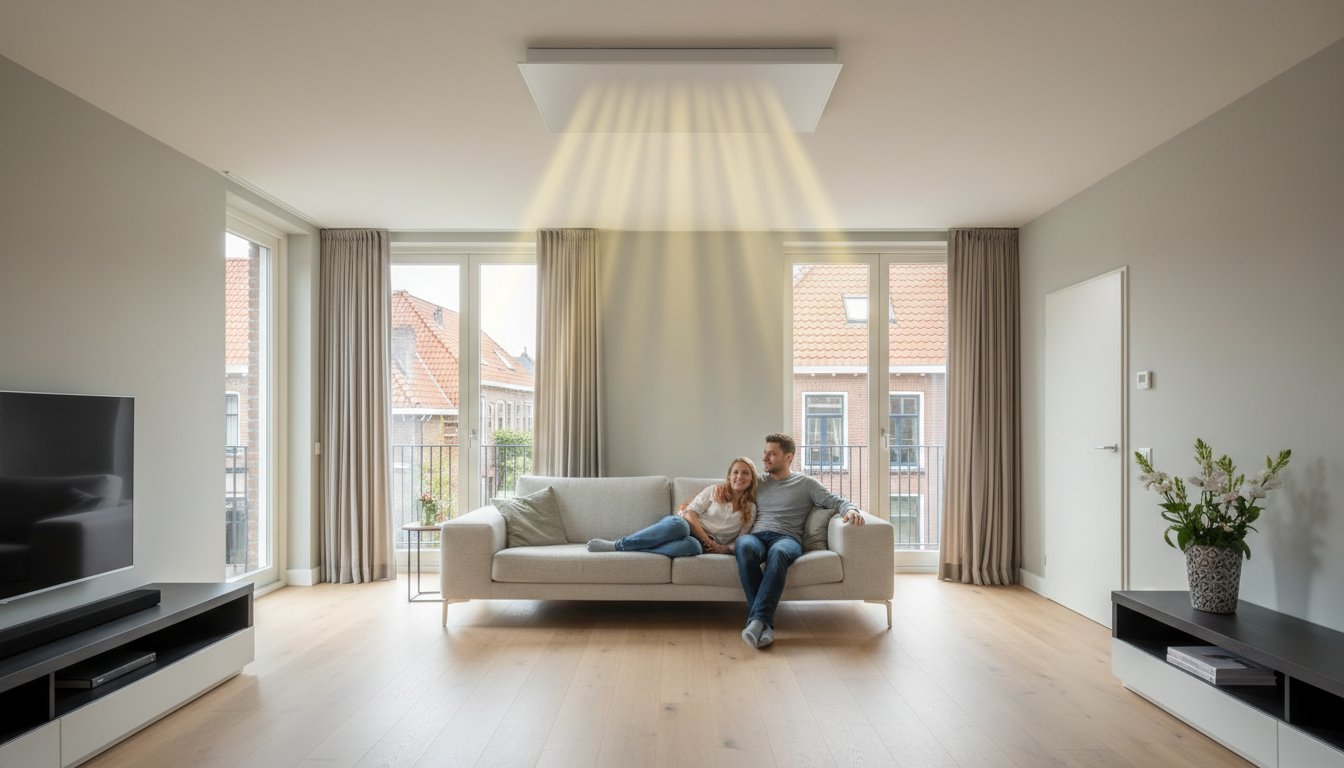
Ceiling mounting can free walls and direct heat towards occupied zones. Not every panel or ceiling is suitable. Check the product manual and structure before deciding output, position or finish.
Key considerations
Assess mounting approval, weight, supports, fixings, clearances and electrical load together. Choose compatible controls and test comfort from occupied spots. Ceiling mounting is not universally the most economical or safest solution.
What ceiling mounting offers
Panels emit radiation and convection. Radiation from above may reach people and surfaces, but tables and furniture can still obstruct parts. Warm floors, even room temperatures or fixed thermostat reductions are not guaranteed. Air movement and heat loss remain; heating does not purify air or treat health conditions.
Output, distance and coverage
Assess heat loss, use, ceiling height and desired distribution. Do not use generic watts by energy label, angles, safety clearances or heights for every model. More output or suspended mounting is an option only if approved for the appliance and structure. Calculate consumption from kilowatt input and actual hours, multiplied by your tariff; no standard minutes-per-hour cycle applies.
Versions and lighting
Compare metal, glass and other versions using exact instructions, weight, size and heat data. Mirror or wall models are not automatically permitted overhead. With LED combinations check light distribution, controls and actual independent operation. Recessed grid models must fit the grid and required structural support. Material or size alone cannot establish load capacity or fire safety.
Prepare and assess installation
Map occupied spots, obstacles, cable routes and power. Have substrate and fixings assessed; plasterboard, timber and concrete require their own solutions. Use specified brackets and locks without generic drilling or anchor instructions. Have fixed wiring, circuit load and protection checked. Existing ceiling boxes or sockets are not automatically suitable. Conceal receivers only in approved positions.
Quality, controls and costs
Ask for documentation for the supplied version; origin or warranty does not establish universal certification or lifespan. Check thermostat and receiver compatibility and place sensors as instructed. Compare purchase, installation, controls, energy and maintenance at equal demand. Appliances without fans or fluid circuits can still fail and need inspection. There is no fixed saving or cost-free operation.
Advice for homes and projects
Send plans, ceiling construction, dimensions, photos, insulation and schedules. We support private and business end users, installers and wholesalers with selection and quotations. Agree supplied items, installation assessment and management. Check operation and comfort after mounting and layout changes.
Frequently asked questions
Rear surfaces can heat up; a generic temperature does not establish safe timber or plasterboard mounting. Required clearance and height depend on the exact model. Prevent access to hot surfaces as instructed and never cover them. Clean after safe shutdown and cooling; inspect fixings and cables. Low maintenance is not maintenance-free; stop use and seek assessment after damage or unusual behaviour.