
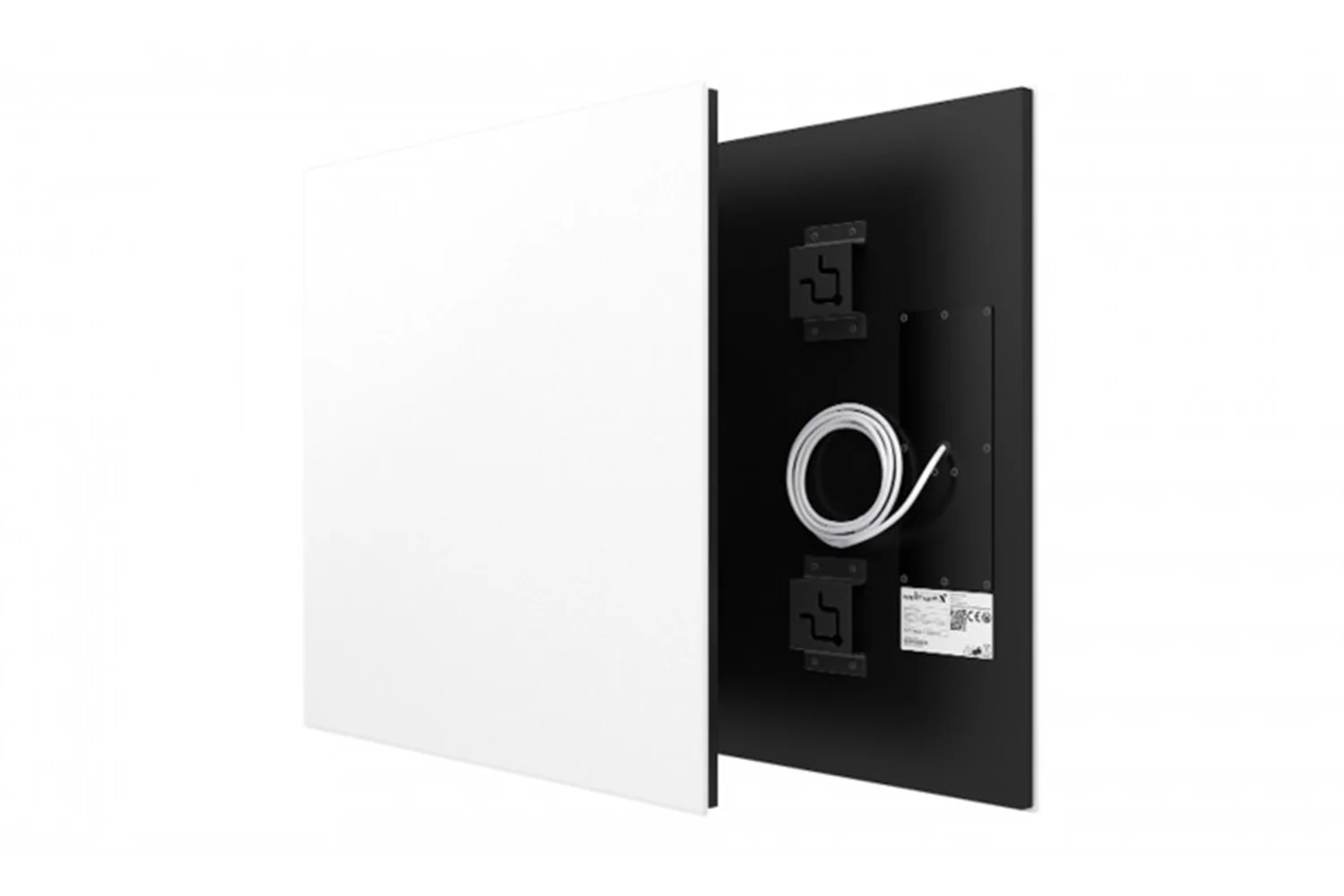
Product image: example of an electric heating panel. For animal housing, the product application and safe installation must be confirmed separately.
Heating a dog house first requires an assessment of the animal’s accommodation, including when it is a kennel. A panel suitable for a living room is not automatically suitable around moisture, hair, straw and a dog that may chew or jump. Start with the conditions the animal needs, then have product application and installation assessed.
A heat source does not replace dry, appropriately sheltered accommodation, adequate exercise and social contact. Provide suitable indoor accommodation during extremely cold, hot or prolonged wet weather. Discuss with a vet whether outdoor accommodation suits your dog and the current conditions.
Key considerations
Use only an appliance the manufacturer permits for the specific conditions. Assess hot surfaces, combustible bedding, water, cable damage and faults. The animal must be able to move to a suitable place away from direct heat. Ask a vet for advice if uncertain about climate conditions or health.
What does infrared heating mean in animal housing?
A panel radiates warmth towards exposed surfaces and people or animals within range. Convection also occurs and the air warms too. Openings, ventilation and insufficient insulation continue to cause heat loss. A panel does not automatically make unsuitable outdoor accommodation fit for winter use.
Thermal comfort is not treatment
A space heater is not therapy for arthritis, pain, respiratory complaints or recovery after surgery. Research into medical applications of infrared does not establish such effects for an ordinary heating panel. Older, ill, young or less mobile animals may need separate advice on climate and care.
Maintain ventilation, dry bedding and cleaning. Heating does not remove moisture from the accommodation or clear the air of hair, dust or pathogens. For persistent moisture problems, also investigate leaks and construction. Do not reduce ventilation merely to retain warmth.
Safety before comparing technologies
Compare only appliances approved for the application. No general category is fireproof, chew-resistant or safe when covered. Metal alone does not establish impact or corrosion resistance. Temperature protection does not permit blankets, straw or fur to touch the appliance.
Have moisture exposure, ambient temperature, possible rain and cleaning methods assessed together. An IP code alone does not make a device suitable for every outdoor enclosure. Have power supply, protection and cable route professionally assessed, protecting against the animal’s behaviour without obstructing the specified heat dissipation.
Assessing output, positioning and controls
Dimensions alone do not determine output. Include insulation, openings, ventilation, winter conditions and appropriate climate requirements. A fixed output such as 400 watts or a general value per cubic metre is not a safe selection rule for every dog house. Extra power does not guarantee lower consumption.
Follow the permitted mounting method and clearances for the actual model. Assess whether the animal can reach the surface, sensor or cables, including when jumping or bedding shifts. Provide an appropriate escape area and inspect the arrangement before use. An ordinary domestic stand or homemade grille is not proven suitable protection.
A thermostat must suit the appliance and conditions. Position and protect sensors according to the design and manual. Test controls, independent measurement and failure behaviour before putting the system into use. An app does not guarantee supervision or reliable alarms; record who checks and what happens during faults. Do not set a universal night setback for the animal.
Product advice for private and professional animal housing
We discuss technical product questions with private and business end users, installers and wholesalers. Send photographs, dimensions, construction details and the desired application. For kennels with several enclosures, assess every zone and the combined electrical load. We confirm application suitability only on the basis of product documentation, not a general range claim.
Regular checks remain necessary
Check for damage, loose fixings, dirt and changes to bedding or accessibility. Clean according to the manual and have damaged equipment assessed out of use. Calculate costs using actual power, operating time and tariff. A fixed hourly cost or guaranteed saving compared with a heating mat cannot be given without an equivalent comparison.
Frequently asked questions
Can the animal burn itself on a panel?
A hot surface or prolonged excessive heat exposure can cause injury. Do not assume brief touching is safe or fur provides protection. Permitted application, accessibility, distances and the ability to move away must be assessed beforehand.