
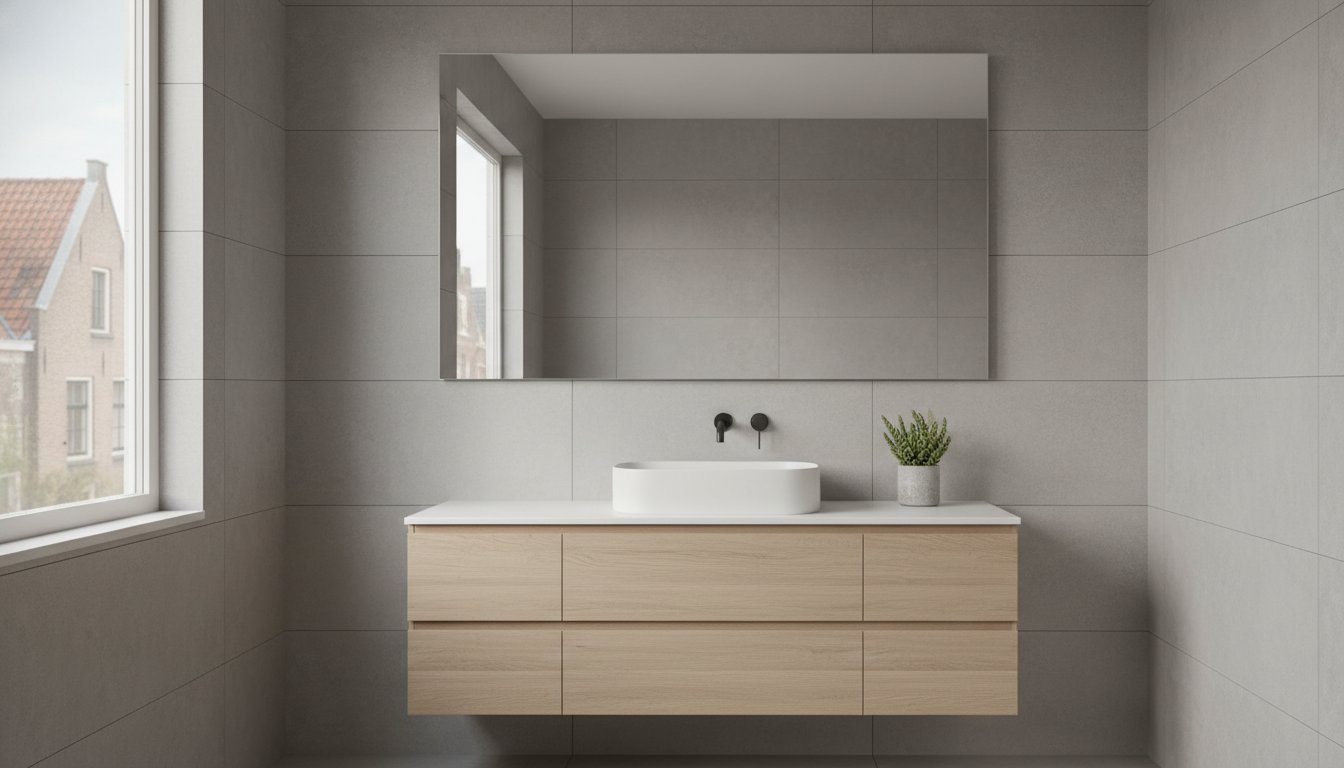
Do not choose an infrared panel for bathroom heating on output or appearance alone. One bathroom may have several comfort areas: at the basin, while dressing and in other occupied positions. Map these areas, then assess product suitability, heat loss and installation together. This creates a plan rather than an isolated purchase.
Key points
Distinguish local warmth from heating the entire room. Have the exact position and complete connection assessed. Check whether accessories such as lighting or towel rails are permitted. Maintain ventilation and choose controls according to use; no universal wattage or run-on time replaces this preparation.
How a bathroom panel works
The warm surface emits heat by radiation and convection. People and surfaces absorb radiation, and the air also gets warmer. The local sensation varies with distance, model and shielding. A shower screen, item of furniture or door can affect direct coverage. A panel does not eliminate heat loss through ventilation or external walls.
Warmer surfaces may collect less condensation if their temperature is high enough relative to the humid air. This does not mean the panel keeps all walls dry or resolves mould at its source. Check ventilation, moisture production and possible leaks. Local heating does not replace repairing a building-related moisture problem.
Assessing technical requirements and suitability
Have the model, mounting position, exposure and complete electrical connection assessed together. The required protection depends on that combination. An IP rating alone does not permit every location near water. Use current installation regulations and the product manual as the starting point, rather than a general zone table as mounting advice.
For primary heating, heat loss, ventilation, the desired temperature and use must be assessed. Room volume or the number of tiles alone does not determine output. For supplementary heating, the heat delivered at the intended position matters. Assess the space and product options before removing a radiator or adjusting the existing system.
Versions for different functions
Metal, glass and mirror offer different designs. Compare weight, dimensions, mounting and cleaning for each product; material alone proves neither higher efficiency nor unrestricted safety. A mirror panel can combine mirror and heating. Demisting works only on sufficiently warm areas under suitable conditions, not as a guarantee of permanently clear glass.
A ceiling panel can free wall space but does not automatically replace underfloor heating. For a lighting combination, check the approved LED module, driver and separate controls. Add towel rails only if the manufacturer and model permit them, and observe the permitted load. An ordinary panel must not simply be covered with fabric.
Coordinating positioning and installation
Draw doors, shower screens, furniture and occupied positions on the plan. Consider how heat reaches the basin and dressing area without violating prescribed clearances. Choose wall or ceiling positions for suitability, coverage and fixing. More panels or a central position do not automatically guarantee even warmth for every user.
Hot surfaces can cause burns, even after brief contact. Choose the position with children, pets and vulnerable users in mind. Have load-bearing capacity, supply, electrical load and protection appropriately assessed. Conceal cables only if the required space and maintenance access remain available.
A thermostat must measure the intended comfort zone and control the panel according to the product instructions. Programme it according to actual warm-up response and usage times. A fixed run-on time after showering does not guarantee dry walls. Keep the ventilation programme appropriate and check separately what the heating does and does not contribute.
Consumption, costs and operating duration
Calculate kWh from input power and actual operating time, and use your own tariff. Compare the complete situation, including existing heating. A heat pump can deliver more heat per kWh of electricity than direct resistance heating. Solar electricity is not always available during bathroom use and does not guarantee near-zero running costs.
Low maintenance does not mean checks are unnecessary. Follow cleaning instructions and inspect the panel, brackets, cable and controls as prescribed. Service life and warranty vary by component and product. European origin or a material name does not prove a fixed twenty years without loss of performance or repairs.
Advice for the complete bathroom plan
We help private and business end users, installation companies and wholesalers coordinate products and use. Share photos, a floor plan showing water points and furniture, insulation data and usage times. This lets us discuss suitable options and provide the installing contractor with relevant product information.
Frequently asked questions about bathroom panels
How quickly will I feel warmth?
Warming the panel and warming the entire bathroom are different processes. Model, starting temperature, distance and heat loss all play a role. A fixed time of a few minutes does not apply to every version. After handover, check whether the programme provides the desired comfort at the right time.