
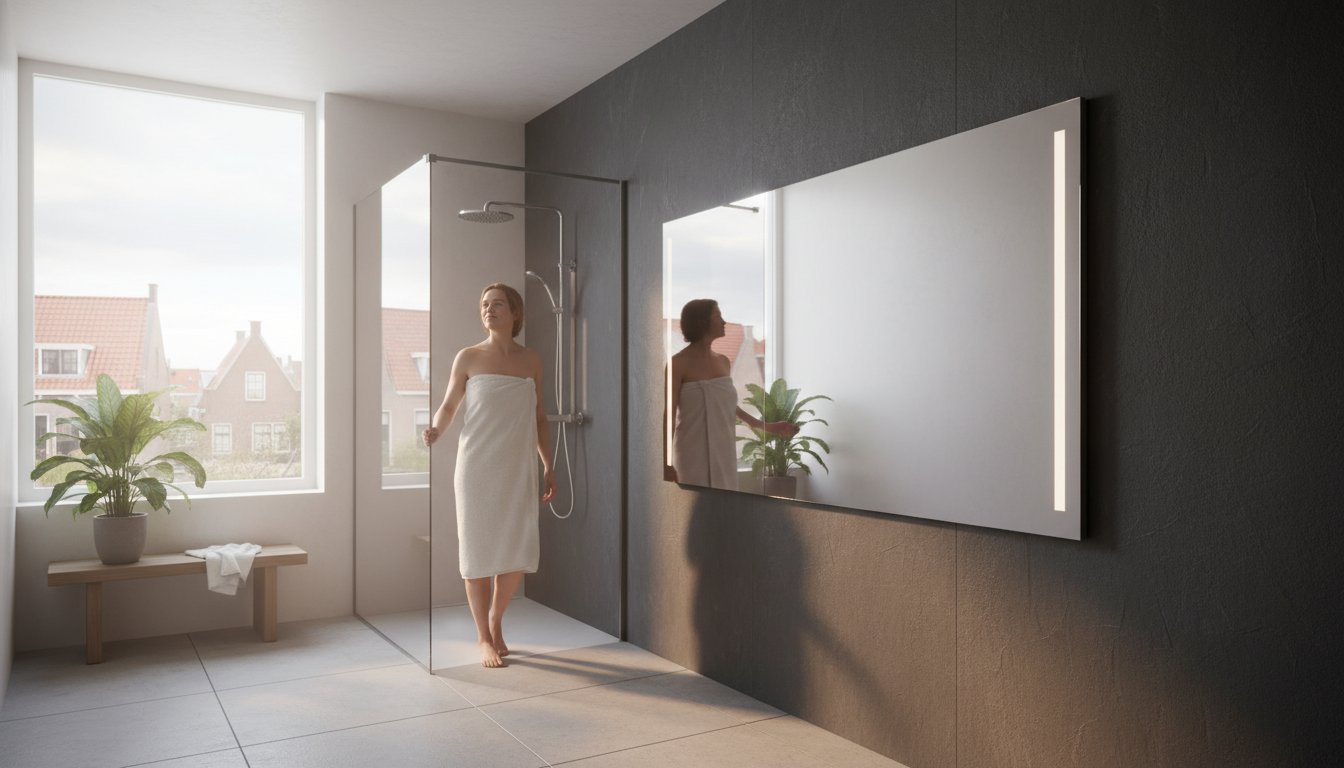
When renovating a bathroom, you can include infrared heating early in the design. This helps plan the available wall and ceiling space, electrical connections and desired functions together. The choice must suit both bathroom use and the specific product requirements.
Key points
Describe the desired temperature, usage times and existing heating. Then plan heat loss, positioning and safe connection. A mirror, towel function and lighting are separate wishes that not every panel automatically fulfils.
Choosing a function in the bathroom design
A panel can provide primary or targeted supplementary heating, depending on capacity and design. It emits heat through radiation and convection; the air also warms up. The sensation of warmth at the basin may therefore differ from the temperature throughout the room. A lower air-temperature setting does not give everyone the same comfort.
Heating does not replace ventilation or guarantee prevention of condensation, mould or health complaints. Warm surfaces can help reduce condensation, but a warm wall does not automatically repel moisture. Include removal of shower moisture and any building defects separately in the renovation.
Technical requirements before choosing products
Have heat loss determined for the desired temperature using the available insulation and ventilation data. A fixed 60 to 100 watts per square metre provides no certainty for your bathroom. Also assess warm-up time and whether other heating remains. More output is not automatically more economical and may increase electrical load.
Have a competent installer check zones, likelihood of water contact, product suitability and electrical protection together. Use current installation regulations and the exact manual. A single IP rating, a general zone designation or a ceiling position does not constitute complete mounting approval.
Mirrors, glass and other design features
A mirror panel can combine room heating with a mirror. A smaller anti-condensation heater is not the same and may have insufficient output for the room. Even a heated mirror can mist under some conditions; warm-up time, moisture and the heated area determine the result.
For glass, colour or printing, check the available version and permitted mounting. Towels may only be placed on components specifically approved for that purpose; do not cover an ordinary panel. For lighting, ask about independent operation, light output and connection. These functions do not prove general health or hygiene benefits.
Positioning and controls in the renovation plan
Mark the basin, shower, dressing area, doors and furniture on a floor plan. Compare permitted wall and ceiling positions for coverage and clearance. A ceiling panel is not automatically better and does not replace actual underfloor heating. Also check load-bearing capacity and maintenance access before finishes are closed up.
Choose a compatible thermostat and any receiver capable of handling the load. The sensor must measure representatively without being affected by direct radiation or draughts. Wireless operation, adaptive start and open-window detection depend on the model. Set the programme according to actual warm-up time and use; no feature guarantees comfort precisely on time in every situation.
Our advice for a complete renovation choice
We support private and business end users, installation companies and wholesalers. Send your floor plan, photos, insulation information and wishes for warmth, mirror and lighting. We can then discuss available products and additional components, with clear limits on what the chosen version does.
Request a complete proposal including mounting, connection, controls and warranty and service conditions. Expected service life is not a warranty, and low maintenance is not maintenance-free. Follow the cleaning and checks in the manual. Green electricity does not automatically make a product entirely carbon-neutral over its whole life cycle.
A good handover to everyday use
At handover, check operation, settings and clearances. Ask how to recognise faults and which components must remain accessible. Keep documentation and compare the initial period of use with your comfort goal. An unsuitable choice first requires analysis, not automatically an extra-powerful panel.
Frequently asked questions
Is every bathroom panel safe to touch?
No. An operating surface can cause burns. Consider children and vulnerable users, and follow safety clearances. Overheating protection does not permit covering or touching the panel. Let it cool before maintenance.
How do I assess costs?
Use input power and actual operating time. As an illustrative calculation, an appliance drawing 1 kW continuously for half an hour uses 0.5 kWh. Multiply by your tariff and compare the same heating performance. A new heat source alongside unchanged heating counts as additional consumption.