
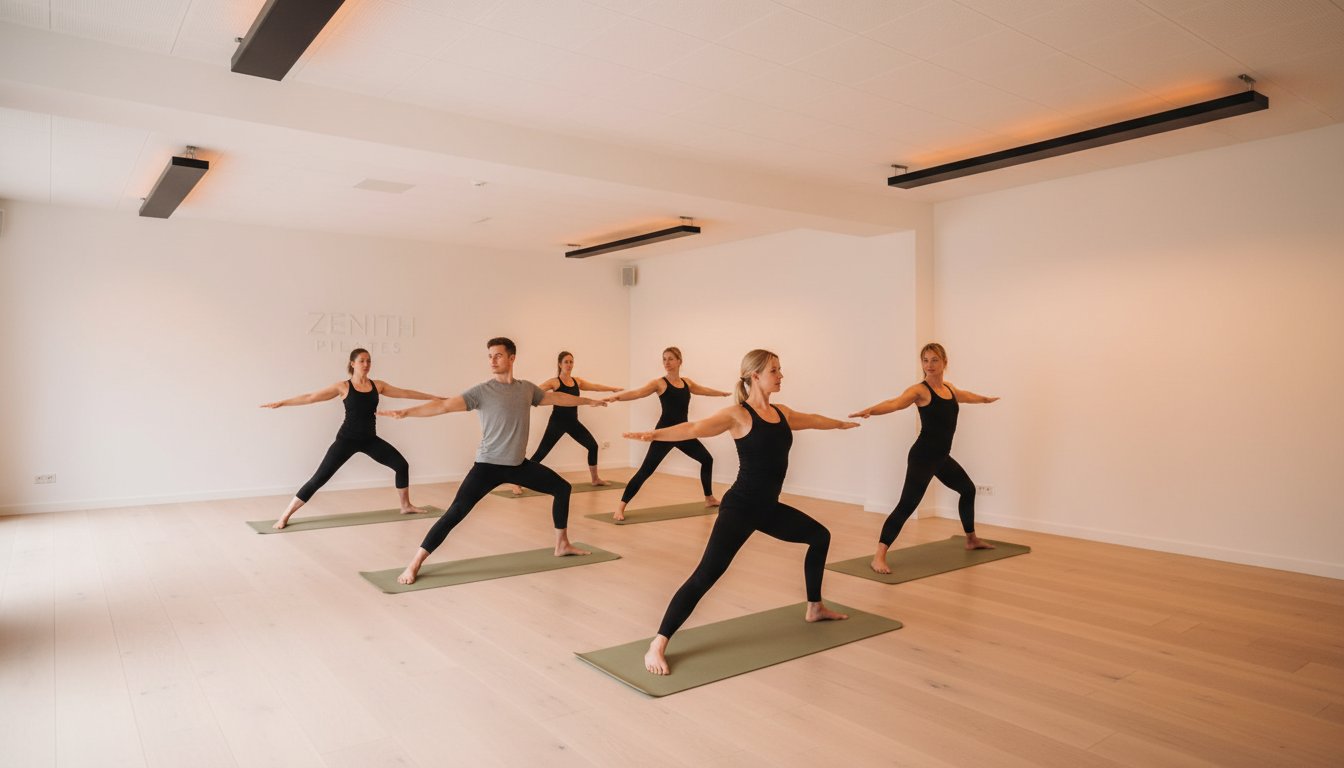
Infrared heating can form part of the heating plan for a Hot Pilates studio. Suitability depends on the device, permitted application, building and use. We help private and business end users, installers and wholesalers with product selection and technical preparation. A heating panel is not a medical device and does not determine which training temperature is appropriate for participants.
What does infrared heating do in a Pilates studio?
An infrared panel emits heat through radiation and convection. People and surfaces within its range receive radiant heat; the air also warms up. Perceived warmth depends on distance, positioning, surface temperatures and room use.
A panel does not remove dust or pathogens. Better circulation, increased muscle flexibility, injury prevention and faster recovery are not general properties of space-heating panels either. Keep heating choices separate from medical or exercise advice.
Technology and device selection
With electric resistance heating, almost all electricity consumed ultimately becomes heat. That differs from the radiant share or savings compared with another system. Compare the specific model’s power, heat output, controls and permitted operating conditions; use only traceable measurements for radiant share.
Not every panel is suitable for high ambient temperatures, prolonged commercial use or ceiling mounting. Check the manual and specifications. A particular surface temperature is not mandatory for every studio, and an IP rating alone does not establish suitability for all humid conditions.
See the points to consider for ceiling mounting
Comparing infrared with other heating systems
Compare investment and running costs using the same comfort requirements and hours of use. Include heat loss, ventilation, energy prices, controls and maintenance. Heat pumps and electric resistance heaters work differently; lower consumption or running costs cannot be promised without calculation.
Good ventilation remains necessary during exercise and when heat and moisture are produced. A device without a fan does not create a forced airflow itself, but natural convection, ventilation and movement can still move dust. Heating does not replace fresh air or studio cleaning.
Planning and installation in the studio
Start with a heat-loss calculation and a plan for each usage zone. Include insulation, height, glazing, ventilation, desired temperature and class schedule. A fixed watts-per-square-metre figure does not replace this calculation. Establish warm-up time in the actual situation rather than guaranteeing a fixed number of minutes.
Have the installer assess electrical load, the available supply, circuits and protection. Follow the manufacturer’s requirements for load-bearing capacity, mounting, clearances and cabling. Hot surfaces can cause burns; prevent accidental contact and keep combustible materials at the specified distance.
Choose controls suited to the device and intended use. Check temperature range, switching capacity and sensor placement. A timer can support the class schedule. Motion detection must also work for participants who move very little; connection to building management depends on the components chosen.
Running costs and sustainable operation
Calculate consumption by multiplying input power in kilowatts by actual operating hours. This gives kilowatt-hours. Multiply by the applicable electricity tariff and account for other costs separately. A general payback period or fixed consumption per class cannot be substantiated without project data.
Low maintenance does not mean maintenance-free. Follow the manual for cleaning, visual inspection and checking connections and controls. Lifespan and warranty vary by product and use; an expected lifespan is not a warranty period.
Advice for your studio
We help with device selection, positioning and controls, coordinating supply with you or your installer. Share dimensions, building information, hours of use and the intended application for a tailored proposal. Performance, installation conditions and warranties are assessed for the specific model.
Request a technical quote for your studio
Frequently asked questions about Hot Pilates and infrared
How much power does my studio need?
This follows from the heat-loss calculation and intended use. Include ventilation and warm-up behaviour. We do not give a universal wattage guaranteeing the same temperature or warm-up time for every studio.
Which training temperature is appropriate?
This cannot be decided from a heating product. The studio operator should assess training conditions and participant suitability with appropriately qualified experts. The device’s permitted operating conditions also continue to apply.
Can I install the system myself?
Follow the manual and have an expert assess the electrical installation and any fixed connection. Easy mounting does not establish that the existing supply or supporting structure is suitable.
Can I use solar panels?
Your own solar electricity can cover part of demand when generation and use coincide. Winter demand and periods without sun remain important. Solar panels alone do not guarantee zero energy costs or entirely carbon-neutral operation.