
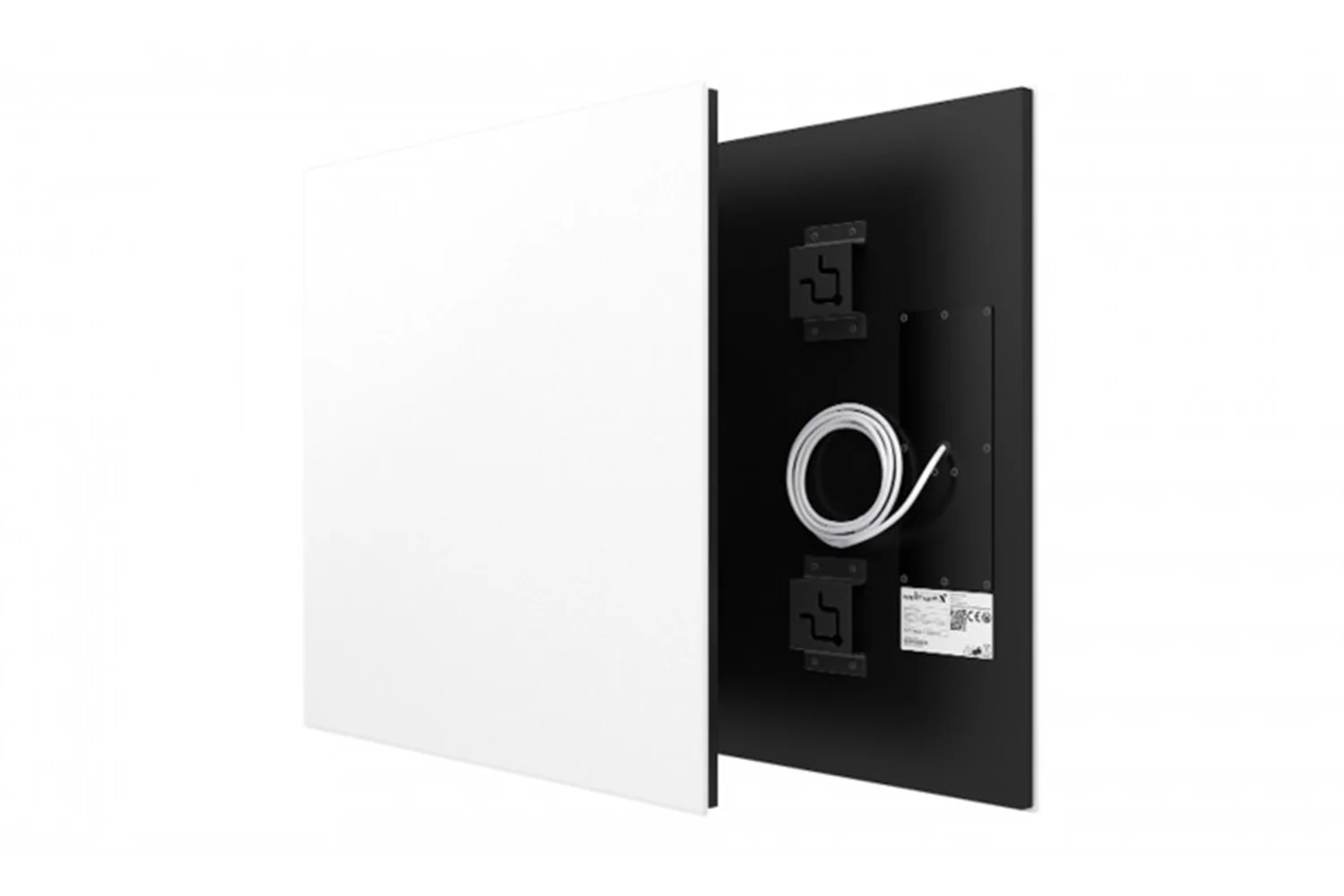
How does infrared heating work? An electric panel transfers some of its heat through electromagnetic radiation. You can feel that warmth without touching the appliance. To assess the technology properly, distinguish heat transfer from claims about savings, safety or health. Below we explain its operation step by step.
Key points
A panel emits both radiant and convective heat. Radiators also use both forms. Stored heat is energy supplied earlier, and savings do not automatically follow from a radiant fraction. Positioning, heat loss and controls must therefore be assessed together.
Infrared radiation and absorption by surfaces
Infrared is part of the electromagnetic spectrum beyond visible red. Warm surfaces emit thermal radiation. An electric panel heats its surface using a heating element; people and materials can then absorb the radiation. How much is absorbed or reflected depends on surface and wavelength.
Short-, medium- and long-wave describe parts of the spectrum, not three fixed quality classes. Radiation behaviour is related to appliance temperature and design. Comparing it with warmth from the sun may help explain the sensation but does not prove identical radiation or unconditional safety.
Combining radiation, convection and conduction
Radiation can transfer heat directly to a surface within reach. Convection transfers heat through moving air. Conduction takes place through materials or contact. These processes coexist in a heated room. A panel without a fan still causes natural air movement and does not make a room dust-free.
Comfort depends, among other things, on air temperature, surrounding surfaces, air movement and personal circumstances. Direct radiation can change the sensation of warmth, but a room at 18 °C does not automatically feel like 21 °C to everyone. An even floor-to-ceiling temperature or the disappearance of cold feet is not a universal result.
Conversion efficiency and thermal storage
With electric resistance heating, electricity ultimately becomes almost entirely heat. This does not tell you which portion is radiation or reaches the desired position. Radiant-fraction information requires data for the model and measurement method. Emissivity describes a surface property and is not the same as a percentage saving.
Walls, floor and furniture can absorb heat and release it later. That storage is not additional heat production. The amount and rate of storage depend on mass, material and temperature. An open door, ventilation and poor insulation continue to remove heat even when objects are already warm.
Warmer surfaces can help reduce condensation but do not guarantee prevention of moisture or mould. A panel is not a dehumidifier and does not treat allergies or asthma. Ventilation, limiting moisture, cleaning and repairing building-related causes remain separate considerations.
From physics to positioning and controls
First determine primary or supplementary heating and heat loss at the desired temperature. Then examine obstructions, available mounting positions and distance to users. A panel behind a cupboard cannot radiate directly towards a seating area. There is no universal best ceiling position, radiation angle or wattage per cubic metre.
The exact manual determines permitted wall or ceiling mounting, brackets and clearances. Have load, connection and protection assessed by a competent installer. For damp rooms, product and mounting position must be suitable together; an IP code alone is insufficient.
A compatible thermostat switches according to a temperature measurement and settings. Position the sensor representatively and match timings to use. Zone control can limit unnecessary heating hours but does not automatically limit maximum combined power. A combined floor and panel installation needs a suitable control strategy.
Checking product quality using specific information
Compare specifications, construction, documentation and warranty per model. A material name or origin does not prove a fixed service life. Check the scope of stated quality marks; a safety certificate does not automatically prove the radiant fraction. Low maintenance does not remove the need to check fixings, connection and controls.
We help private and business end users, installation companies and wholesalers choose suitable products. Share photos, a floor plan, insulation information and usage wishes. We then discuss suitable models, finish and controls without presenting the technology as an automatic saving.
Use the explanation for a complete comparison
Compare the same heat demand, comfort requirement and operating duration, and include installation and maintenance. A heat pump is also a possible alternative for primary heating. It moves environmental heat and can therefore deliver more heat per kWh of electricity than direct resistance heating; compare performance and total costs for the same heat demand. Solar panels do not supply sufficient electricity at every heating moment. Ask for a proposal clearly identifying assumptions and components.
Frequently asked questions
Does infrared mean the surface feels safe to touch?
No. Hot surfaces can cause burns, even after brief contact. Follow distances, positioning and operating instructions and consider children and vulnerable users. Low mass or overheating protection does not automatically make contact safe.
Sources and assumptions
- Ceiling heating
- Mirror heating
- Product documentation
- Request a quote
- ICNIRP: guidelines on visible and infrared radiation (2013, PDF)Open PDF in a new tab
- IEC 60675-3:2020: measuring radiant performance
- Welltherm: installation and operating manual for glass panels (PDF)Open PDF in a new tab
- Australian Government: electric heating and heat pumps