
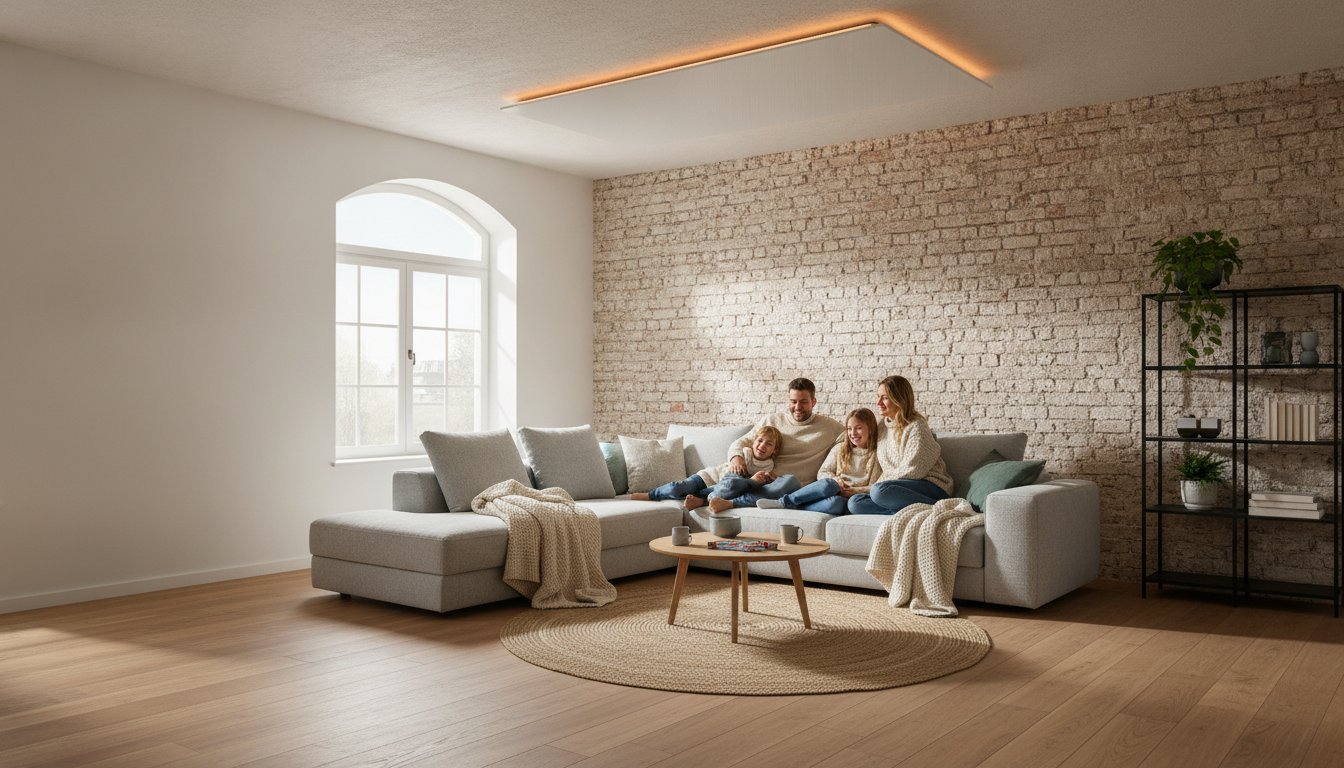
How does infrared heating work? In an electric panel, an element converts electrical energy into heat. The warm surface then exchanges heat with people, materials and air. This explanation follows the energy flow step by step and clarifies radiation, convection and storage in relation to comfort and consumption.
Key points
An infrared panel does not emit radiation alone. Direct heat exchange depends on temperature, surface, distance and exposure to the panel. Storage creates no extra energy. Positioning and controls must suit the use; none of these principles alone guarantees a lower bill.
Radiation, convection and conduction
Heat transfers through several mechanisms. Conduction occurs within or between materials; convection through moving fluid or air; radiation through electromagnetic energy. A heating system can combine mechanisms. Radiators also radiate and infrared panels also cause convection.
An exposed surface can absorb energy and reflect part of it, depending on material and wavelength. Obstacles alter direct exchange; radiation does not pass freely through every material. Comparing with sunshine can describe the sensation, but panels and the sun do not have the same spectrum.
From electric element to warm surface
Current through a designed resistance element generates heat, which reaches the front through internal construction. Front, coating, temperature distribution and rear construction affect heat emission. Panels do not all share one element or insulation design; assess specific model data.
Metal, glass and mirror panels offer different designs and applications. Material alone proves neither superior efficiency nor service life. A coating does not establish a fixed radiation angle without product measurements. Rear insulation can influence heat flow but does not eliminate all rear heat emission.
What heat storage actually does
A room’s thermal mass exists before heating is switched on. Materials absorb energy while warming and can release it later. Heat capacity and conductivity are different properties: wood and concrete are not relevant for identical reasons. One heating method does not uniquely activate the structure.
Storage can influence temperature swings, but losses through structure and ventilation continue. Stored heat is energy previously supplied. Infrared does not remove wall moisture or guarantee a dry core. Damp still requires ventilation and investigation of leaks or thermal bridges.
Translate the principles into positioning and controls
Choose an approved wall or ceiling position reaching the intended comfort area. Keep clearances and check obstacles, support and connection. Ceiling mounting is not automatically better. Main heating capacity must match heat loss; general watts per m² are not a full calculation.
A thermostat measures temperature at its sensor and switches according to settings. It does not automatically measure heat stored in all walls or everyone’s comfort. Choose compatible components and schedules. Wi-Fi or smart-home integration is a control option, not proof of lower consumption.
Our advice on technical choices
We supply private and business end users, installers and wholesalers. Send dimensions, insulation, use times and context for focused advice. We help select products and controls and use the chosen model’s documentation for specifications. Check warranty and maintenance too.
From physical principle to suitable application
High electricity-to-heat conversion does not establish a building’s annual demand. Compare direct electric heating with alternatives such as heat pumps, which move environmental heat. Local supplementary warmth can support comfort, but net cost and savings depend on genuinely avoided use elsewhere.
Questions about how it works
How much does a 600-watt panel use?
One continuous hour at full output is 0.6 kWh. Actual daily energy depends on on-hours and settings. A thermostat can switch off, but the panel can also run for long periods at high demand.
Is operation automatically safe and maintenance-free?
No. Follow mounting, clearance and operating instructions for the appliance. Hot surfaces can cause injury. Cleaning and checks of connection and controls remain necessary even without a fan or water circuit. Heating panels provide comfort, not general medical benefits.