
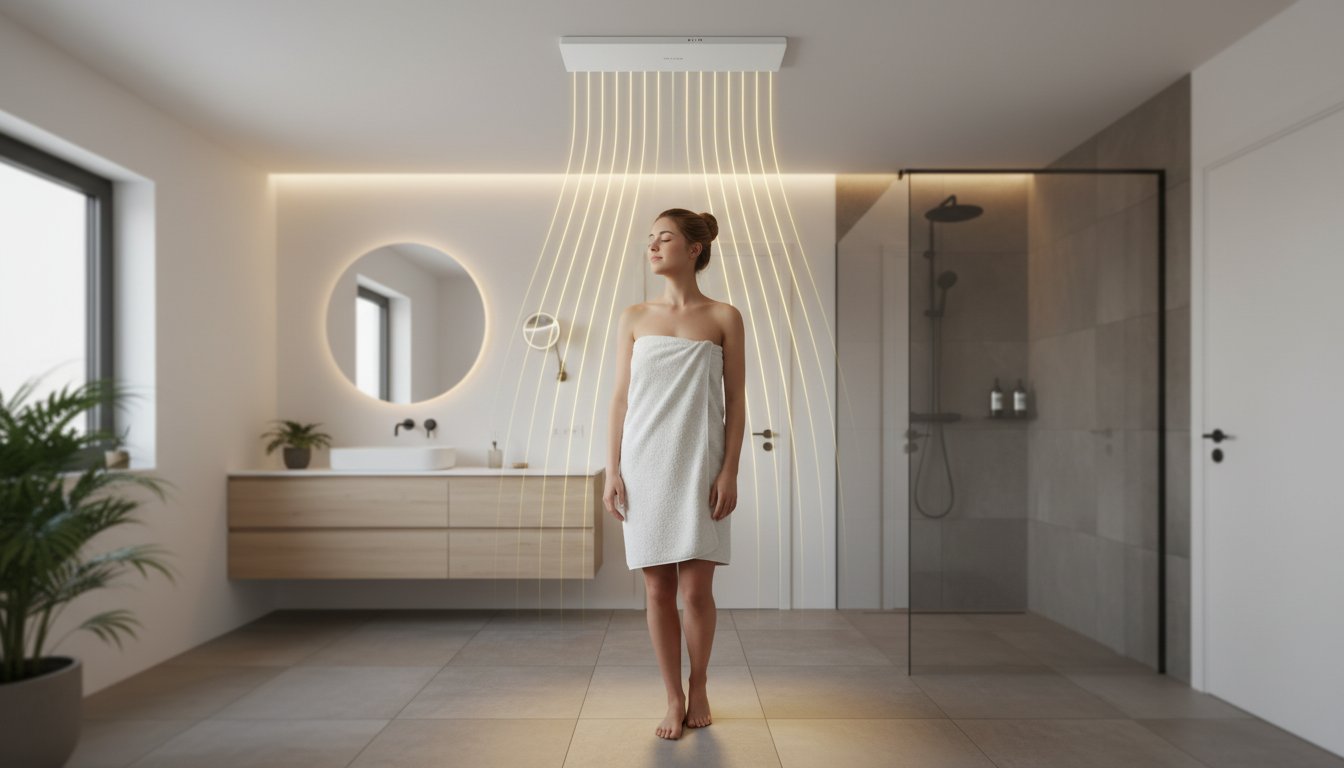
Want a warm bathroom when you use it? Assess the heat demand, the area where comfort matters and appropriate controls. An infrared panel may deliver targeted radiant warmth, but cannot heat every bathroom within a fixed number of seconds or minutes.
Key considerations
Distinguish warmth felt by your body, warmer air and a warm floor. Compare systems under equivalent conditions. Have output, mounting position and electrical safety assessed and maintain ventilation.
What does fast heating mean?
Feeling comfortable at the washbasin differs from warming all the air, walls and tiles. Starting temperature, insulation, ventilation, panel type and distance affect results. Allow preheating where needed based on actual experience. Cold tiles feel unpleasant but do not establish an immediate drop in core body temperature. Room heating does not treat circulation, joints or other medical conditions.
How an infrared panel may help
A panel emits radiant heat towards people and surfaces it can reach. Convection also occurs and the air warms too. Placement and obstructions affect comfort; heat losses still exist and full coverage is not guaranteed. Choose only a model approved for the intended bathroom position. Mirror, wall and ceiling panels have their own mounting and control requirements.
Compare the heating options
Infrared panels may provide local comfort, electric radiators or convectors heat differently, and underfloor heating also targets the floor surface. Response depends on each system’s design, construction and circumstances. Distinguish electric and water-based underfloor heating. Electric radiators do not automatically require water connections. No universal ranking applies to warm-up or costs; compare complete installation, controls, consumption, maintenance and replacement.
Preparing the installation
Have output calculated rather than using universal watts per square metre. Check the supporting surface, fixings, clearances, cables and total electrical load. Assess model approval, bathroom zones, IP protection, electrical class and protective devices together. An IP code does not approve every position and appliances do not all require the same earthing. Have bathroom work and fixed wiring competently completed and tested; do not rely on blanket claims about DIY legality.
Comfort without unsupported promises
Warmer surfaces may limit local condensation, but heating does not remove moisture. Ventilate and address leaks or moisture sources; do not expect guaranteed mould-free, dust-free or healthier rooms. Surfaces may become hot even with a room thermostat. Consider children and other vulnerable users. Design, thickness, lighting and mounting options vary by model.
A suitable operating plan
Match approved thermostats and schedules to actual shower and bath times. Decide whether existing main heating needs supplementary warmth. We help private and business end users, installers and wholesalers with advice and quotations based on photos, dimensions and floor plans. Confirm supplied components and installation requirements. Consumption and potential savings must be assessed for your application rather than assumed from a standard annual amount.
Frequently asked questions
How soon will warmth be felt? It depends on the appliance and conditions; no universal warm-up guarantee applies. Is one panel sufficient? Only heat-loss and placement assessment can establish this. How should it be maintained? Let it cool, switch off and follow cleaning and inspection instructions; do not open electrical parts yourself. Stop use and seek assessment for damage, unusual smells, broken glass or irregular operation. Age alone does not determine thermostat replacement.